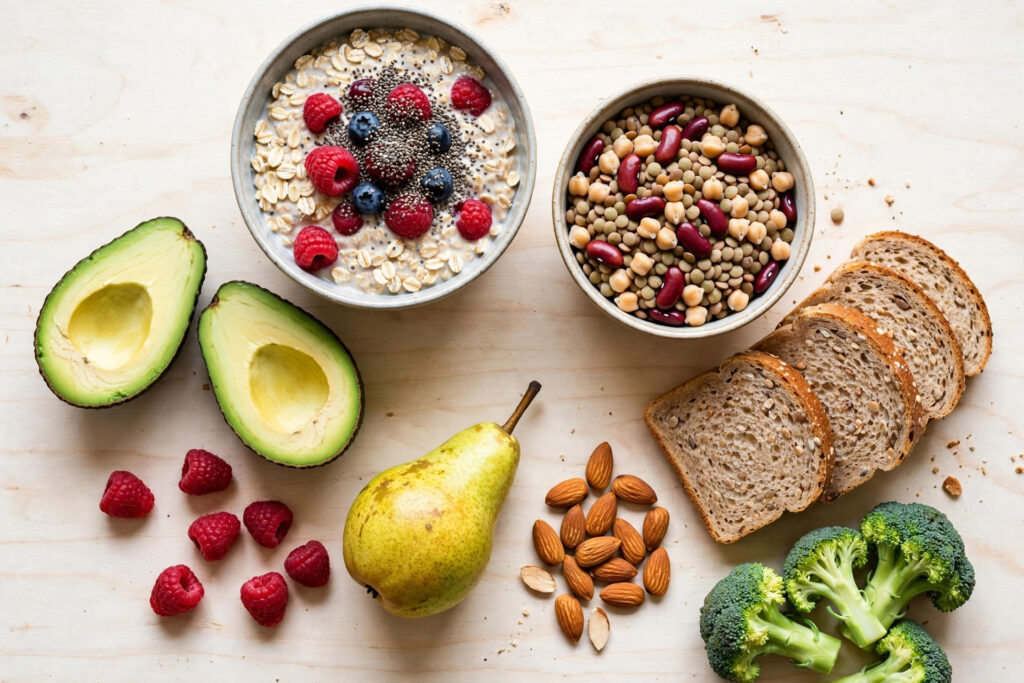
Few nutrients do more work with less credit than fiber. It never makes headlines the way protein or vitamins do, yet it quietly supports your digestion, your heart, your blood sugar, and even the bacteria living in your gut.
Here is the surprising part: most of us are not getting nearly enough of it. UK guidelines say adults should aim for 30g of fibre a day, but the average adult manages only around 20g (NHS, reviewed March 2026).
So what exactly is fiber, and why does your body need it? Here is the plain-English version — honest science, plus practical steps you can start today.
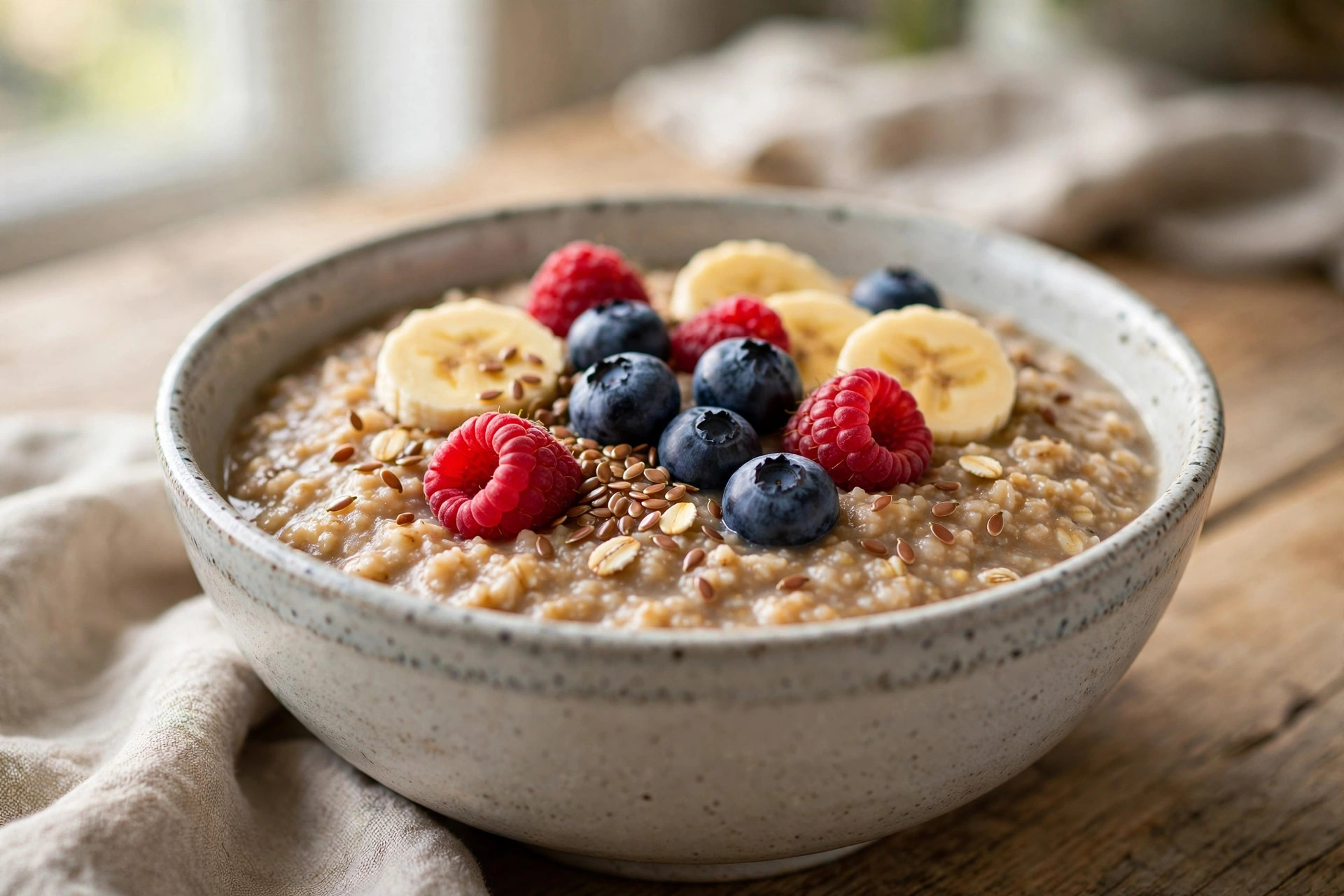
What Is Fiber, Exactly?
Dietary fiber is the part of plant foods your body cannot digest. Unlike protein, fat or other carbohydrates, which get broken down and absorbed in your small intestine, fiber passes through your digestive system largely intact.
That might sound like a design flaw. It is not. When fiber reaches your colon, it becomes food for the trillions of microbes living there. Your gut bacteria ferment it into useful compounds called short-chain fatty acids, which help keep the gut lining healthy and support your immune system (Mayo Clinic Q&A, March 2026).
Fiber only comes from plants. Meat, fish, dairy and eggs contain none. To get more of it, eat more whole grains, beans, vegetables, fruit, nuts and seeds.
Soluble vs Insoluble: The Two Types of Fiber
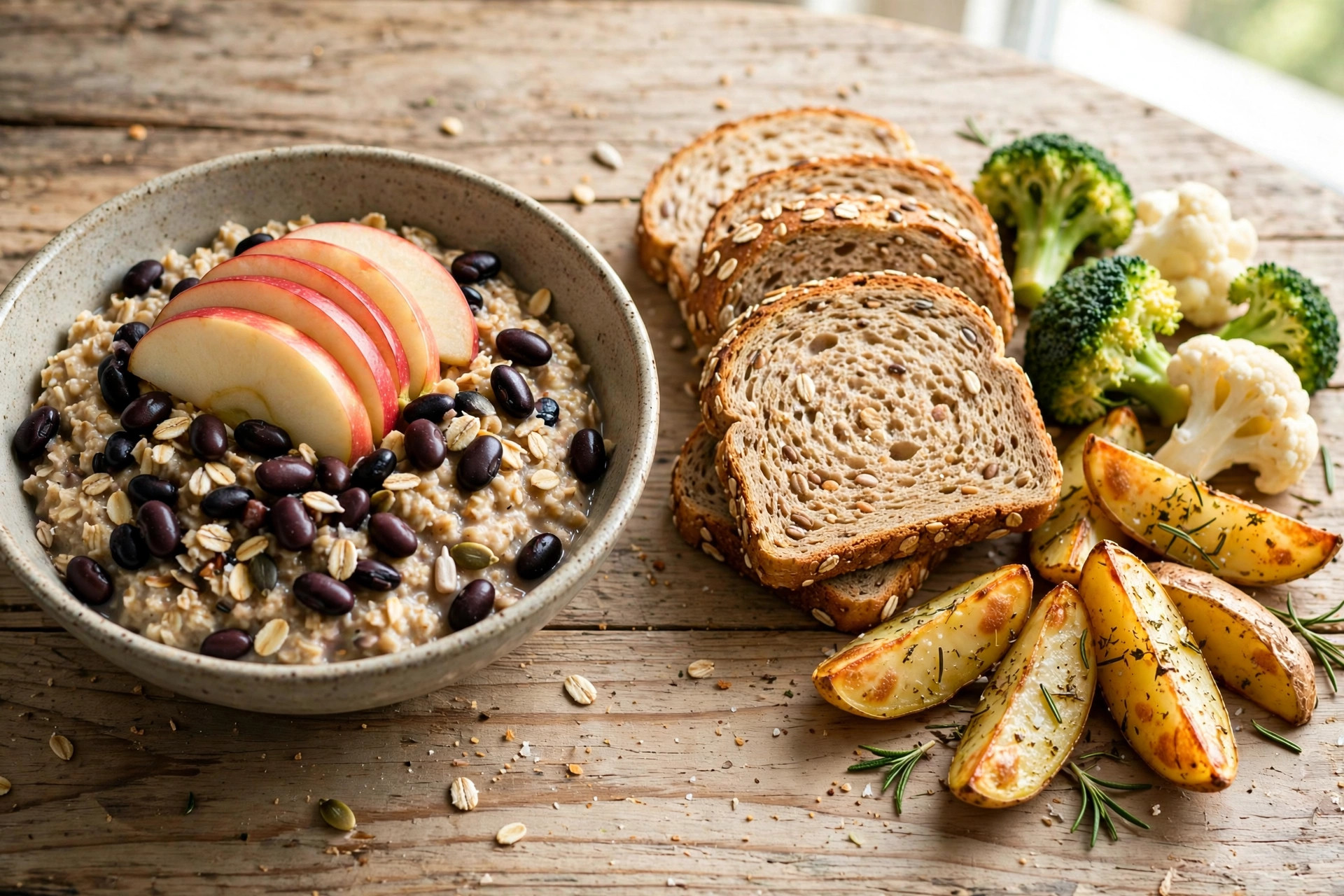
Nutritionists usually split fiber into two types based on how it behaves in water.
Soluble fiber dissolves in water and forms a gel-like substance in your gut. This gel slows down digestion, which helps steady your blood sugar after meals. It also helps pull cholesterol out of your body, since it binds to bile — and bile is made from cholesterol (Cleveland Clinic, 2025). Good sources include oats, barley, beans, lentils, apples, pears and citrus fruit.
Insoluble fiber does not dissolve in water. Instead it passes through your system mostly unchanged, adding bulk to your stool and helping waste move along. That is the type that keeps you regular. Good sources include whole-wheat flour, wheat bran, brown rice, vegetable skins, cauliflower and green beans.
A useful newer way to think about it, highlighted by Mayo Clinic in March 2026, is whether fiber is fermentable (gut bacteria feed on it) or nonfermentable (it mainly adds bulk). Honestly, though, you do not need to memorise categories — most whole plant foods contain a mix of both, so eating a variety covers you.
Why Your Body Needs Fiber
Fiber’s reputation begins with digestion, but the research goes much further.
It keeps your gut working properly. Fiber adds bulk and softens stool, preventing constipation, and it feeds the gut bacteria that support digestion and immunity. Fiber-rich diets are also linked to a lower risk of diverticular disease.
It protects your heart. Soluble fiber helps lower LDL (“bad”) cholesterol, a major risk factor for heart disease. A 2017 review found that people eating high-fiber diets had a significantly lower risk of cardiovascular disease and death from heart conditions.
It steadies your blood sugar. Fiber slows the absorption of sugar into your bloodstream, helping prevent sharp spikes after meals. A 2018 review found that people eating high-fiber diets — especially cereal fiber — had a lower risk of developing type 2 diabetes.
It helps with weight control. High-fiber foods are filling, so you stay satisfied for longer and naturally eat less. In a 2019 study, people who raised their fiber intake lost more weight and stuck to their eating plans more easily.
It is linked to lower disease risk overall. A large analysis of almost 250 studies, commissioned by the WHO and published in The Lancet in 2019, found that people eating the most fiber had a 16–24% lower risk of dying from heart disease, stroke, type 2 diabetes or bowel cancer than those eating the least. Every extra 8g of daily fiber was linked to a further 5–27% risk reduction (reported by Harvard Health).
One honest caveat: most of this evidence comes from observational studies, which show a link between high fiber intake and better health — they cannot fully prove fiber alone caused it. People who eat lots of fiber also tend to eat more vegetables, exercise more, and smoke less. Still, the signal is remarkably consistent across hundreds of studies, and fiber is cheap, safe and easy to get from food.
How Much Fiber Do You Need Each Day?
UK guidance is straightforward: adults should aim for 30g of fibre a day. Children need less, but still more than most get:
- Ages 2 to 5: about 15g a day
- Ages 5 to 11: about 20g a day
- Ages 11 to 16: about 25g a day
Mayo Clinic suggests most healthy adults aim for 30 to 40g a day, so the UK’s 30g is a solid minimum, not a ceiling. If you currently eat very little fiber, work up to the target gradually rather than jumping there overnight — your gut needs time to adjust.
High-Fiber Foods Worth Eating
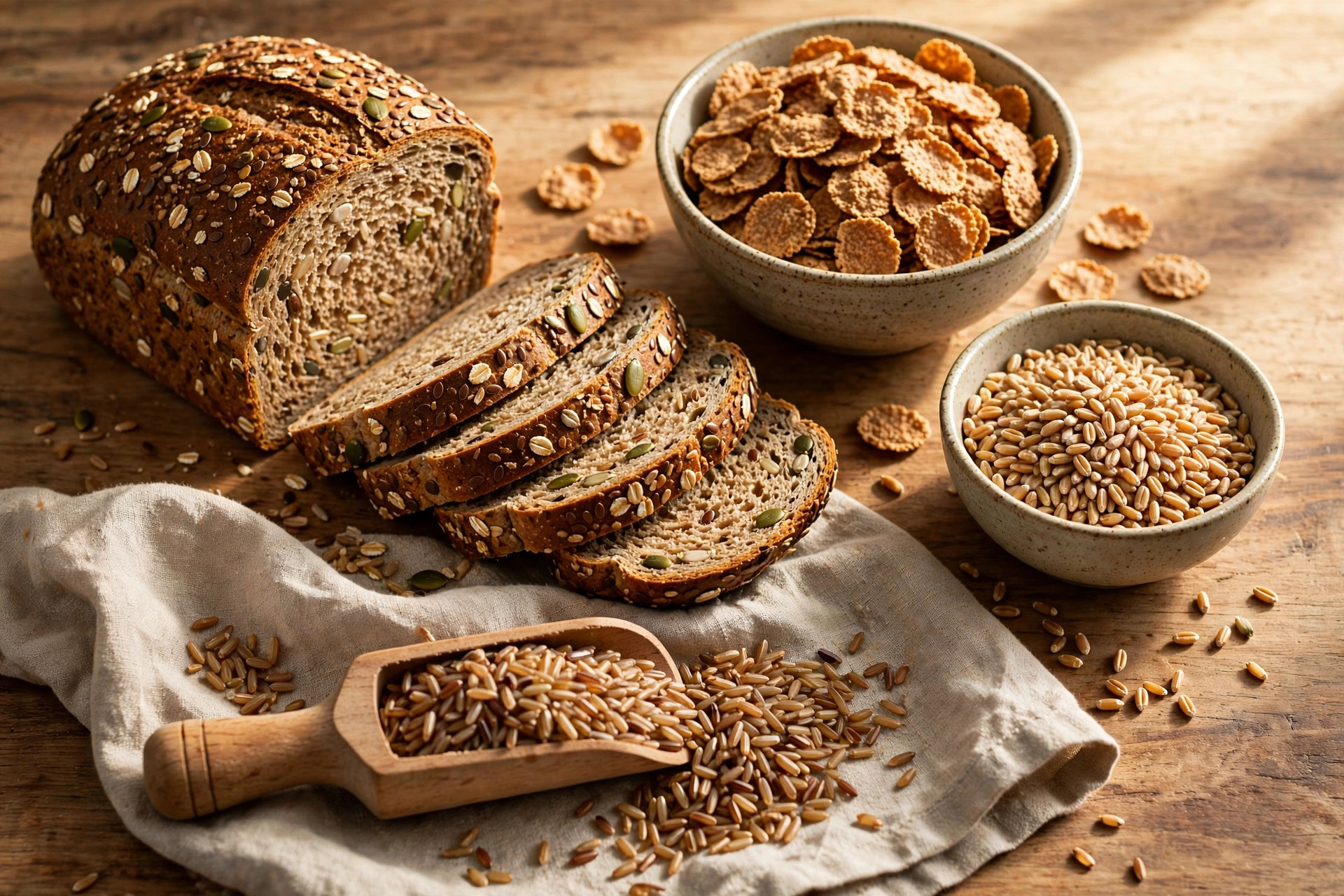
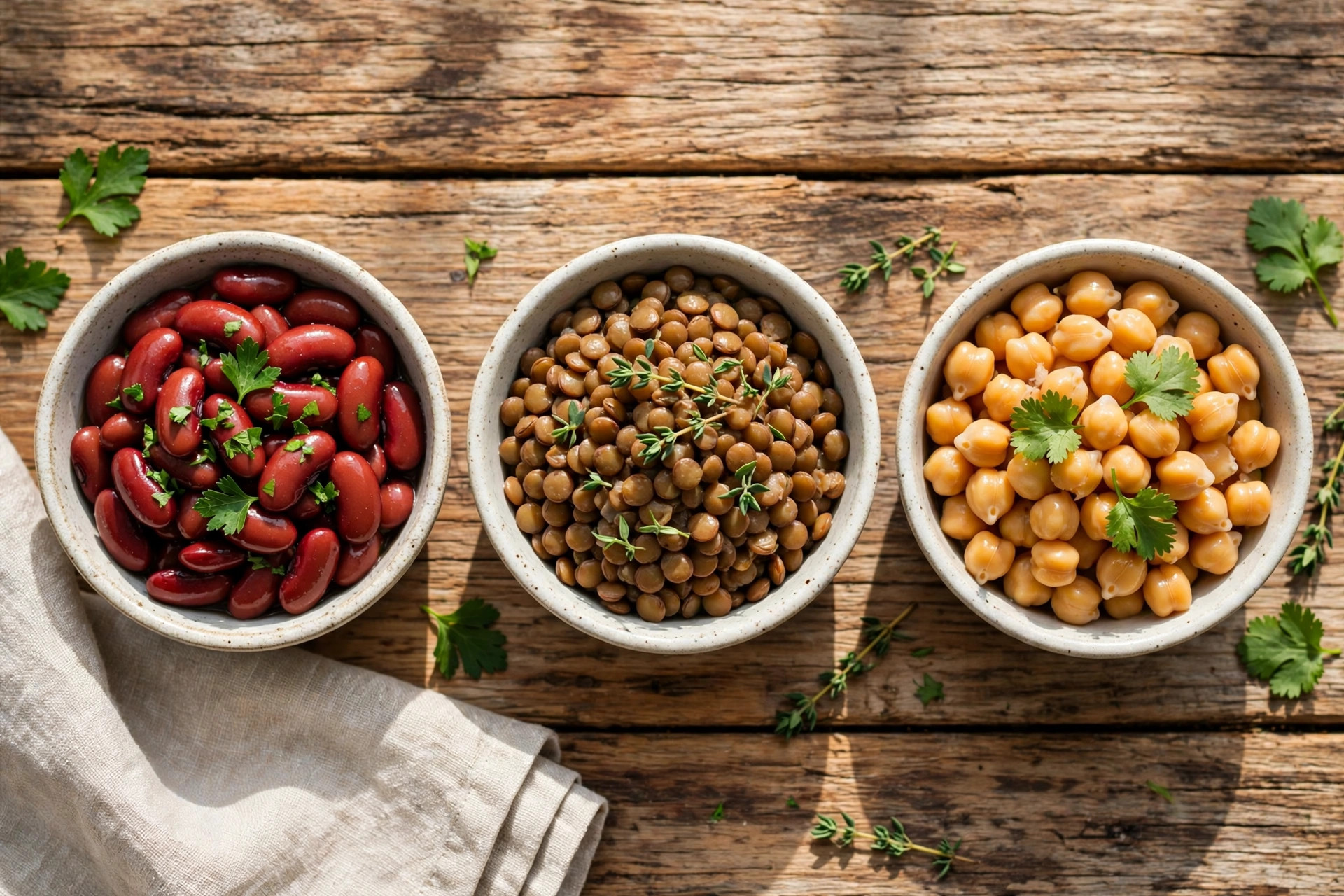
Pulses (beans, lentils, chickpeas) are the heavy hitters — half a cup of cooked lentils gives you nearly 8g. Whole grains, vegetables with their skins on, and berries all add up fast. Here is how some common foods compare:
| Food | Serving | Fiber (g) |
|---|---|---|
| Chickpeas, cooked | ½ cup | 8.1 |
| Lentils, cooked | ½ cup | 7.8 |
| Black beans, cooked | ½ cup | 7.5 |
| Pear, raw | 1 medium | 5.5 |
| Avocado | ½ cup | 5.0 |
| Raspberries | ½ cup | 4.0 |
| Sweet potato, baked with skin | 1 medium | 3.8 |
| Almonds | 1 oz (about 23 nuts) | 3.5 |
| Whole-wheat spaghetti, cooked | ½ cup | 3.2 |
| Orange | 1 medium | 3.1 |
(Fiber values adapted from the USDA National Nutrient Database, as listed by Medical News Today.)
The pattern is simple: eat more beans, whole grains and fruit and vegetables with their skins on, and the grams add up without any fancy foods. Swapping white bread for wholemeal is one of the easiest upgrades you can make — see our piece on brown bread vs white bread if you want the full comparison.
How to Eat More Fiber (Without the Bloating)
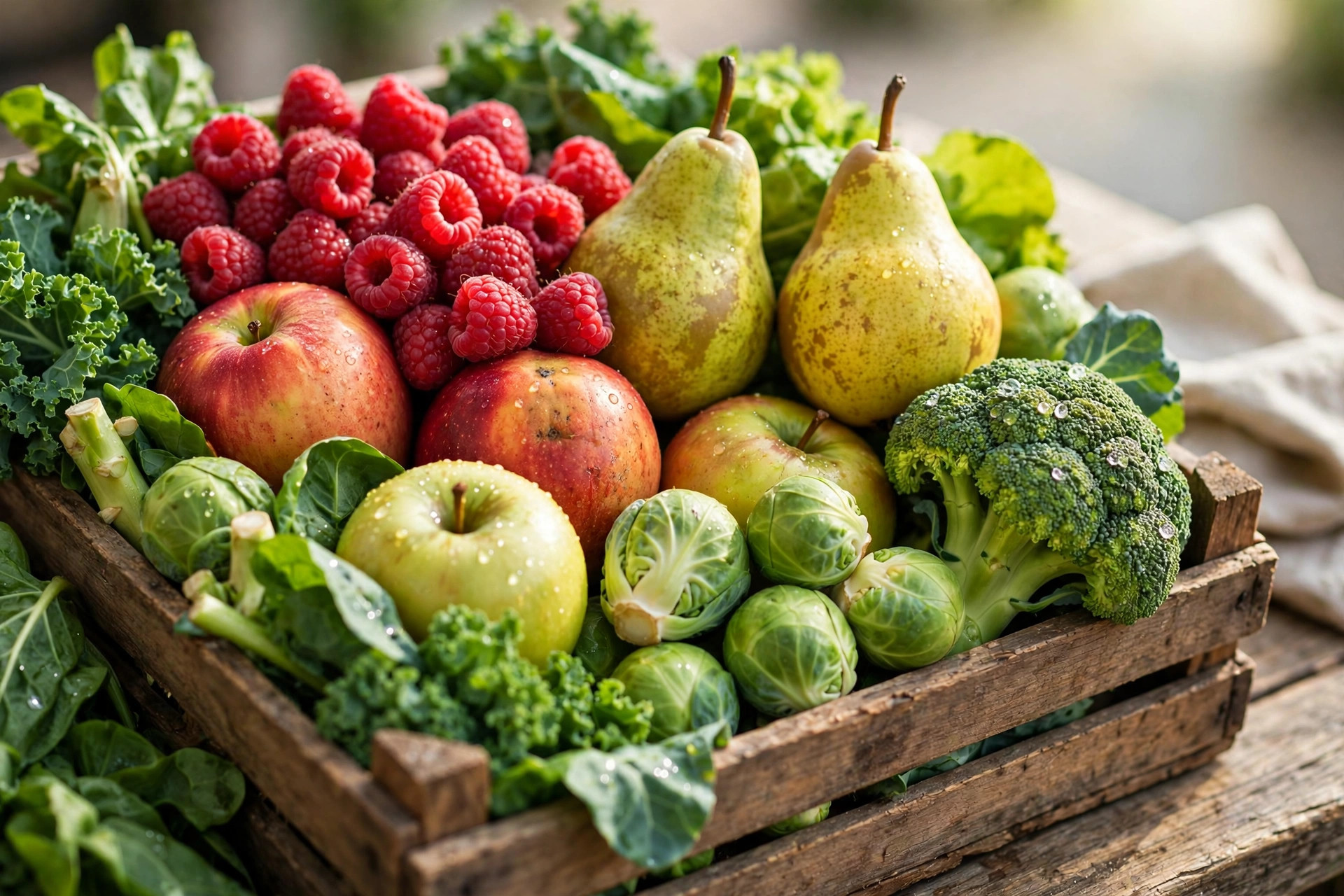
The biggest mistake people make is going from almost no fiber to loads of fiber in one day. That is how you get gas, cramping and bloating. Mayo Clinic’s March 2026 guidance suggests adding about 3g a week — as simple as one extra portion of peas, carrots or brown rice — holding that level for a week, then adding more.
A few habits make a real difference:
- Start the day with porridge or a high-fiber cereal. Oats are one of the easiest wins in the kitchen.
- Add beans or lentils to curries, stews and salads. They bulk up the meal and keep you full.
- Keep the skins on. Potato, apple and pear skins all hold a good share of the fiber.
- Choose wholemeal over white for bread, pasta and rice, most of the time.
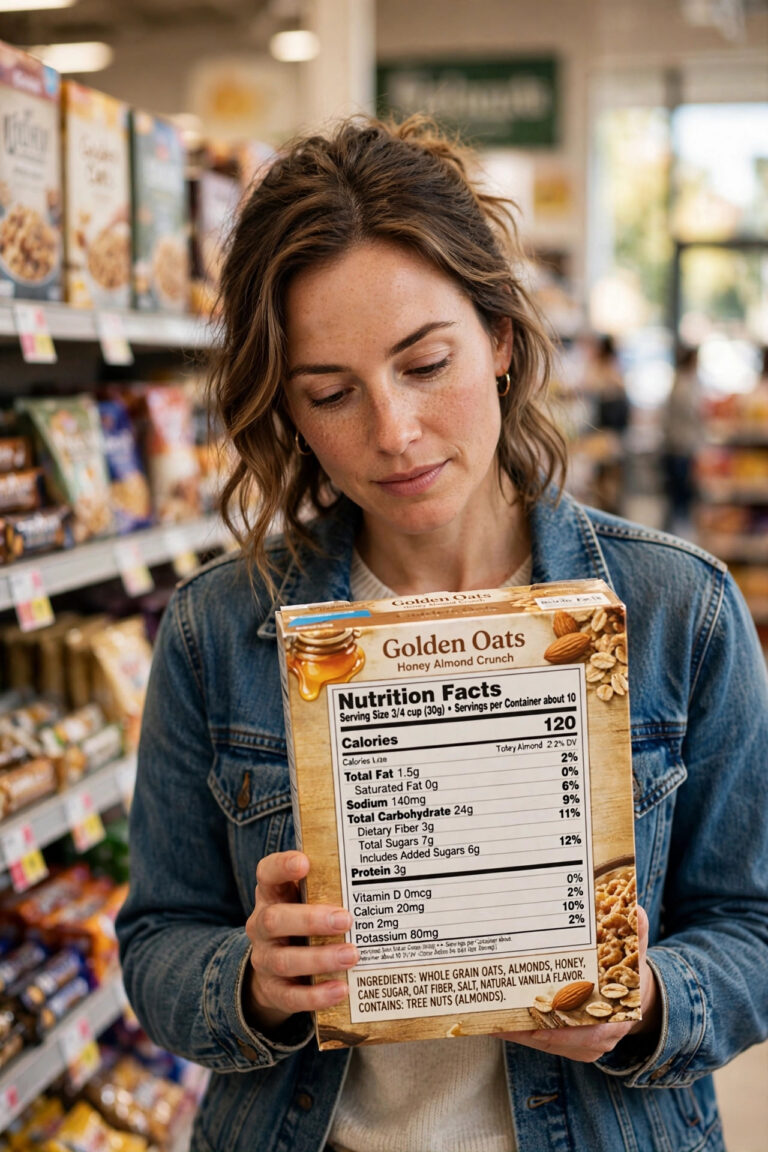
- Check the label. A food counts as high in fiber if it has 6g or more per 100g — our guide on how to read a nutrition label walks you through it.
And drink more water as you increase fiber. Fiber absorbs water, so if you are dehydrated it can make constipation worse instead of better.
A quick word on supplements: products like psyllium husk can help if you cannot get enough from food, but they do not give you the mix of fiber types, vitamins and minerals that whole foods do (Harvard Health). They are a backup, not the plan.
One more note of caution: if you have a digestive condition such as IBS, inflammatory bowel disease, or narrowing of the bowel, high fiber can sometimes make symptoms worse. In that case, do not follow general advice — speak to your GP or a dietitian first.
The Bottom Line
Fiber is not glamorous, but it is one of the most dependable tools you have for looking after your gut, heart and weight. Aim for 30g a day from real food, build up slowly, drink enough water, and let variety do the heavy lifting.
Disclaimer: This article is general information only and is not medical advice. If you have a digestive condition or any health concerns, speak to your GP or a registered dietitian before changing your diet.


2 responses to “What Is Fiber and Why Does Your Body Need It?”
[…] Lentils, beans and chickpeas deserve an extra mention: they’re also packed with fibre, which keeps you full and your digestion moving — here’s why fibre matters so much. […]
[…] fewer calories, it’s that you’re less likely to reach for a second snack at 11am. If fibre is still a fuzzy concept: it is the part of plant foods your body cannot digest — it slows everything down and keeps you […]