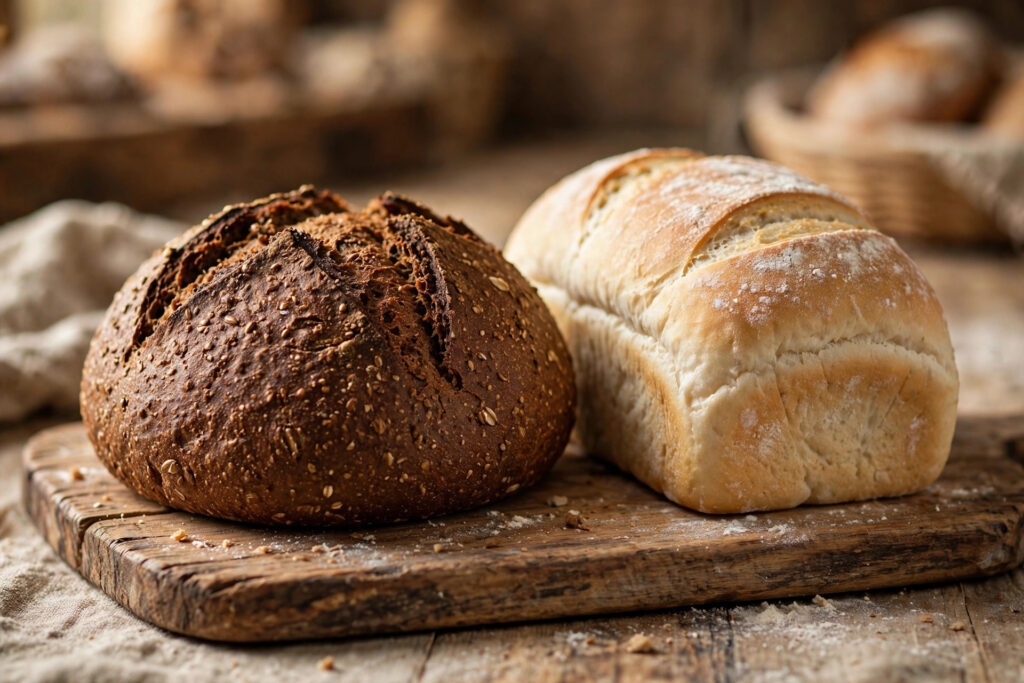
Two loaves sit side by side on the shelf. One is brown, one is white, and the brown one looks like the healthy choice. Usually it is — but not always. A surprising amount of “brown bread” is just white bread dyed with caramel colouring.
Short answer: real wholegrain brown bread wins — more fibre, more nutrients, steadier energy. But colour alone proves nothing. Here’s what’s actually inside each loaf, how to spot the fakes, and how to pick the genuinely healthier slice.
What refining actually takes out of white bread
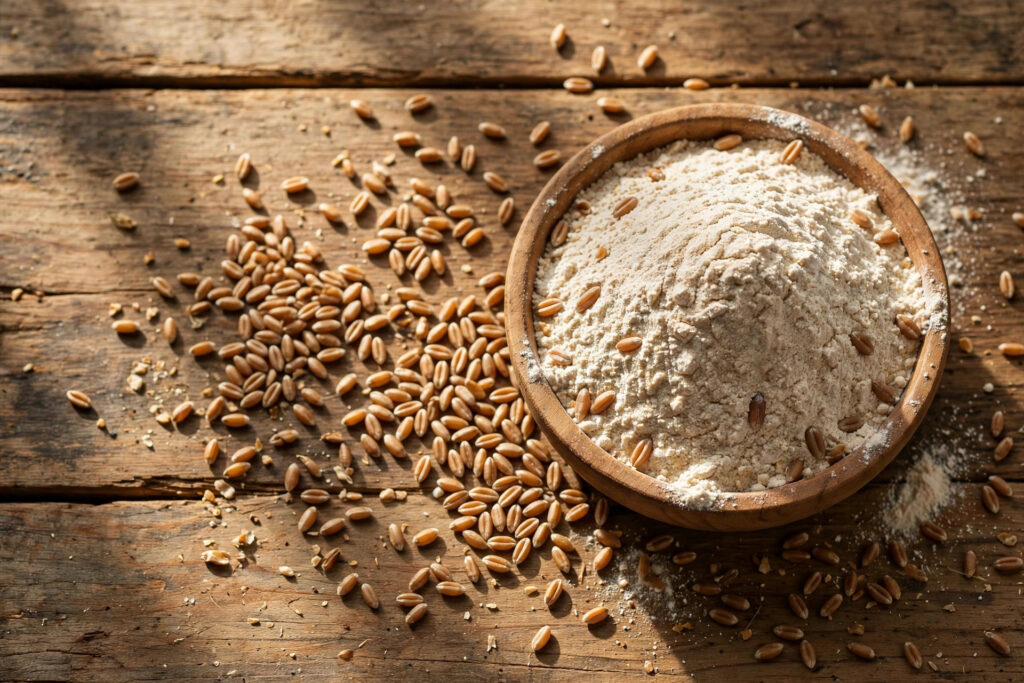
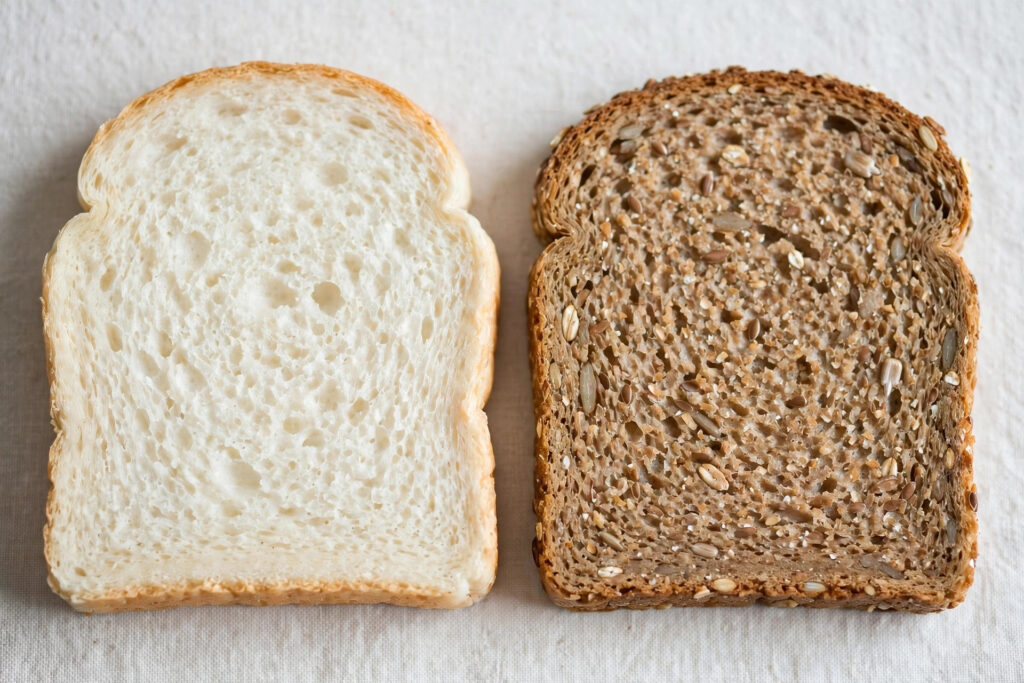
Every wheat grain has three parts. The bran is the fibre-rich outer shell. The germ is the nutrient-packed core, full of B vitamins, vitamin E and healthy fats. The endosperm is the starchy middle — mostly carbohydrate.
White flour keeps only the endosperm. The bran and germ get milled away, and with them go most of the fibre, vitamins and minerals. What’s left is soft, mild-tasting and long-lasting on the shelf — but nutritionally thin. Some white bread is “enriched,” meaning a few vitamins get added back in, but the fibre never comes back. The Whole Grains Council explains the three parts of the grain and why keeping all of them matters.
That softness is exactly why white bread is so popular, especially with kids. Nothing wrong with liking it — just know what you’re (not) getting from it.
There’s one more thing worth knowing: refined flour goes stale-tasting faster in a nutritional sense, so manufacturers often add dough conditioners and preservatives to keep that pillowy texture for days. None of that is dangerous in normal amounts, but it’s another reminder that the ingredient list on white bread tends to run longer than on a simple wholemeal loaf.
Brown bread vs white bread: nutrition side by side
Here’s how the two compare per 100g (typical values — brands vary, so check your loaf):
| Nutrient (per 100g) | White bread | Wholemeal brown bread |
|---|---|---|
| Calories | ~265 | ~247 |
| Protein | 9g | 13g |
| Fibre | 2.7g | 7g |
| Carbohydrates | 49g | 41g |
| Sugar | ~5g | ~5–6g |
| Glycemic index (approx.) | ~70–75 (high) | ~50–55 (medium) |
The fibre gap is the big story: wholemeal gives you nearly three times the fibre, plus more protein and minerals, for roughly the same calories. The NHS puts it plainly: wholemeal, granary, brown and seeded breads are a healthy choice with B vitamins, vitamin E, fibre and minerals — while white bread has notably less fibre.
Per slice, that works out to roughly 2–3g of fibre in wholemeal versus under 1g in white. Small numbers, but they add up across two slices of toast every morning.
The fake brown bread trick
Here’s the part the bread aisle doesn’t advertise. Plenty of loaves labelled “brown bread” are made from the same refined flour as white bread — then darkened with caramel colour (E150a), molasses or malt extract to look wholesome. Same nutrition as white bread, healthier-looking price tag.
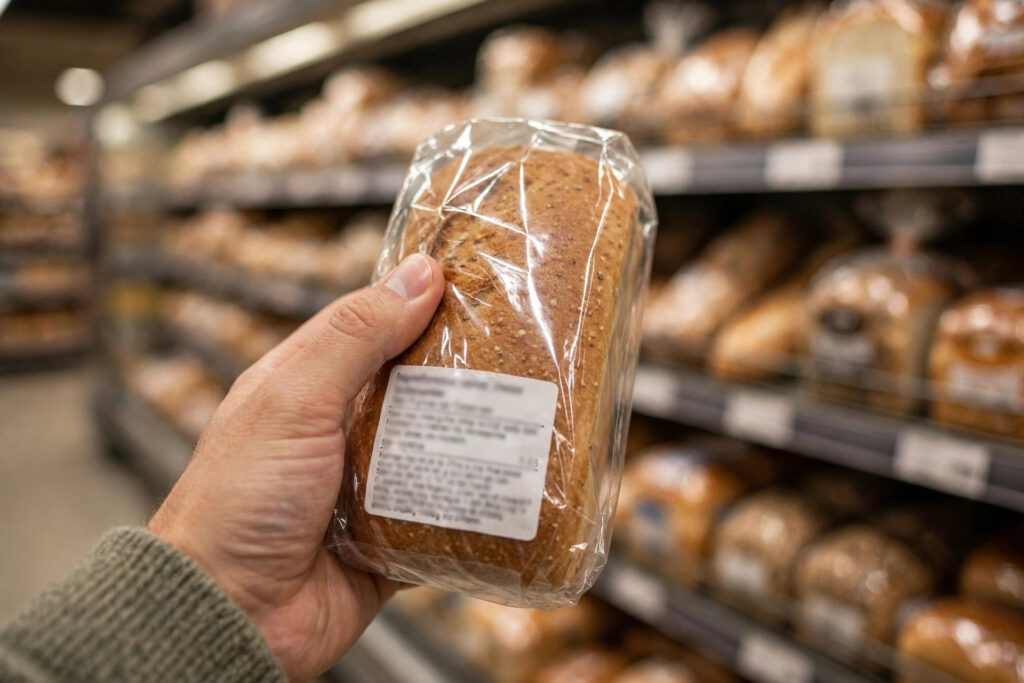
Colour means nothing. Neither does the word “multigrain” — that only means more than one grain was used, and they’re often still refined. What actually counts is the word whole: “wholemeal flour” or “whole wheat flour” as the first ingredient.
Three quick checks before a loaf goes in your basket:
- First ingredient should read “wholemeal flour” or “whole wheat flour” — not “wheat flour,” “enriched flour” or “maida.”
- Fibre should be at least 2–3g per slice on the nutrition panel.
- No caramel colour (E150a) lurking in the ingredients list.
If you want to get good at this, learning how to read a nutrition label — what to look for, and what to ignore — is worth five minutes: check the first ingredient, fibre per 100g, and added sugars.
Blood sugar, fullness and weight
This is where wholegrain earns its reputation. On the glycemic index, white bread scores around 70–75 (high) while wholemeal sits near 50–55 (medium). You can explore tested values in the Glycemic Index Foundation’s database, run by the University of Sydney.
In plain terms: white bread digests fast, so blood sugar rises quickly and hunger returns sooner. Wholemeal’s fibre slows everything down — steadier energy, and you stay full longer. That fullness effect is why wholegrain toast beats white for weight control: it’s not that it has fewer calories, it’s that you’re less likely to reach for a second snack at 11am. If fibre is still a fuzzy concept: it is the part of plant foods your body cannot digest — it slows everything down and keeps you full.
One honest caveat: studies linking wholegrain eaters to lower obesity risk are observational — they show a pattern, not proof. People who choose wholegrain also tend to exercise more and eat more vegetables. The fibre mechanism is solid, but bread alone won’t decide your weight.
Quick note: this is general information, not medical advice. If you have diabetes or take blood-sugar medication, talk to your doctor or a dietitian about what’s right for you.
How to pick a genuinely healthy loaf
Use this checklist on your next shop:
- First ingredient: “wholemeal flour” or “whole wheat flour”
- At least 2–3g fibre per slice
- Short, readable ingredient list — nothing you can’t pronounce
- No caramel colour (E150a) or added sugars high up the list
- “Multigrain” only counts if it also says “whole grain”
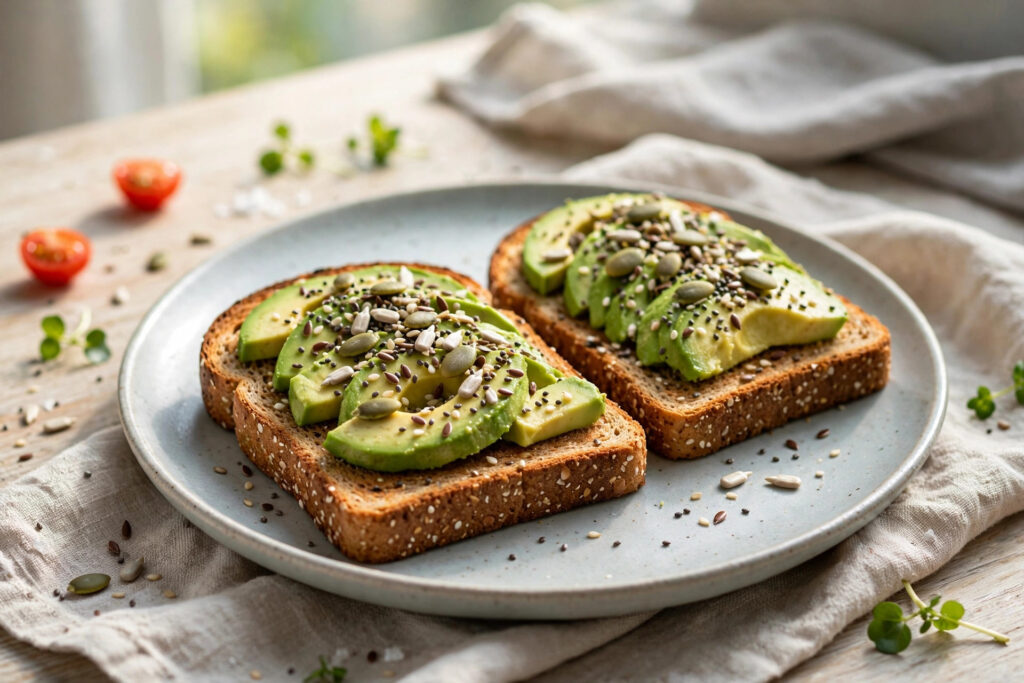
- Seeds on top or inside (sunflower, flaxseed) are a bonus, not a requirement
The best loaf is the one with the fewest surprises. Real wholemeal bread doesn’t need colouring, and it doesn’t need a paragraph of additives either.
Frequently asked questions
Is brown bread good for weight loss?
It helps, but it’s not magic. The extra fibre keeps you fuller for longer, so you naturally eat a little less through the morning. Pair it with protein — eggs, peanut butter, cheese — and it works even better.
Can diabetics eat white bread?
An occasional small portion is possible, especially paired with protein or fibre to slow the spike — but wholegrain is the better everyday choice for blood sugar control. Check with your doctor or dietitian for personal advice.
Is multigrain bread healthier than brown bread?
Not automatically. Multigrain just means several grains were used — they can all be refined. A true 100% wholegrain brown loaf beats a refined multigrain one every time. Read the first ingredient.
Does toasting change the nutrition?
Barely. Toasting doesn’t add or remove meaningful nutrients — it just changes texture and flavour. One tip from food safety experts: aim for golden, not dark brown, since very dark toast forms more acrylamide, a chemical worth keeping low.
The bottom line
Real wholegrain brown bread beats white bread on fibre, nutrients, blood sugar and staying power. But brown colour alone is a marketing trick — flip the loaf over and read the ingredients before you believe it.
And white bread isn’t poison. Keep it as an occasional choice, pair it with something substantial, and save the everyday slot for the real wholegrain loaf. The healthiest bread is the one whose label has nothing to hide.