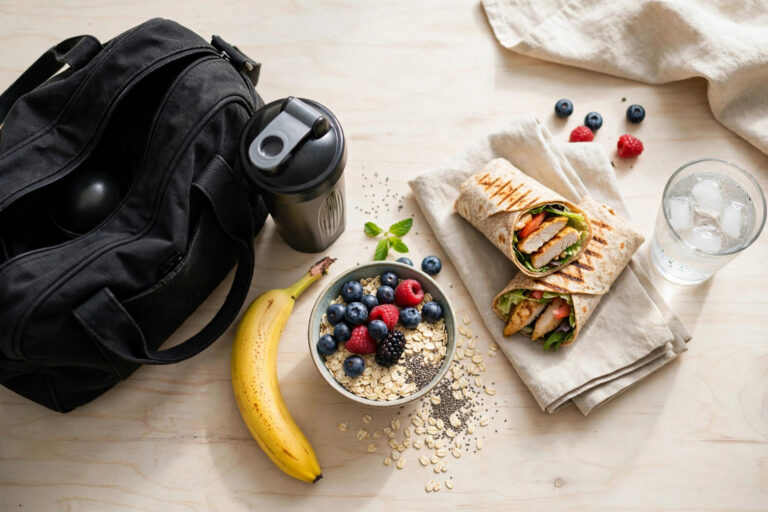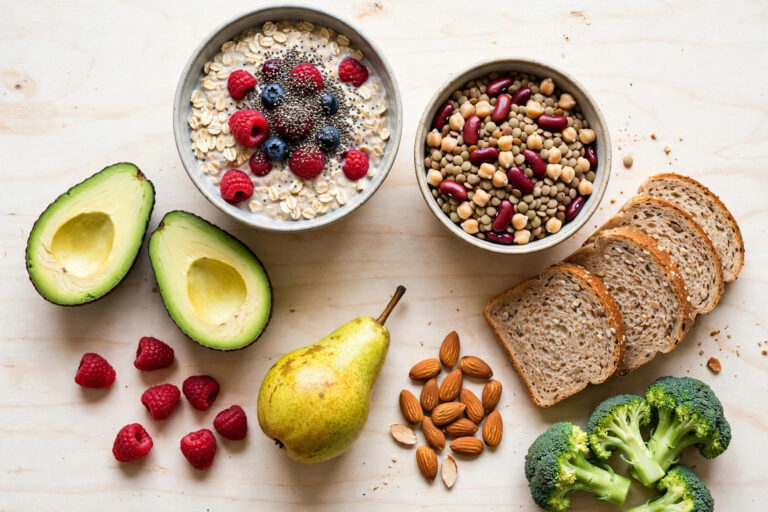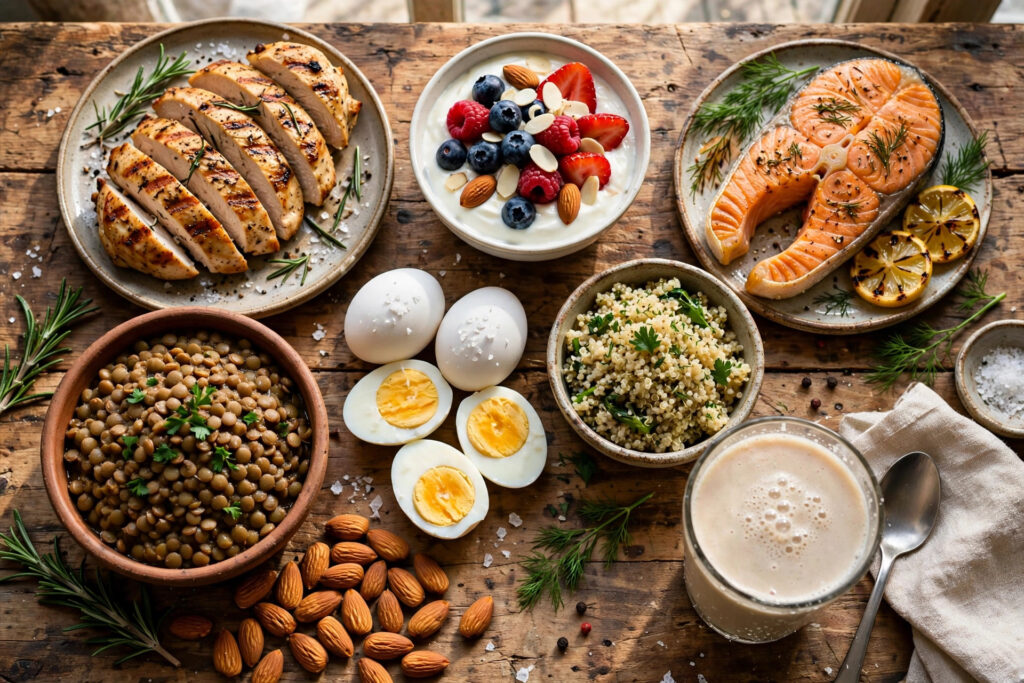
You show up, you lift, you sweat — and still the mirror barely changes. Sound familiar? The missing piece is usually not effort. It is food. Training sends the signal to grow, but your meals supply the raw material. Eat too little protein or too few calories, and even the best workout plan runs on empty.
This guide walks you through the best foods for muscle gain — the protein-rich staples, the plant-based options, the carbs and fats that keep everything working — plus how much you actually need and the mistakes that quietly stall progress.
Why Your Food Matters as Much as Your Workout
Every strength session creates tiny tears in your muscle fibres. That sounds bad, but it is exactly how growth starts. Over the next day or two, your body repairs those fibres and builds them back slightly thicker and stronger. This repair process runs on amino acids — the building blocks inside protein.
Think of it this way: your workout is the architect’s drawing, and protein is the bricks. Without enough bricks, the building never rises. And without enough total calories, your body burns protein for energy instead of using it for repair. Research is consistent on this point: protein supports muscle growth best when it is paired with resistance training and enough overall food (International Society of Sports Nutrition, 2017).
If you train regularly, a diet for gym-goers built around whole foods will do far more for your physique than any shortcut.
How Much Protein Do You Really Need?
The International Society of Sports Nutrition’s position stand (Jäger et al., 2017) recommends that exercising individuals aiming to build muscle eat 1.4–2.0 grams of protein per kilogram of body weight per day. That is more than the basic 0.8 g/kg minimum set for sedentary adults, because training raises your demand.
A quick way to find your number:
- 60 kg body weight → about 84–120 g of protein per day
- 70 kg body weight → about 98–140 g of protein per day
- 80 kg body weight → about 112–160 g of protein per day
- 90 kg body weight → about 126–180 g of protein per day
Two details matter as much as the total. First, spread your protein across the day — roughly 20–40 g per meal every 3–4 hours stimulates muscle building better than one giant protein-heavy dinner. Second, you need a small calorie surplus (around 250–500 extra calories a day) so your body has the energy to build new tissue rather than just maintain itself.
For everyday high-protein options beyond this list, see our guide to the best sources of protein.
The Best Animal-Based Foods for Muscle Gain
Animal foods are the most straightforward muscle builders because they are “complete” proteins — they contain all nine essential amino acids your body cannot make itself. They are also naturally rich in leucine, the amino acid that switches on muscle protein synthesis, according to Harvard’s Nutrition Source.
Chicken breast is the classic for a reason: huge protein, almost no fat, and it fits into almost any meal. Grill a batch at the start of the week and your lunches are sorted for days.
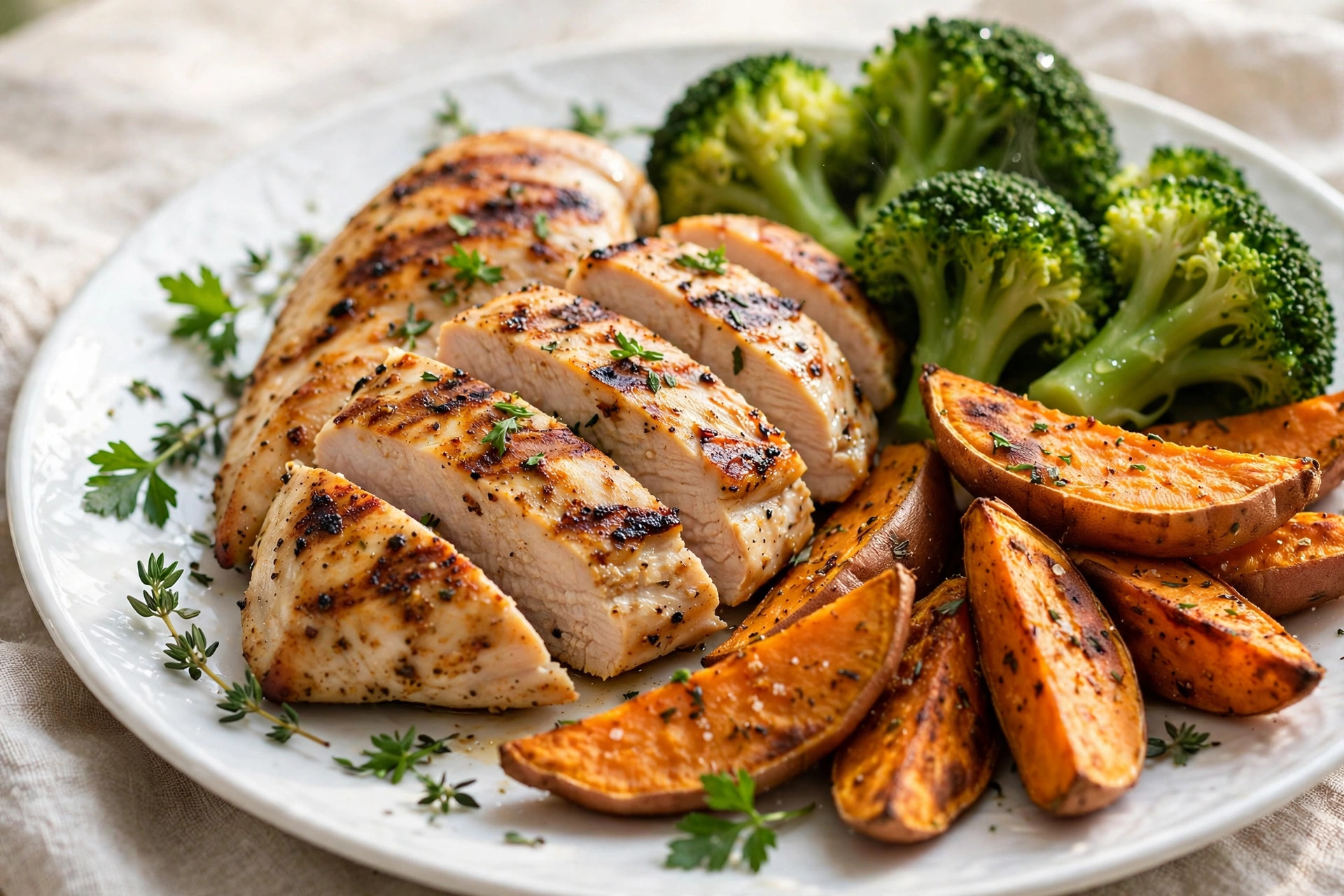
Here is how the top animal-based options compare (protein values from the USDA FoodData Central):
| Food | Typical serving | Protein (approx.) |
|---|---|---|
| Chicken breast | 100 g cooked | 31 g |
| Lean beef | 100 g cooked | 26 g |
| Tuna (canned in water) | 100 g | 25 g |
| Salmon | 100 g cooked | 22 g |
| Greek yogurt | 170 g pot | 17 g |
| Eggs | 2 large | 12 g |
| Cottage cheese | 100 g | 11 g |
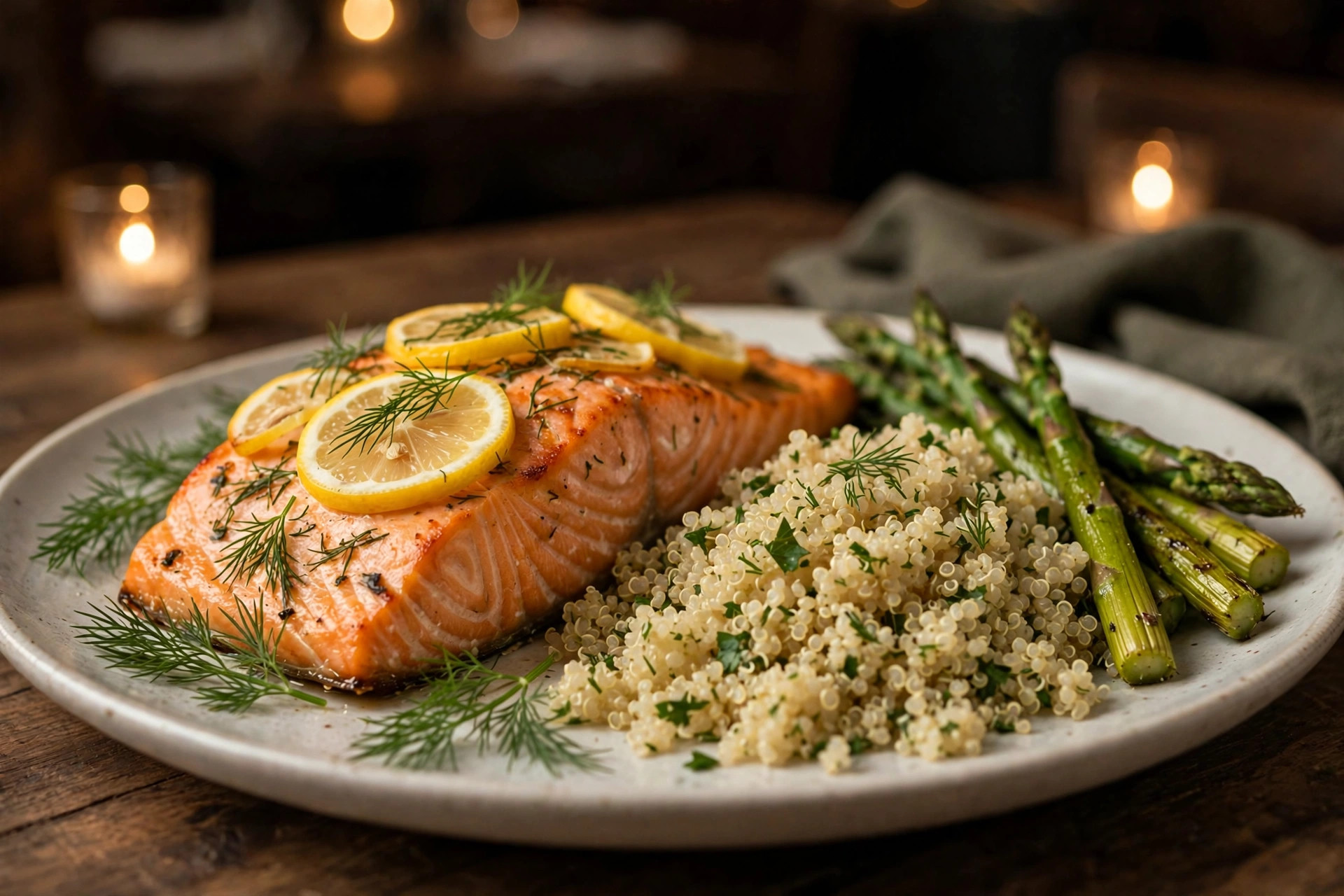
Fatty fish like salmon earn a double mention: protein plus omega-3 fats, which support recovery after hard sessions. Bake it with lemon and you have dinner in twenty minutes.
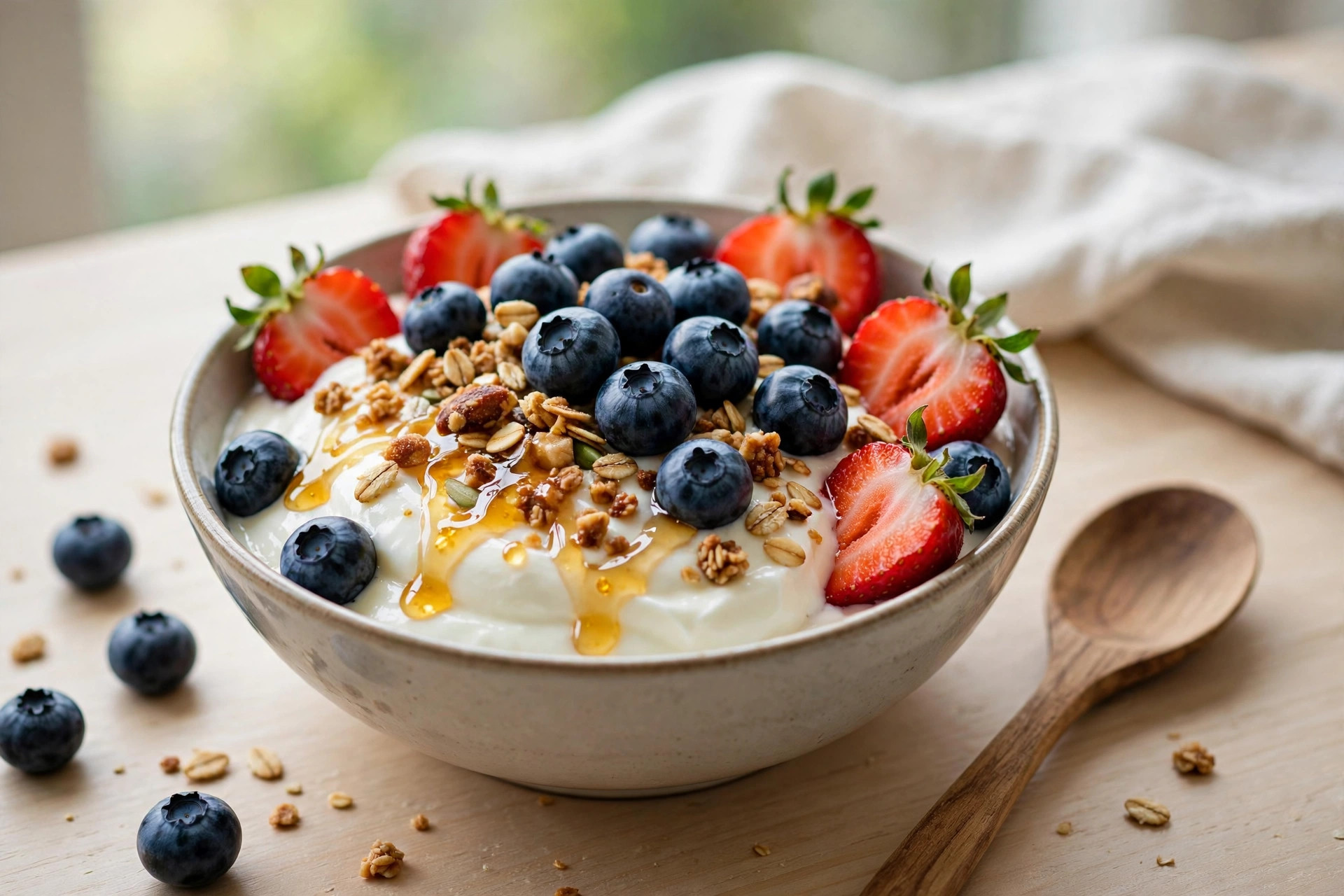
Do not overlook dairy. Greek yogurt and cottage cheese are portable, cheap, and high in casein — a slow-digesting protein that feeds your muscles for hours. A bowl of Greek yogurt with berries makes an ideal evening snack, especially since a little protein before bed supports overnight recovery.
The Best Plant-Based Foods for Muscle Gain
Vegetarians and vegans can absolutely build muscle — it just takes a little more planning. Most plant proteins are “incomplete,” meaning they lack one or more essential amino acids, but eating a variety of them through the day covers all your bases, and soy foods like tofu and tempeh are complete on their own.
Your plant-powered starting lineup:
Lentils are the workhorse — a cup of cooked lentils gives you around 18 g of protein plus a hefty dose of fibre and iron. Tofu and tempeh (both from soybeans) pack 8–19 g per 100 g and soak up whatever flavours you cook them with. Chickpeas, black beans, and kidney beans pull similar weight in curries, chilli, and salads. Quinoa is the rare grain that is also a complete protein, while nuts, seeds, and peanut butter add protein alongside the calories you need for a surplus.
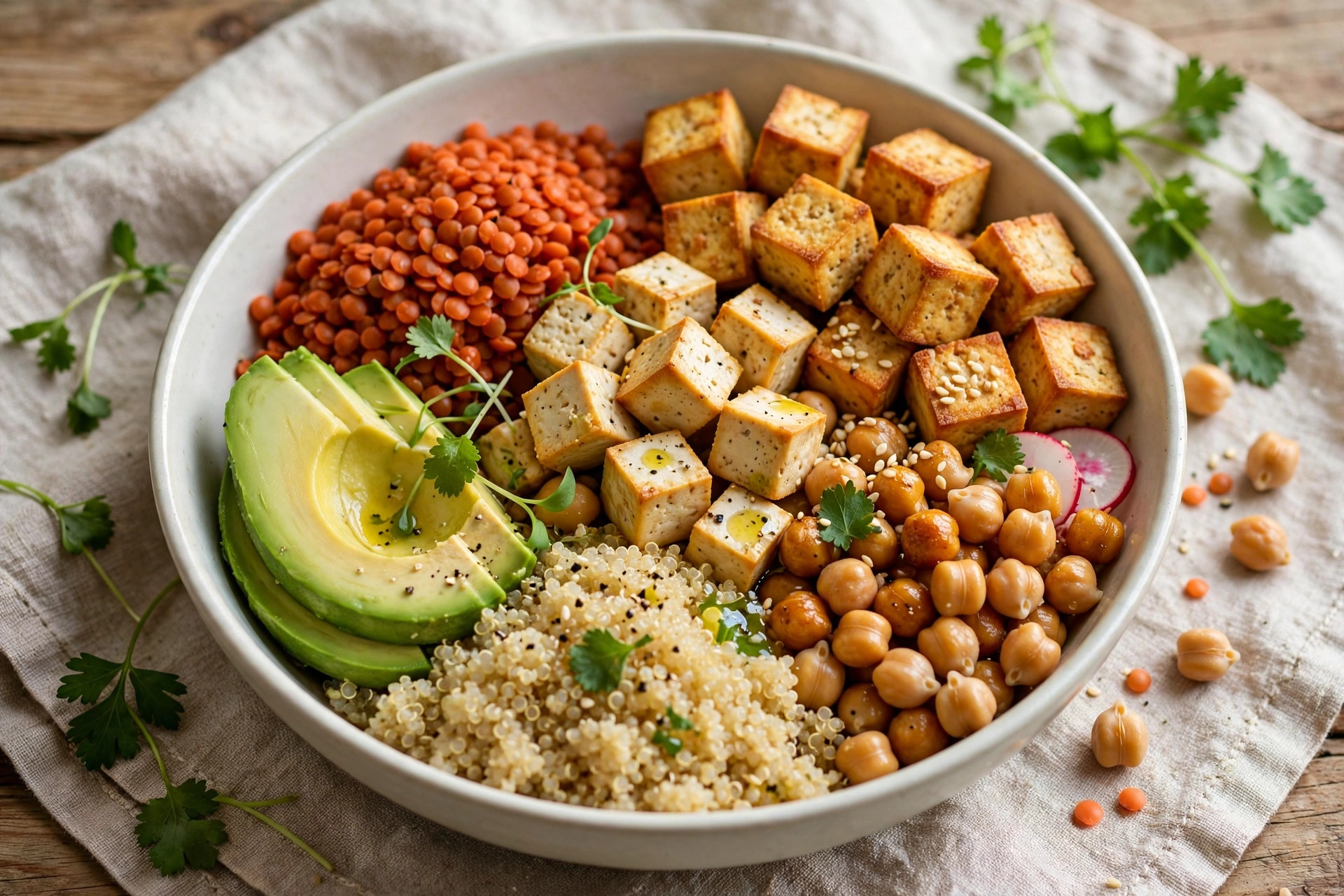
The practical trick is pairing: rice with beans, hummus with whole-grain bread, or lentil soup with a handful of seeds. You do not need to combine them in a single meal — a varied day does the job, as Harvard’s protein researchers note.
Do Not Forget Carbs and Fats
Protein gets the glory, but carbs and fats do essential supporting work. Skip them and your progress slows even with perfect protein.
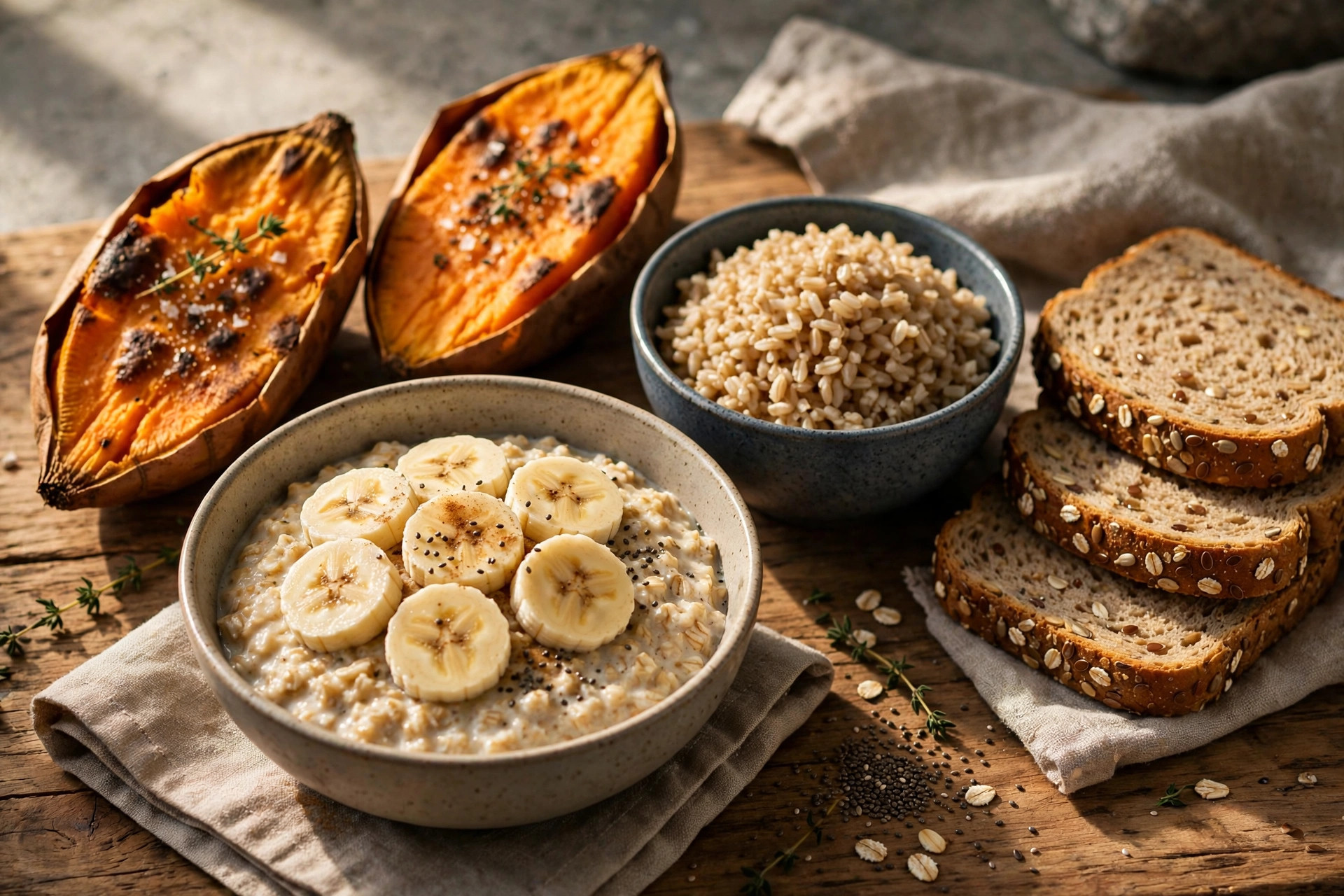
Carbohydrates are your training fuel. They refill glycogen — the energy stored in your muscles — so you can lift heavier next session. Good choices include:
- Oats, brown rice, and quinoa
- Sweet potatoes and regular potatoes
- Whole-grain bread and pasta
- Bananas and other fruit
Eating some carbs around your workout is smart strategy — our piece on what to eat before and after your workout breaks down the timing in detail.
Healthy fats matter for hormones, including testosterone, which plays a role in muscle growth. Add olive oil to salads, snack on almonds and walnuts, eat avocado, and keep fatty fish in the rotation. Fats are calorie-dense, which also makes them genuinely useful when you are struggling to eat enough to grow.
5 Mistakes That Stop Your Muscles Growing
- Eating too little overall. Protein alone cannot build muscle in a calorie deficit. If your weight never moves, add 200–300 calories a day and reassess after two weeks.
- Saving all your protein for dinner. Muscle building runs best on protein spread across 3–5 meals. A protein-light breakfast is a wasted opportunity.
- Training without a plan. Nutrition supports growth, but progressive resistance training — gradually lifting more over time — is the actual trigger. Food without training just adds body fat.
- Relying on supplements. Protein powder is convenient, not magical. Whole foods should supply the bulk of your intake; use powder only to fill gaps.
- Quitting too early. Noticeable muscle growth typically takes 8–12 weeks of consistent eating and training. The people who grow are the ones who keep going.
Your Muscle-Gain Questions, Answered
Do I need protein powder to build muscle?
No. Most people can hit their targets with eggs, chicken, fish, dairy, lentils, tofu, and beans. Powder is simply convenient — useful on busy days or when your appetite cannot keep up with your calorie goal, but never required.
Can vegetarians build muscle as well as meat-eaters?
Yes, when total protein and calories are matched. Studies show plant-based eaters gain similar muscle as long as they eat enough protein from varied sources and train hard. Soy foods, lentils, and quinoa should be staples.
Should I eat protein right after my workout?
It helps, but the old “30-minute window” is overstated. What matters most is your total daily protein and having a protein-containing meal within a few hours of training. A regular dinner after an evening session does the job.
Will eating more protein alone build muscle?
Not without training. Extra protein without resistance exercise mostly gets used as energy or stored. The formula is simple: train hard, eat enough protein and calories, sleep well, repeat.
This article is for general information only and is not medical advice. If you have kidney disease, diabetes, or any health condition — or you are considering a major diet change — speak to a doctor or registered dietitian first.