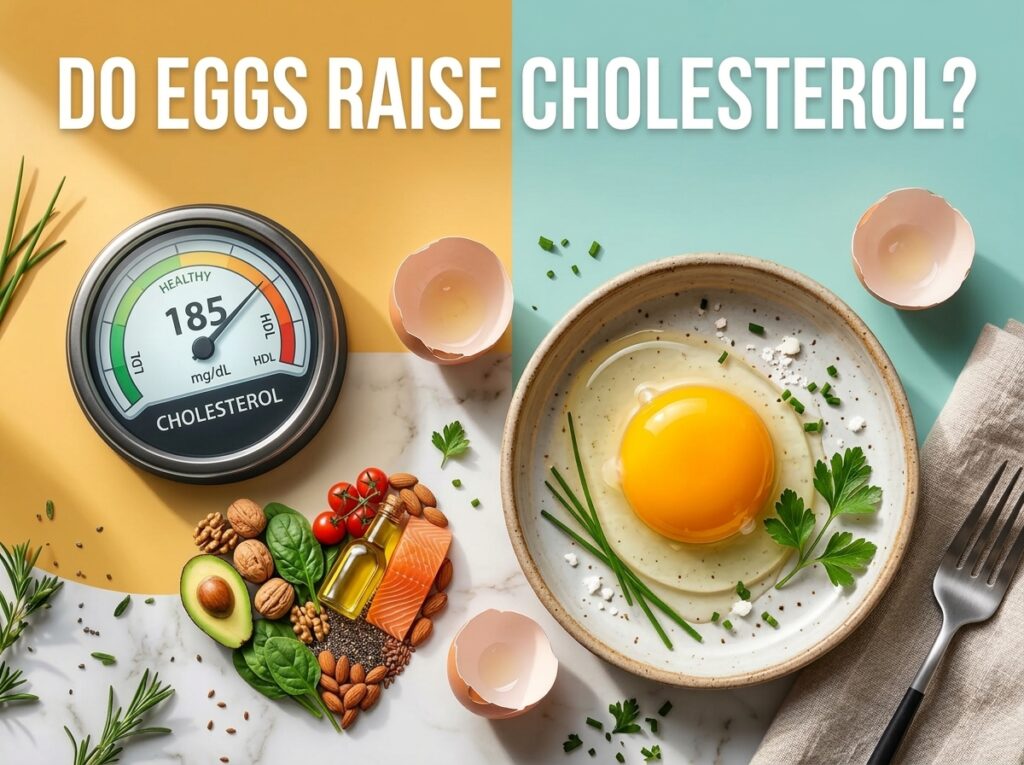
Your doctor mentions the word “cholesterol,” and suddenly your morning omelette feels like a guilty secret. You grew up hearing that eggs are packed with cholesterol and you should avoid them. Then you scroll online and find articles saying eggs are perfectly fine. So which is it? The truth is simpler and less scary than most headlines make it sound. Let’s sort through the noise together.
The Short Answer — Do Eggs Raise Cholesterol?
For the vast majority of people, eating eggs does not meaningfully raise blood cholesterol levels. That might feel surprising if you’ve spent years carefully avoiding the yolk, but the science has shifted quite a bit over the last two decades.
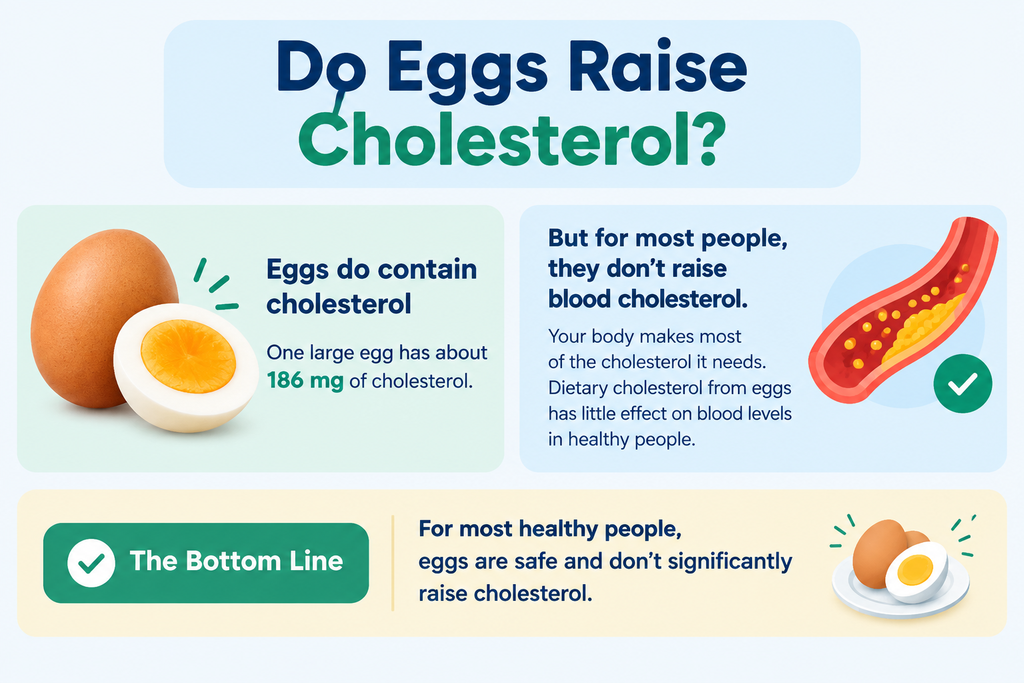
Here’s the key distinction most people miss: the cholesterol in your food and the cholesterol in your blood are not the same thing. An egg yolk contains about 186 milligrams of dietary cholesterol. That sounds like a lot on paper. But your body doesn’t just absorb everything you eat and pump it straight into your arteries. It’s far more clever than that.
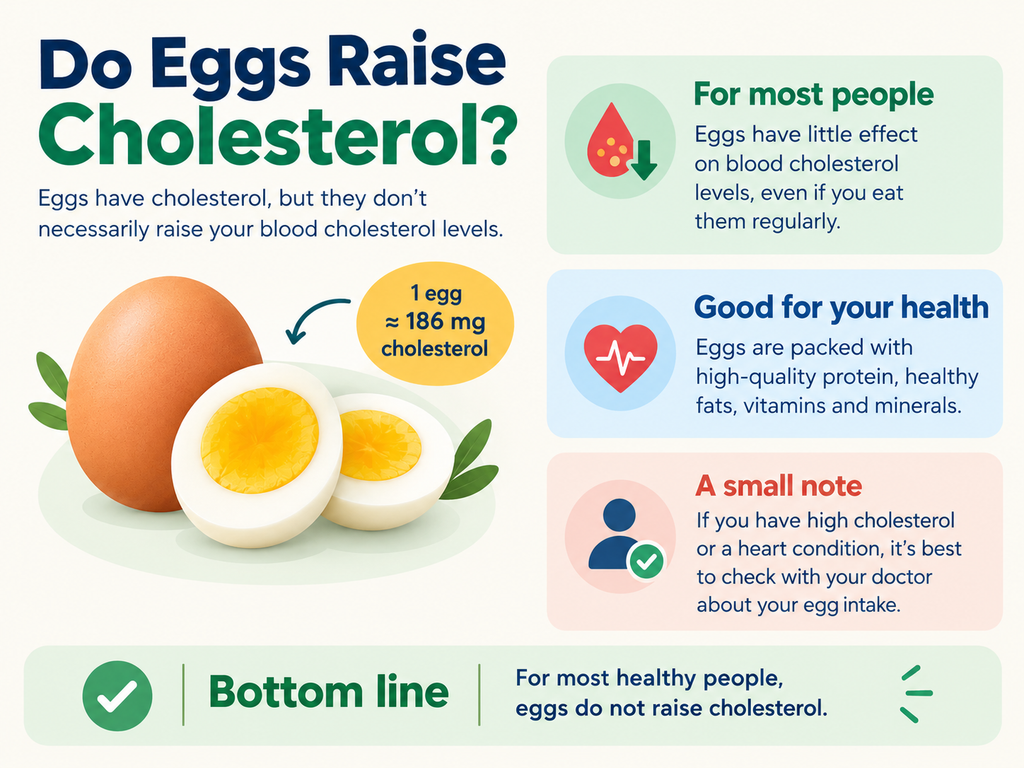
Most healthy adults can eat one to two eggs a day without any negative effect on their cholesterol numbers. If you want a deeper look at daily egg habits and what the research says about quantity, this guide on how many eggs per day is safe breaks it down clearly.
Why Eggs Got a Bad Reputation in the First Place
To understand why so many people still fear eggs, you have to go back to the 1960s and 1970s. Researchers at the time noticed that countries where people ate more fat and cholesterol also had higher rates of heart disease. The logic seemed straightforward: dietary cholesterol goes in, blood cholesterol goes up, arteries get clogged.
Based on that thinking, health authorities set a daily cholesterol limit of 300 milligrams. Since a single large egg yolk carries roughly 186 milligrams, eating two eggs would put you well over the limit. The message was clear — cut back on eggs, and your heart will thank you.
The problem? That early research didn’t separate dietary cholesterol from saturated fat. Foods high in cholesterol — like eggs, red meat, and full-fat dairy — also tend to be high in saturated fat. It turned out that saturated fat was the real troublemaker, not the cholesterol in the food itself. But by the time scientists figured that out, the “eggs are bad” message had already sunk deep into public consciousness.
Old habits die hard, and old nutrition advice dies even harder. Even though the 2020–2025 Dietary Guidelines for Americans quietly dropped the strict 300-milligram cholesterol cap, plenty of people still treat eggs like a health hazard. The guidelines now emphasize overall eating patterns rather than fixating on single nutrients, which is a much more sensible approach.
How Your Body Actually Handles Cholesterol
This is where things get genuinely interesting, and it’s the part most articles gloss over with a single sentence.
Your liver is the real cholesterol factory in your body. It produces roughly 80% of the cholesterol floating around in your bloodstream. The food you eat accounts for only about 20%. Your liver doesn’t just blindly churn out a fixed amount every day, either. It adjusts based on what you eat.
Think of it like a thermostat in your house. When the room gets warm, the heater backs off. When it cools down, the heater kicks in. Your liver works the same way with cholesterol. When you eat more cholesterol-rich foods like eggs, your liver dials down its own production. When you eat less, it ramps up. This feedback loop is why dietary cholesterol has a much smaller impact on blood cholesterol than most people assume.
Here’s a practical example that shows how this plays out in real life. Say you eat a three-egg breakfast on Sunday morning. Your liver senses the extra dietary cholesterol and temporarily slows its own output. By Monday, your blood cholesterol levels are essentially back to where they were before. The system self-corrects. It’s not perfect — genetics, age, and overall diet all influence how well this balancing act works — but for most people, it works well enough that an egg or two a day simply doesn’t move the needle.
The Difference Between LDL and HDL
When your doctor checks your cholesterol, they’re not looking at one number. They’re looking at a panel that includes LDL (low-density lipoprotein) and HDL (high-density lipoprotein).
LDL is the type people call “bad” cholesterol because high levels can lead to plaque buildup in your arteries. HDL is the “good” kind because it actually helps carry cholesterol away from your arteries and back to your liver for processing.
Here’s what’s fascinating about eggs specifically: research shows that when eggs do affect cholesterol levels, they tend to raise both LDL and HDL. The ratio between the two — which many cardiologists consider more important than either number alone — often stays roughly the same. Some studies even suggest that eggs shift LDL particles from small and dense (the more dangerous kind) to large and fluffy (the less harmful kind), though this area of research is still evolving and not yet settled.
What the Latest Research Actually Shows
The scientific consensus on eggs has shifted dramatically, and it’s worth looking at some of the bigger studies to understand why.
A large-scale study from Harvard’s T.H. Chan School of Public Health followed over 100,000 men and women for more than a decade. The researchers found no significant link between eating up to one egg per day and an increased risk of heart disease or stroke in healthy individuals. You can explore their full findings on Harvard’s Nutrition Source page about eggs.
The American Heart Association also updated its stance in recent years. While the AHA still recommends being mindful of overall dietary patterns, it no longer singles out eggs as a food to avoid. Their current science advisory acknowledges that dietary cholesterol has a relatively modest effect on blood cholesterol for most people. The AHA’s 2019 science advisory on dietary cholesterol lays out the details for anyone who wants to read the primary source.
A 2020 meta-analysis published in the British Medical Journal pooled data from multiple studies and reached a similar conclusion: moderate egg consumption of up to one egg daily was not associated with a higher risk of cardiovascular disease.
The pattern is consistent across most of the high-quality research. Eggs, in reasonable amounts, are not the cholesterol villain they were once made out to be.
When You Should Be More Careful With Eggs
Now, here’s where I want to be completely honest with you, because the “eggs are fine” message doesn’t apply equally to everyone. Nutrition is deeply personal, and there are real situations where you genuinely should pay closer attention.
If you have type 2 diabetes, some studies suggest that higher egg consumption may be associated with an increased risk of heart disease. The data isn’t entirely consistent — different studies show different results, and researchers are still debating why this group might respond differently — but it’s a signal worth taking seriously. If you’re diabetic, talk to your doctor about what egg intake makes sense for your specific situation rather than relying on general internet advice.
People with a genetic condition called familial hypercholesterolemia also need to be more cautious. This condition causes very high LDL cholesterol levels regardless of diet, and adding extra dietary cholesterol on top of that can make an already difficult situation worse.
If you already have established heart disease or your LDL numbers are stubbornly high despite medication, your doctor may recommend limiting dietary cholesterol more strictly. In that case, you might want to explore foods to avoid with high cholesterol to get a fuller picture of what deserves your attention.
⚠️ Medical Disclaimer: This article provides general nutritional information and is not a substitute for professional medical advice. If you have high cholesterol, heart disease, diabetes, or any other health condition, please consult your doctor or a registered dietitian before making changes to your diet. Your individual needs may differ significantly from general guidelines.
What Matters More Than Eggs for Your Cholesterol
If you’re worried about your cholesterol levels, fixating on eggs is a bit like worrying about a dripping tap while your bathtub is overflowing. The bigger picture matters far more.
Saturated fat and trans fat have a much stronger effect on your blood cholesterol than dietary cholesterol does. Foods like fatty cuts of red meat, processed meats, butter, full-fat cheese, and commercially baked goods will move your cholesterol numbers far more than a couple of eggs ever will. Understanding the real difference between healthy and unhealthy fats can help you make smarter choices across your entire diet, not just at breakfast.
Fiber is another big player that most people overlook. Soluble fiber — the kind found in oats, beans, lentils, apples, and barley — actually binds to cholesterol in your digestive system and helps drag it out of your body before it can enter your bloodstream. Most adults don’t get nearly enough fiber, and boosting your intake can do more for your cholesterol than cutting out eggs ever could.
Your overall eating pattern matters more than any single food. A diet rich in vegetables, fruits, whole grains, lean proteins, and healthy fats will support healthy cholesterol levels far better than obsessing over whether you had an egg on Tuesday morning. If you’re curious about how eggs fit into a broader daily routine, this piece on whether you can eat eggs every day puts things in helpful context.
Physical activity, stress management, sleep quality, and not smoking all play significant roles in your cholesterol profile too. Cholesterol is a whole-lifestyle conversation, not a single-food conversation.
Smart Ways to Enjoy Eggs Without Worrying
If you love eggs and your doctor hasn’t told you to avoid them, a few simple habits can help you enjoy them without second-guessing yourself.
Stick to one or two eggs a day as a general guideline. That puts you well within the range that research considers safe for most healthy adults. If you want to bulk up your omelette without adding more yolks, toss in an extra egg white or two. Egg whites contain zero cholesterol and plenty of protein, so they’re a great way to add volume without adding fat.
Pay close attention to what you eat alongside your eggs. A couple of eggs fried in butter, served with bacon and white toast, is a very different cholesterol proposition than two boiled eggs with spinach and whole-grain toast. The saturated fat in the butter and bacon will affect your numbers far more than the eggs themselves. Eggs are one of the best sources of protein you can add to a balanced meal, so pair them with foods that support your overall goals.
Cooking method matters less than people think, but it’s still worth a mention. Boiling, poaching, and scrambling with a small amount of olive oil are all perfectly fine choices. Deep-frying eggs or cooking them in large amounts of butter adds unnecessary saturated fat to the equation. The egg itself isn’t the problem — it’s the butter swimming in the pan.
Frequently Asked Questions
How many eggs can I eat a day if I have high cholesterol?
If you’ve been diagnosed with high cholesterol, most current guidelines suggest limiting egg yolks to about three to four per week. That said, this can vary depending on your overall diet, your medications, and how your body responds to dietary cholesterol. Some people are “hyper-responders” whose blood cholesterol is more sensitive to what they eat, while others barely react at all. Your doctor can help you figure out where you fall on that spectrum. The most important step is to look at your total diet rather than just your egg intake.
Are egg whites better than whole eggs for cholesterol?
Egg whites contain no cholesterol and no fat, so they won’t affect your cholesterol levels at all. If you’re on a strict cholesterol-lowering plan, using mostly egg whites with one whole egg is a smart compromise. You get the protein from the whites and the vitamins, minerals, and healthy fats from the single yolk. That said, for most healthy people, the cholesterol in a whole egg is not a reason to skip the yolk entirely. The yolk is where you’ll find vitamin D, choline, lutein, and most of the egg’s nutritional value.
Does the way I cook eggs affect my cholesterol?
The egg itself doesn’t change much no matter how you cook it. A boiled egg and a fried egg contain roughly the same amount of cholesterol. What does change is the fat you add during cooking. Frying eggs in a generous amount of butter or bacon grease adds saturated fat, which is the real driver of higher LDL cholesterol. Poaching, boiling, or scrambling with a light spray of olive oil keeps the added fat minimal. So it’s not the egg you need to worry about — it’s what’s sizzling in the pan around it.
Can eating eggs every day cause heart disease?
Based on the current body of evidence, eating one egg a day does not increase heart disease risk in healthy individuals. The large Harvard study mentioned earlier tracked people for over a decade and found no connection between daily egg consumption and cardiovascular events. The key word here is “healthy.” If you have existing heart disease, diabetes, or a genetic cholesterol disorder, the advice may differ. Always consider your personal health context rather than applying a one-size-fits-all rule.
The fear of eggs is one of those nutrition myths that stuck around long after the science moved on. For most people, eggs are a nutrient-dense, affordable, and perfectly safe part of a balanced diet. They won’t sabotage your cholesterol, and they certainly don’t deserve the bad rap they’ve carried for decades.
Your best next step? If you haven’t had your cholesterol checked recently, schedule a simple blood test. Knowing your actual numbers — your LDL, HDL, and total cholesterol — gives you a real baseline to work from instead of guessing based on outdated advice. Once you have those numbers, you and your doctor can figure out what dietary changes actually matter for you. And if that plan includes a couple of eggs for breakfast, enjoy them without the guilt.


One response to “Do Eggs Raise Cholesterol? The Honest Answer”
[…] hypercholesterolaemia), ask your doctor for personal advice. We’ve gone deeper on this in do eggs raise cholesterol if you want the full […]