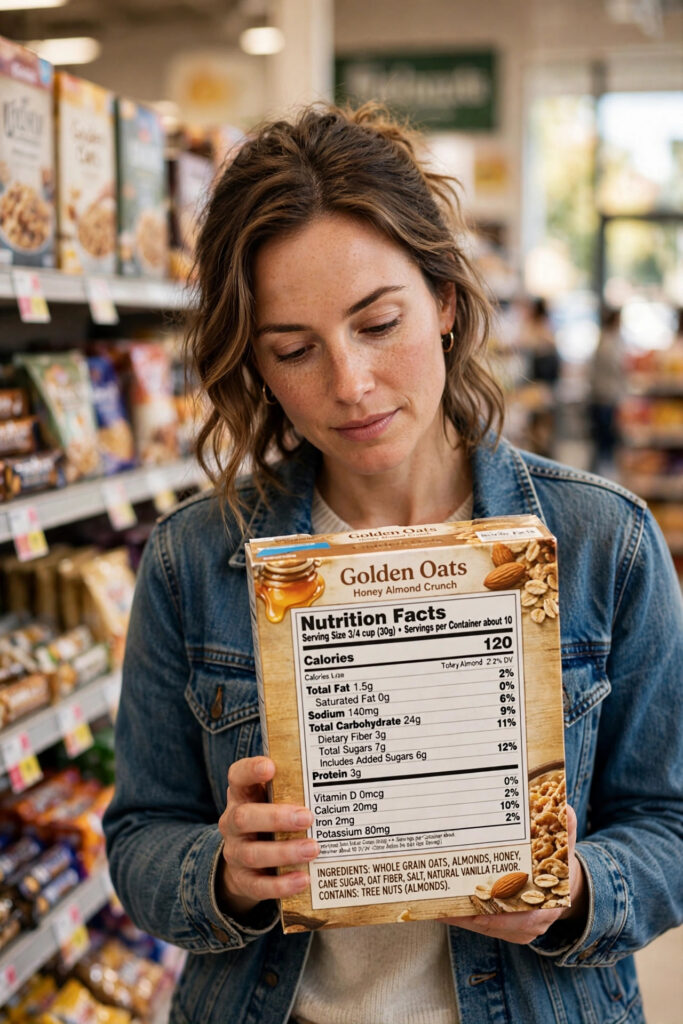
You have been there. You are standing in the supermarket aisle, box in one hand, squinting at a tiny grid of numbers on the back. Fat, saturates, sugars, salt — all per something. Per 100g? Per serving? And what does any of it actually mean for your health?
You are not alone. Most shoppers glance at labels but feel unsure what they are looking at, according to the British Nutrition Foundation (2024). Here is the good news: you do not need a nutrition degree. You need a simple routine and about sixty seconds. Once you know what to check first and what to ignore, it stops being a wall of numbers and becomes a cheat sheet.
Start with the serving size, not the calories
This is where nearly everyone goes wrong: they read the calories first, but every number hangs off the serving size at the top. Eat more than the listed serving and you get more of everything — calories, sugar, salt, all of it.
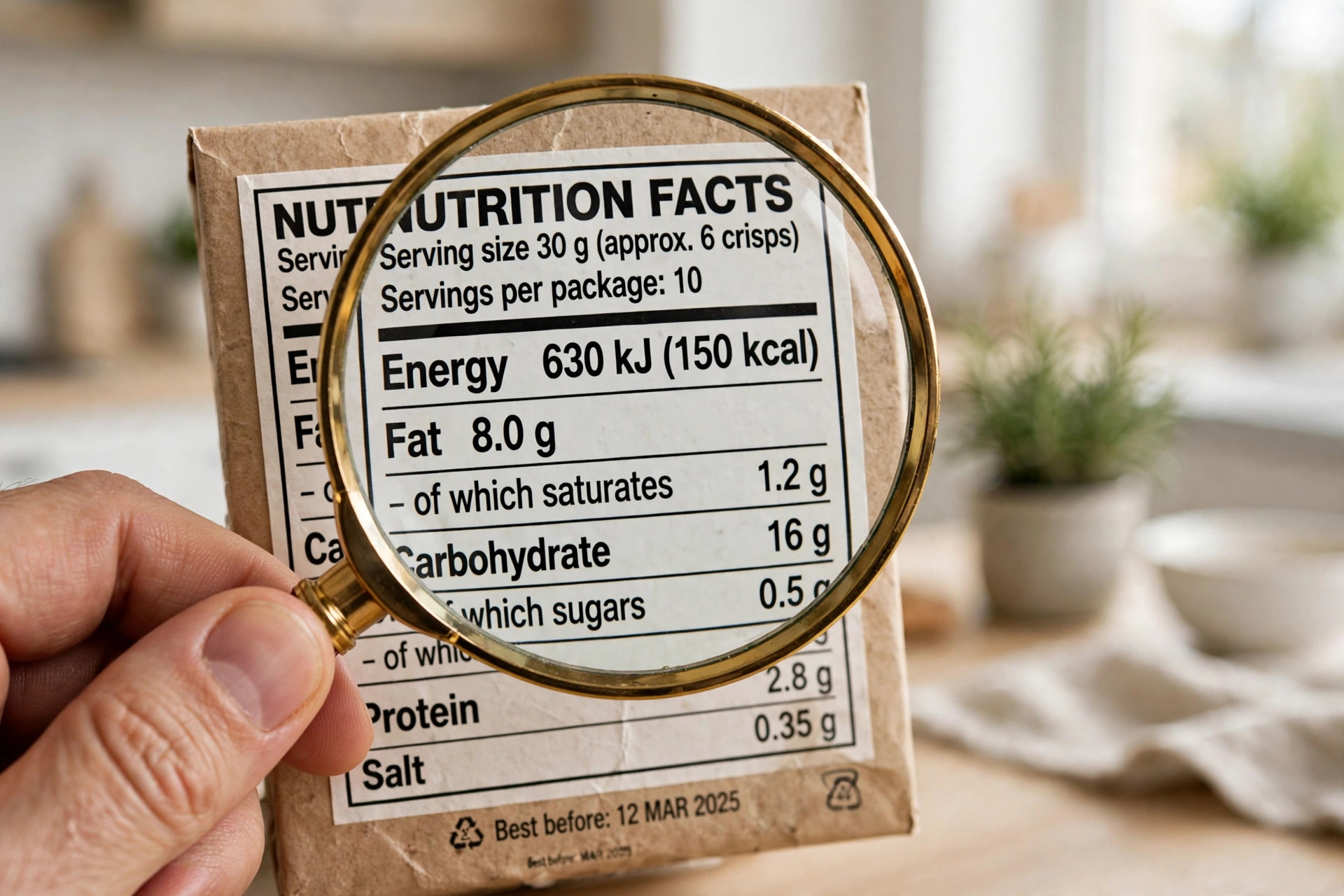
UK labels show nutrition per 100g (or per 100ml) and sometimes per portion. The per-100g column is your best friend when you compare two products, because it levels the playing field. A cereal that says “110 calories per serving” looks light until you notice the serving is 30g and you normally pour twice that.
So check what counts as a serving, then double the numbers if you eat double. Two biscuits means doubling every number. Simple, but it changes everything.
Calories: put the number in context
Calories tell you how much energy a serving gives you — useful, but on their own they say little about whether a food is good for you. A handful of nuts and a small chocolate bar can carry similar calories, yet they feed your body very differently.
Think of calories as the price tag and the rest of the label as what you get for your money. The NHS reference intake is about 2,000 calories a day for an average woman and 2,500 for an average man — guides, not personal targets. What matters more than the raw count is what those calories come with: fibre, protein and vitamins, or mostly sugar and salt.
Compare calories per 100g side by side — that single habit beats most of the tricks different “serving sizes” play.
The four numbers that matter most
If you learn only one part of the label, make it this: fat, saturates, sugars and salt. Most of us in the UK get too much of these and not enough fruit, vegetables and fibre, the NHS points out.
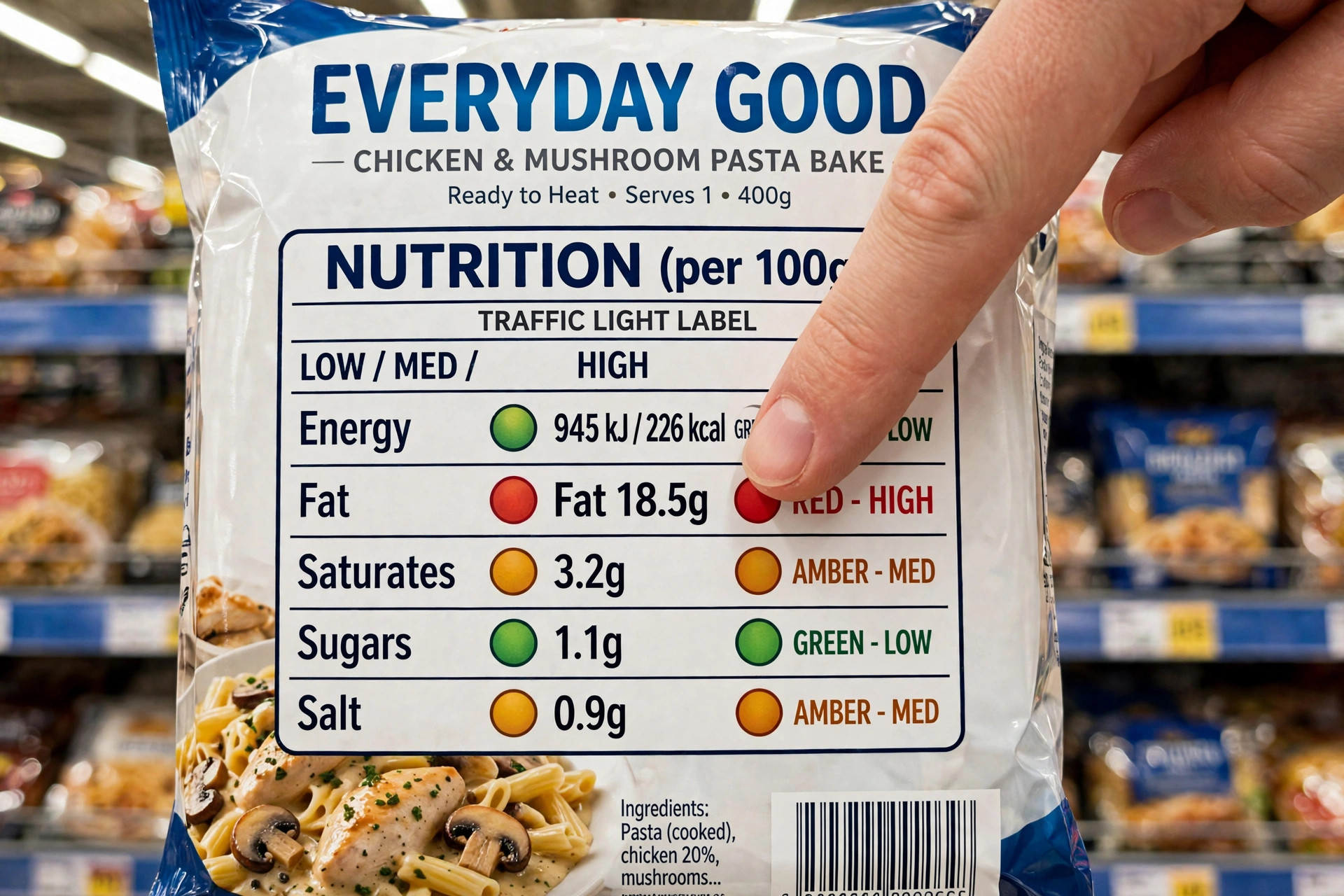
The NHS quick guide for judging any food per 100g:
| Nutrient | Low (green) | High (red) |
|---|---|---|
| Total fat | 3g or less | More than 17.5g |
| Saturated fat | 1.5g or less | More than 5g |
| Sugars | 5g or less | More than 22.5g |
| Salt | 0.3g or less | More than 1.5g |
Between low and high is amber — medium. One red dot is not a disaster: a cheese with a red for fat still has a place in your diet, just in smaller portions, less often. When choosing between two similar products, pick more greens and fewer reds. That one habit, repeated every shop, quietly reshapes your diet.
Watch salt especially — it hides in bread, soups, ready meals and sauces that do not even taste salty. And watch saturated fat if heart health is a concern; our guide to foods to avoid with high cholesterol shows where it hides most.
The HEART UK traffic-light guide is a handy one-page breakdown of these limits.
Read the ingredients list like a detective
The nutrition table tells you how much of each nutrient is in the food. The ingredients list tells you where it came from — and often tells a blunter story.
Ingredients must be listed in order of weight, heaviest first. If sugar (or one of its aliases) sits in the first three ingredients, the product is mostly sugar, whatever the front says. If the first ingredients are whole foods you recognise — oats, tomatoes, chickpeas — that is usually a good sign.
Sugar wears a lot of disguises. Scan for these:
- Words ending in “-ose”: fructose, glucose, dextrose, maltose, sucrose
- Syrups: glucose syrup, golden syrup, rice syrup, high-fructose corn syrup
- The “natural” ones: honey, agave nectar, maple syrup, fruit juice concentrate
Your body treats them all much the same way — the name does not make them healthier. And do not panic at every long word: ascorbic acid is just vitamin C and tocopherols are vitamin E. It is the hydrogenated oils, artificial colours and pile-ups of sugar aliases that deserve your suspicion.
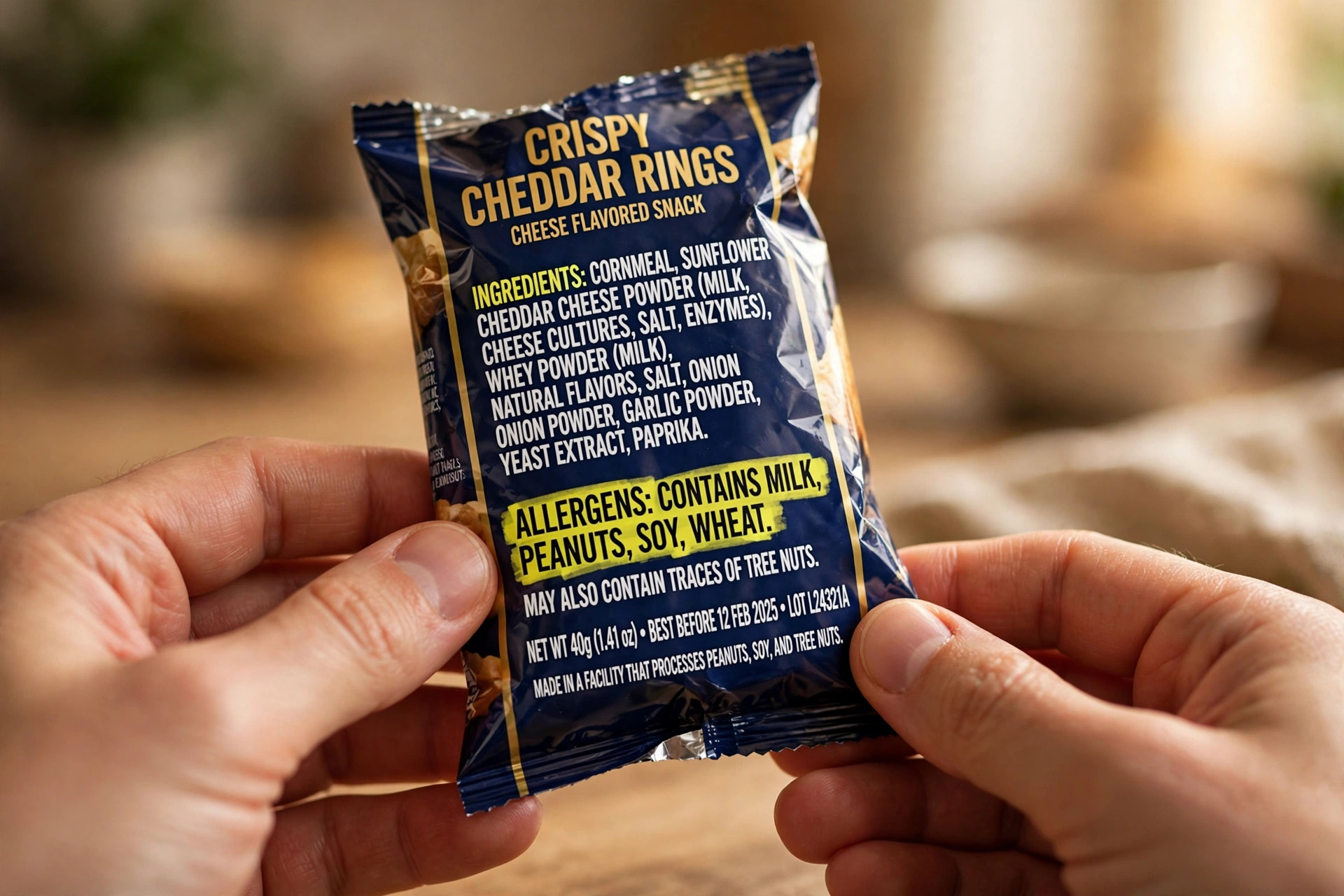
One more detail: the 14 major allergens — including milk, eggs, peanuts, soya, wheat and fish — must be emphasised in the ingredients list, usually in bold. If someone in your family has an allergy, this is the part of the label that matters most. The British Nutrition Foundation explains nutrition labels in more detail here.
Don’t trust the front of the pack
The front of the pack is advertising; the back is information. Never let the first decide without checking the second.
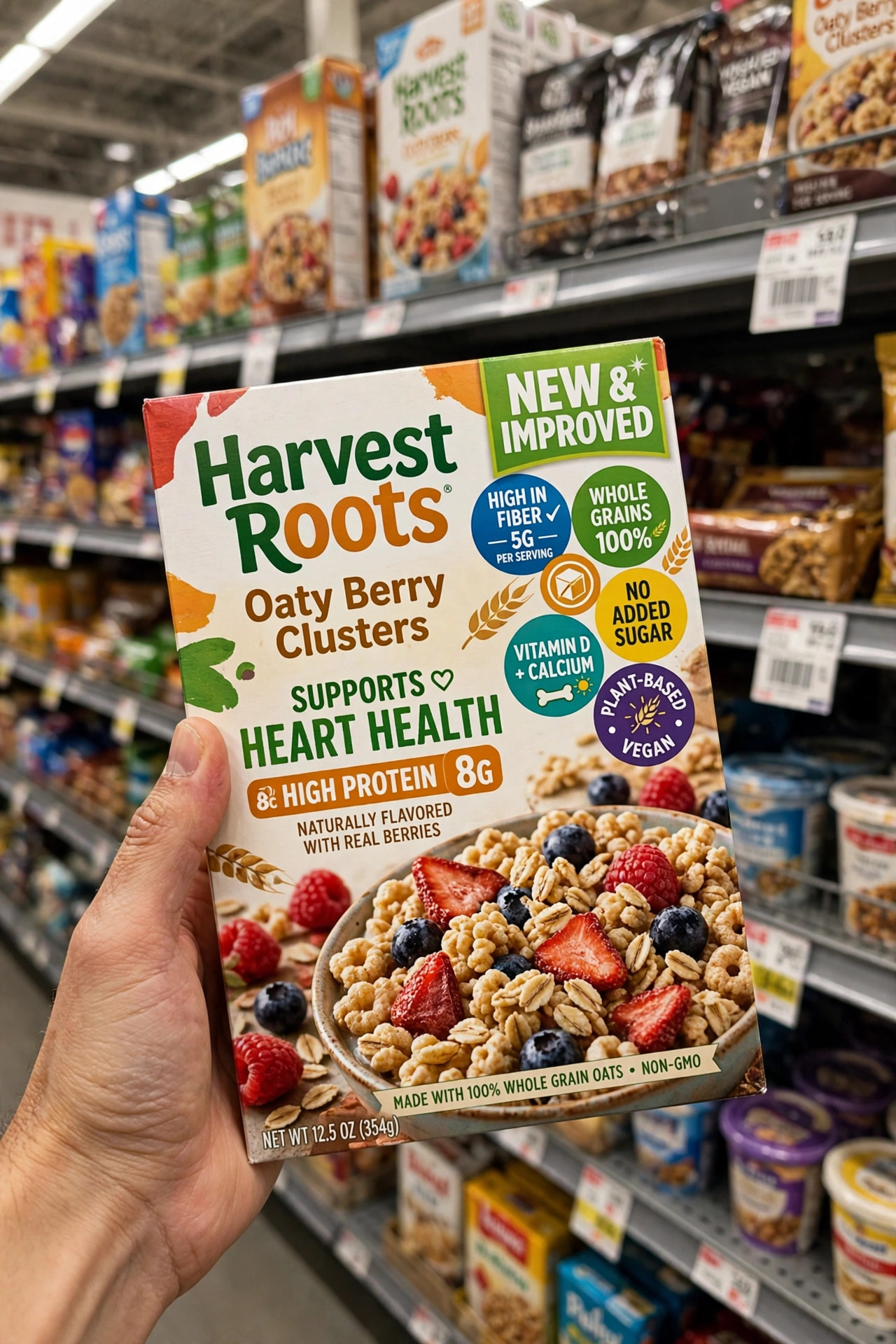
Some classic traps:
- “Low fat” often means extra sugar was added to keep the flavour. Check the sugars row before you celebrate.
- “No added sugar” does not mean sugar-free. Fruit juice, honey and dried fruit still count as sugars on the label.
- “Natural” or “wholesome” are not tightly regulated terms. A “natural” granola bar can still carry a red traffic light for sugar.
- “High in fibre” or “source of protein” can be true on a product that is also high in salt. A claim only describes one nutrient, so read the whole label.
None of this means every claim is a lie — many products genuinely earn their badges. But a claim is the start of your check, not the end of it. Flip the pack. Sixty seconds. Then decide.
Your 60-second label routine
Here is the whole skill in one routine — practise it on a few products this week and it becomes automatic.
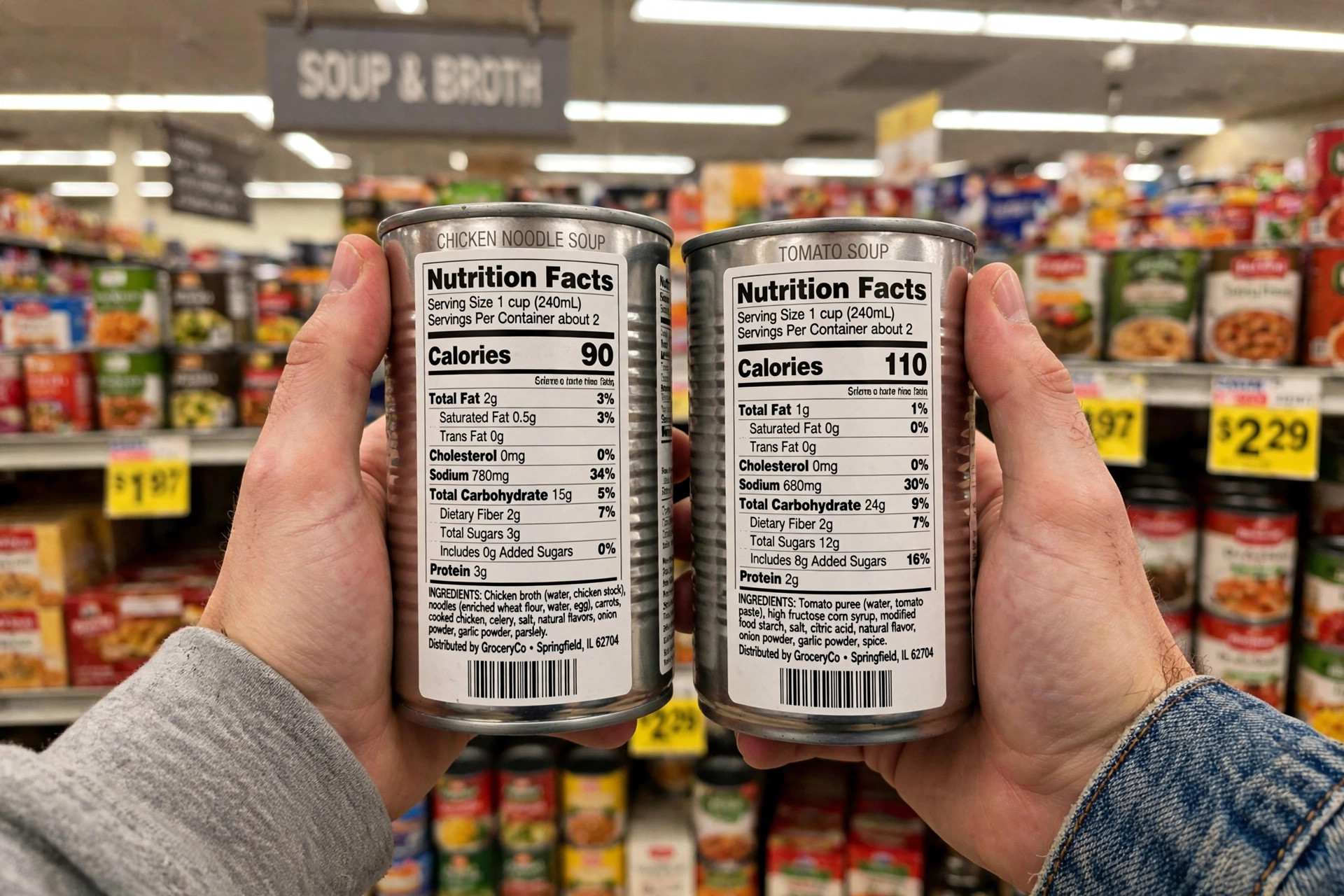
- Serving size. What counts as one portion — and how much will you actually eat? Double the numbers if you will eat double.
- Per-100g check. Compare across brands using the per-100g column, not the per-portion one.
- Traffic lights. Glance at the colours for fat, saturates, sugars and salt. More greens and ambers beats more reds.
- Ingredients. First three items should be real foods you recognise. Count the sugar aliases.
- Front claims. Enjoy the badges, then verify them on the back before the product goes in your basket.
Try a face-off: one cereal shows 8g of sugar per 100g with a green light and oats first; another shows 24g with a red light and glucose syrup near the top. Same aisle, same price, very different breakfast. That is a label read well.
Once comparing is a habit, you can apply it everywhere. For ideas on what to compare first, our best snacks for weight loss roundup is a good starting shelf.
A quick note: this article is general information to help you shop smarter, not medical advice. If you are managing diabetes, high blood pressure, kidney disease or any condition where specific nutrients matter, talk to your GP or a registered dietitian about your personal limits.
Reading a nutrition label is a small skill with an outsized payoff. Sixty seconds in the aisle today means better breakfasts and smarter swaps all year. Pick up the next thing in your basket and try the routine.