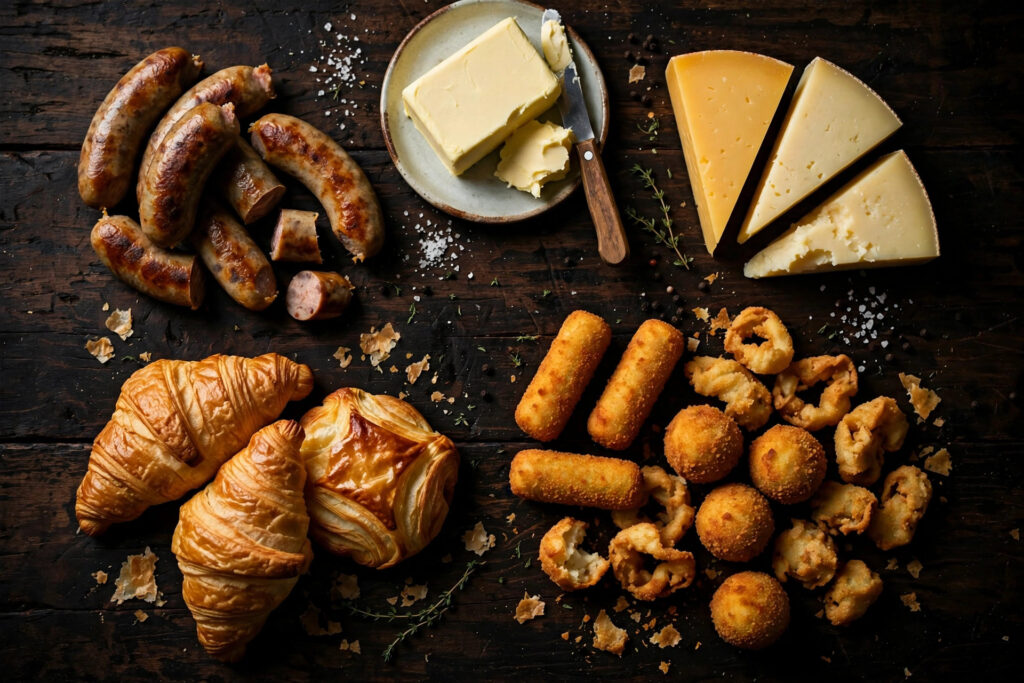
Got your blood test back and the word “cholesterol” is circled in red? You’re not alone — around half of UK adults have total cholesterol above the healthy limit. And the first thing most people ask is: what should I stop eating?
Here’s the honest answer, and it might surprise you. The cholesterol in food matters far less than most people think. What really moves your numbers is saturated fat and trans fat — because they push your liver to pump out more LDL, the “bad” cholesterol that clogs arteries. Cut those, and you’re doing the single most useful dietary thing for your cholesterol.
One important note before we go on: this article is general information, not medical advice. High cholesterol is a medical condition — don’t try to treat it with diet alone, and never stop prescribed medication because of something you read online. If your numbers are high, talk to your doctor about the full picture, including medicine, exercise and diet together.
The one rule that matters more than “cholesterol in food”
Your liver makes most of your blood cholesterol already. Eat a lot of saturated fat and two things go wrong: your liver makes more LDL, and it grows fewer receptors to clear it. More made, less cleared — that’s the double hit.
Trans fats are worse still — the artificial fats in some fried and packaged foods raise LDL while lowering HDL, your “good” cholesterol.
The old advice to fear egg yolks has mostly been retired: research shows dietary cholesterol has only a minimal effect on blood cholesterol for most people, which is why the US dietary guidelines dropped their old 300mg-a-day limit. As the British Heart Foundation puts it, cutting saturated fat matters far more than counting the cholesterol in food. (Simple version: olive oil, nuts and oily fish are the unsaturated fats to favour; butter, palm oil and processed snacks are the saturated and trans fats to limit.)
How much saturated fat is too much? UK guidelines say no more than 30g a day for men and 20g for women. Most of us eat more than that without realising — which brings us to where it’s hiding.
The worst offenders at a glance
| Food to cut back on | Why it raises cholesterol | Simple swap |
|---|---|---|
| Sausages, bacon, salami, fatty mince | Loaded with saturated fat (5–10g per 100g) | Skinless chicken, turkey, beans or lentils |
| Butter, ghee, lard | About 50% saturated fat; 1 tsp of butter has 5g | Olive or rapeseed oil, or an olive-oil spread |
| Whole milk, cheese, cream | Major everyday source of saturated fat | Semi-skimmed milk, natural yoghurt, lighter cheese |
| Deep-fried and fast food | Often cooked in oils high in trans and saturated fat | Grilled, baked or air-fried versions |
| Pastries, pies, biscuits, cakes | Made with butter, palm oil or shortening | Oat-based bakes, fruit, plain popcorn |
| Palm and coconut oil | Palm oil is ~50% saturated fat, coconut oil ~85% | Olive, rapeseed or sunflower oil for daily cooking |
| Chocolate bars | Cocoa butter and milk fat add up fast | A couple of squares of dark chocolate, or berries and nuts |
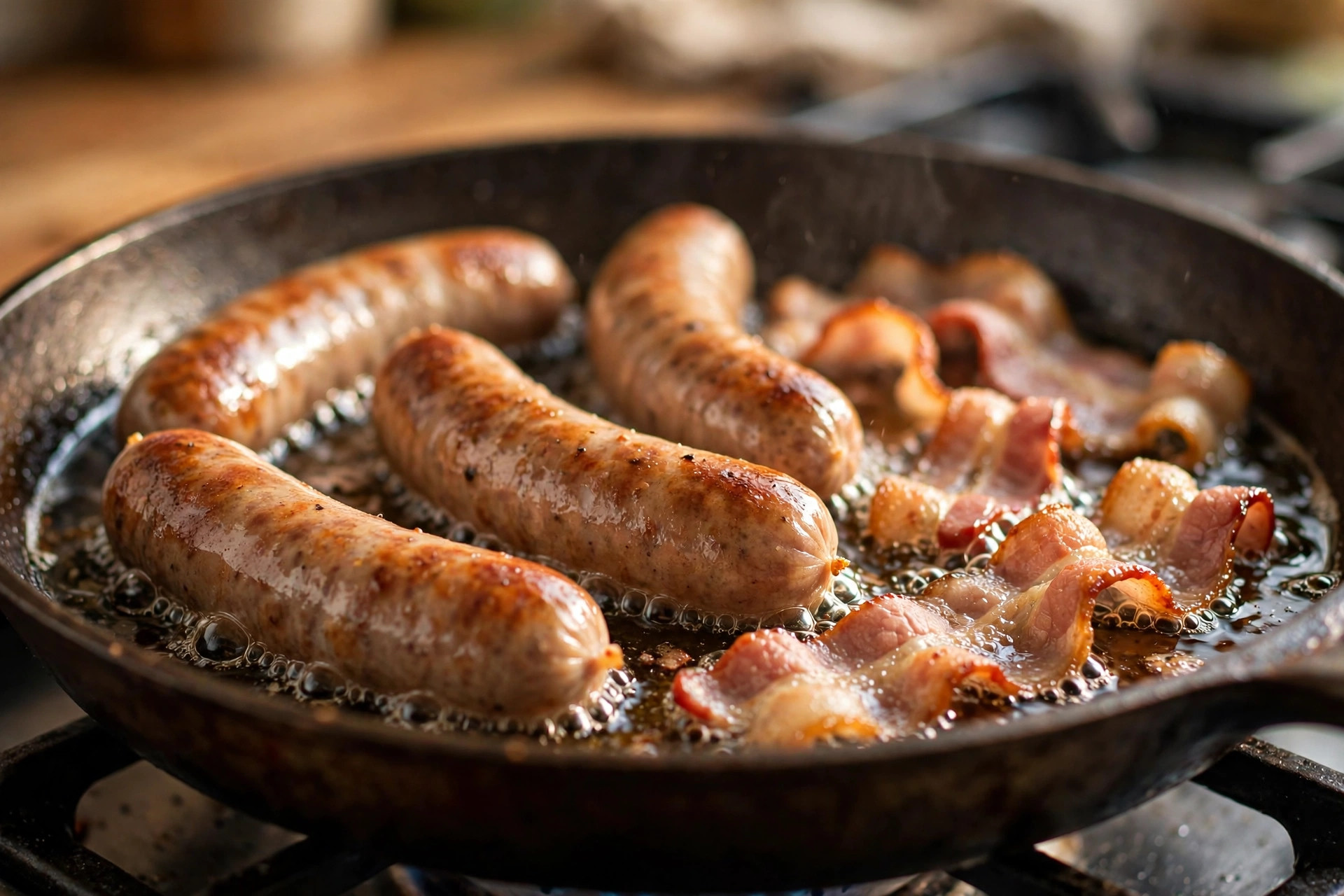
Red meat, processed meat and full-fat dairy: the biggest everyday sources
If you change nothing else, change these — they’re where most people’s saturated fat comes from.
Red and processed meat is the heavyweight. Beef, lamb and pork carry 5 to 10g of saturated fat per 100g, and just one portion can deliver a quarter or more of your whole day’s limit. Processed meats — sausages, bacon, salami, pepperoni — are worse, adding salt and preservatives on top. The BHF suggests keeping red and processed meat to no more than 70g a day — roughly two rashers of bacon. You don’t have to quit meat: choose leaner cuts, trim visible fat, and let beans, lentils or chicken take over a few dinners a week.
Butter, ghee and full-fat dairy come next. Butter and ghee are around half saturated fat — a single teaspoon of butter holds 5g, a quarter of a woman’s daily limit. Whole milk, cheese and cream quietly add up too, making up about a quarter of the average person’s saturated fat intake. The fix is painless: semi-skimmed milk in tea and cereal, natural yoghurt instead of cream, and olive or rapeseed oil instead of ghee or lard for cooking. You still get the protein and calcium.
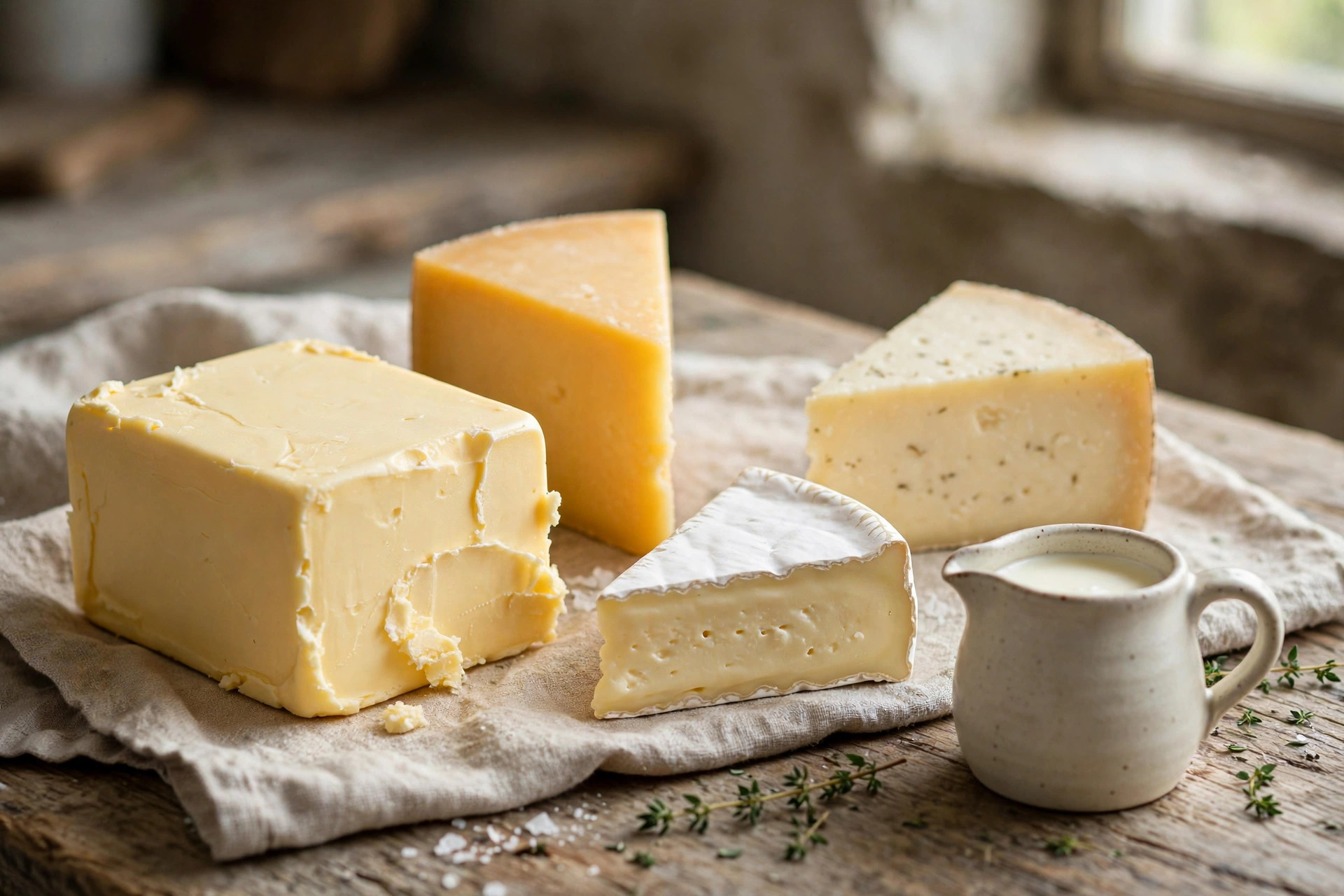
Fried foods, pastries and packaged snacks: the trans fat trap
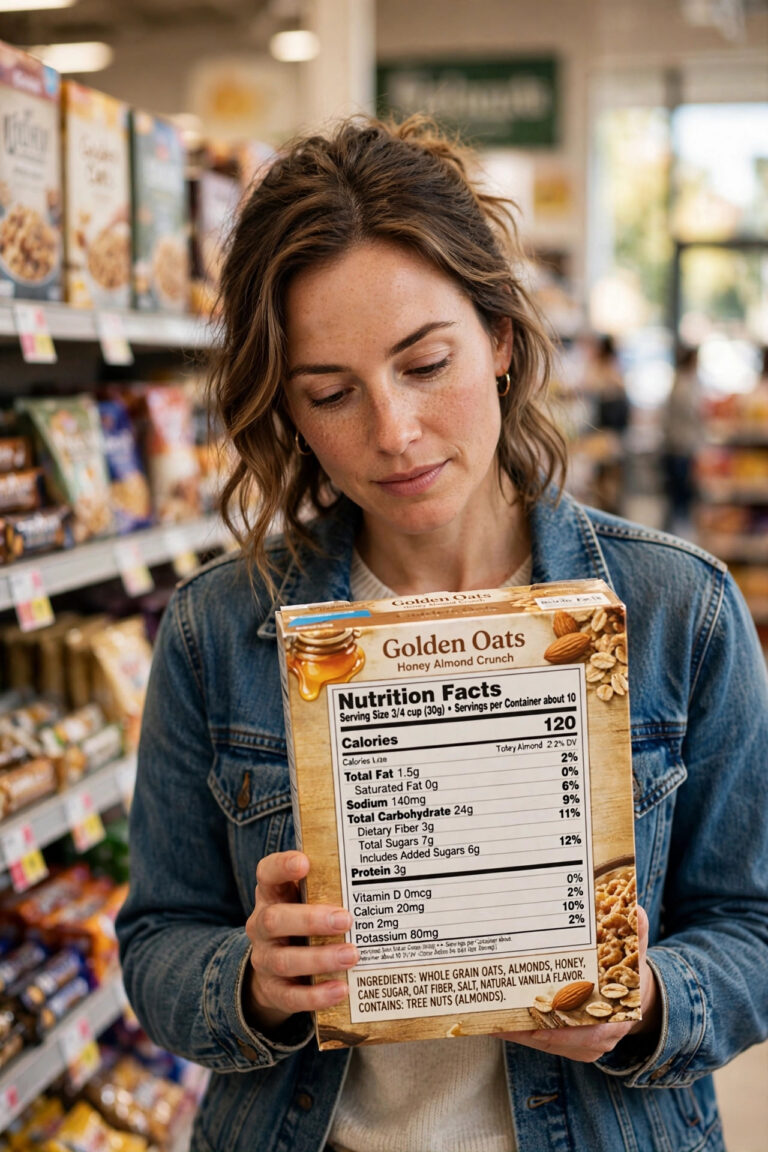
This is where trans fats lurk. Commercially fried foods — chips, fried chicken, doughnuts — are often cooked in oils that have been reused or partially hydrogenated, and packaged pastries, biscuits, crackers and ready meals can contain “partially hydrogenated vegetable oil” in the ingredients list. That’s the phrase to watch for on labels.
Pastries hit you twice: butter or palm oil for saturated fat, plus sugar and refined flour that push up triglycerides (another blood fat your doctor watches). Make cake an occasional treat, not a daily habit, and check labels for palm oil in biscuits and spreads.
Eating out? Go for grilled fish or chicken, vegetable soups and steamed dishes — and ask for grilling instead of frying.
What about eggs? The honest answer
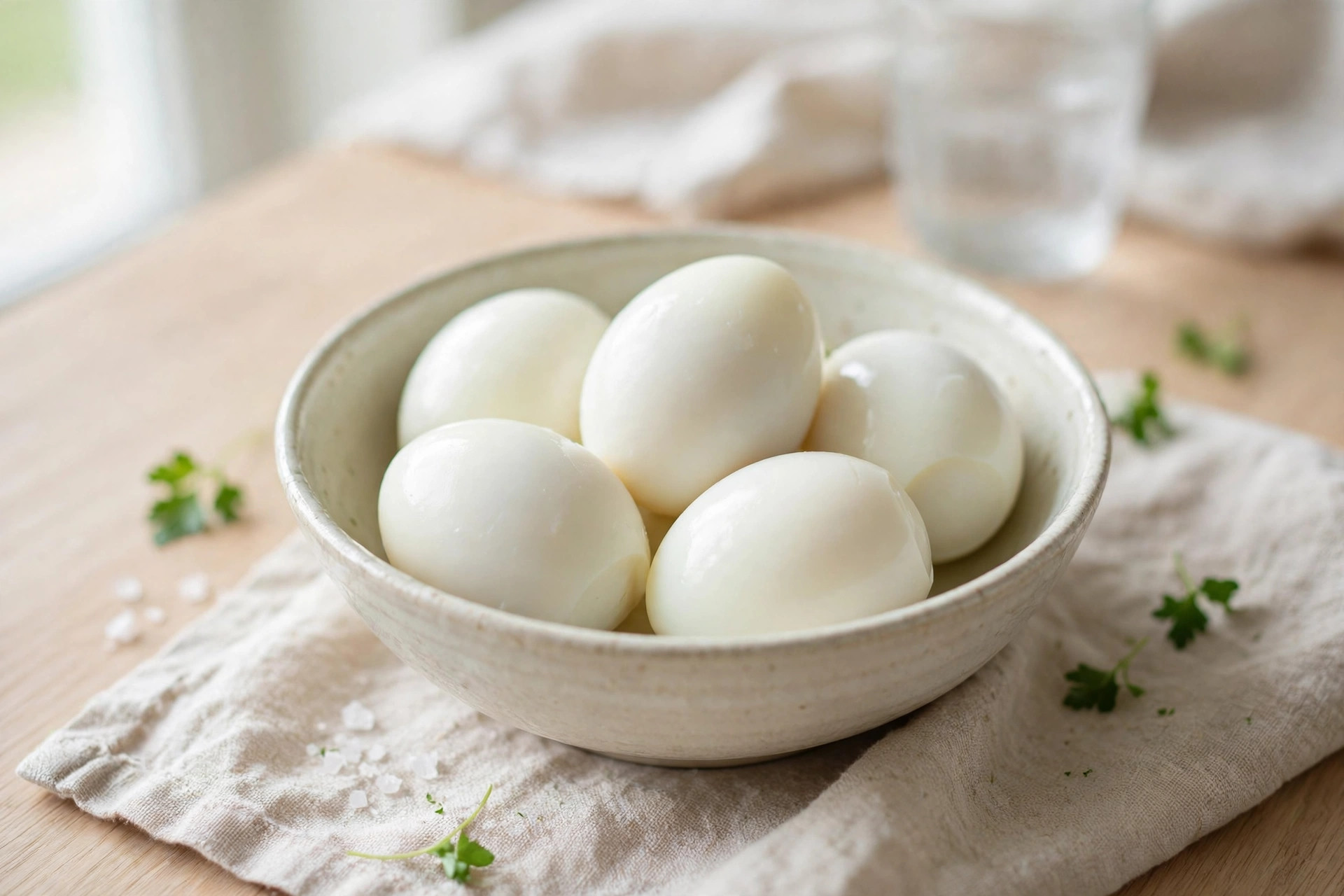
Eggs got a bad reputation they didn’t deserve. A yolk does contain dietary cholesterol — but as we’ve seen, dietary cholesterol barely moves blood cholesterol for most people. The BHF says most of us can enjoy eggs as part of a healthy diet without worrying.
The honest caveat: it’s what you eat with them that usually does the damage. Two boiled eggs are a fine breakfast. Two fried eggs with bacon, sausages and buttered white toast is a saturated-fat bomb — but the eggs aren’t the problem there. If you have diabetes, heart disease or inherited high cholesterol (familial hypercholesterolaemia), ask your doctor for personal advice. We’ve gone deeper on this in do eggs raise cholesterol if you want the full story.
What to eat instead: foods that actively help
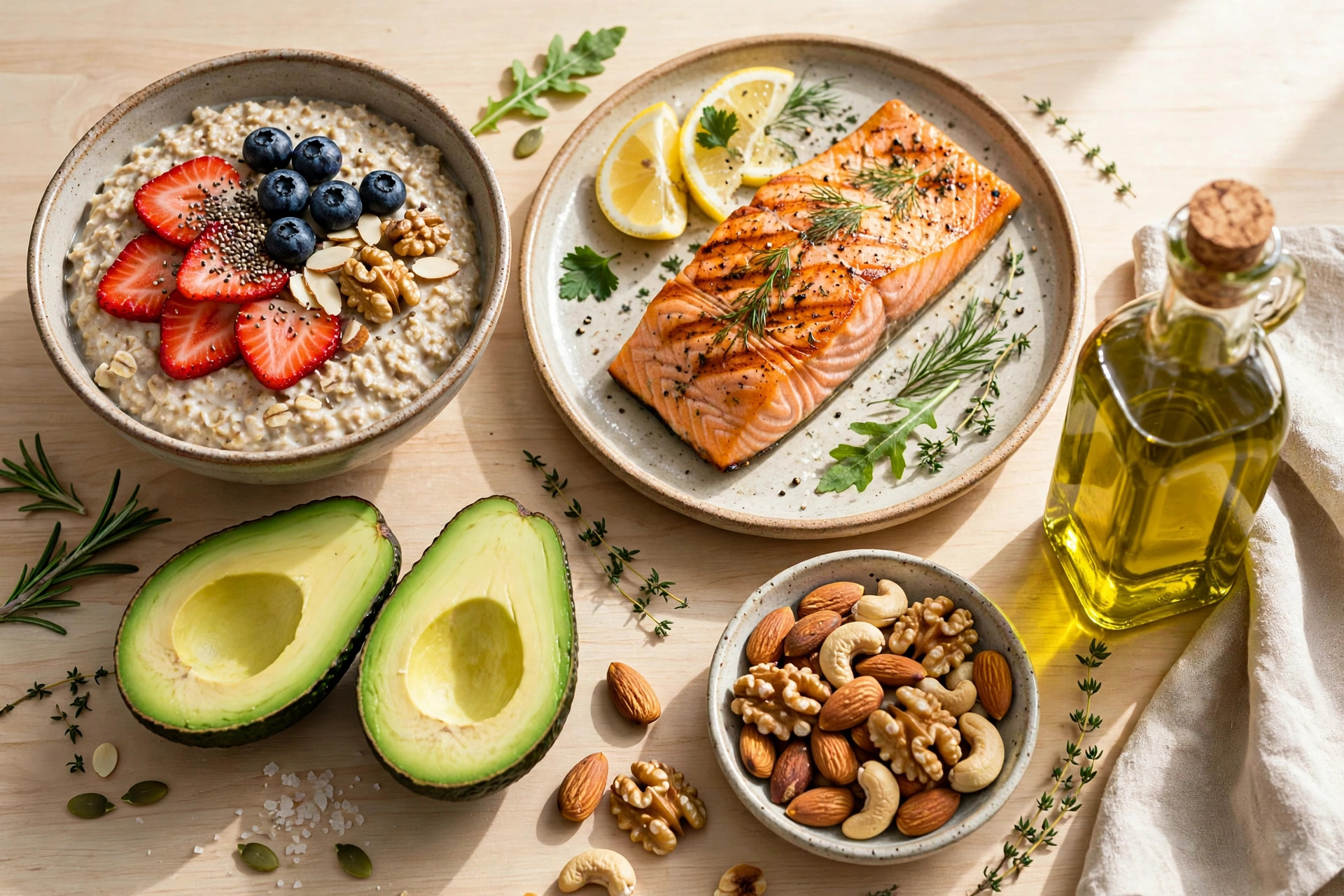
Cutting the bad stuff is only half the job. Some foods genuinely help pull cholesterol down:
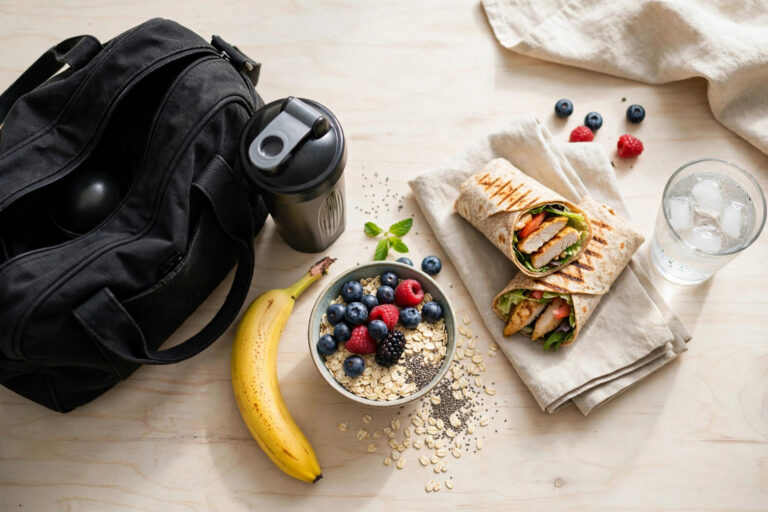
- Oats and barley — their soluble fibre (beta-glucan) binds cholesterol in your gut and carries it out. A daily bowl of porridge is one of the best-supported dietary moves there is.
- Nuts and seeds — a small handful of almonds, walnuts or pistachios a day; rich in unsaturated fats.
- Oily fish — salmon, mackerel, sardines or trout two to three times a week.
- Olive and rapeseed oil — use instead of butter, ghee or coconut oil for everyday cooking.
- Beans, lentils and chickpeas — cheap, filling, and full of soluble fibre.
- Fruit and vegetables — apples, pears, berries and leafy greens add fibre and replace higher-fat snacks.
Soluble fibre deserves a special mention: it latches onto cholesterol in your digestive system and helps remove it — that morning bowl of oats is doing quiet work for your arteries (see our oats vs cornflakes comparison). And remember: high cholesterol usually has no symptoms, so pair diet changes with regular check-ups (NHS guide to high cholesterol).
Frequently asked questions
Should I cut out all fat to lower cholesterol?
No — and please don’t try. Your body needs fat, and unsaturated fats (olive oil, nuts, oily fish) actually help your cholesterol profile. The target is saturated and trans fats specifically, not fat itself.
Is coconut oil healthy?
Not for cholesterol. It’s about 85% saturated fat — higher than butter. Fine as an occasional ingredient, but don’t use it as your everyday cooking oil if your cholesterol is high.
Can diet alone fix high cholesterol?
Sometimes, especially with modestly raised numbers. But genes, age and weight play a big role too — many people need medication as well. Diet is one powerful tool, not the whole toolbox.
How quickly can diet change my numbers?
Most people see movement in their blood results within 6 to 12 weeks of consistent changes. That’s also when doctors usually re-test, so it’s a good horizon to aim for.
The bottom line: stop hunting for “cholesterol” on food labels and start hunting for saturated and trans fat instead. Eat less processed meat, butter and fried food; eat more oats, beans, nuts, fish and olive oil. Small swaps, done daily, genuinely move the needle — and your next blood test is the perfect moment to prove it to yourself.
One response to “Foods to Avoid with High Cholesterol: What Actually Matters”
[…] that do not even taste salty. And watch saturated fat if heart health is a concern; our guide to foods to avoid with high cholesterol shows where it hides […]