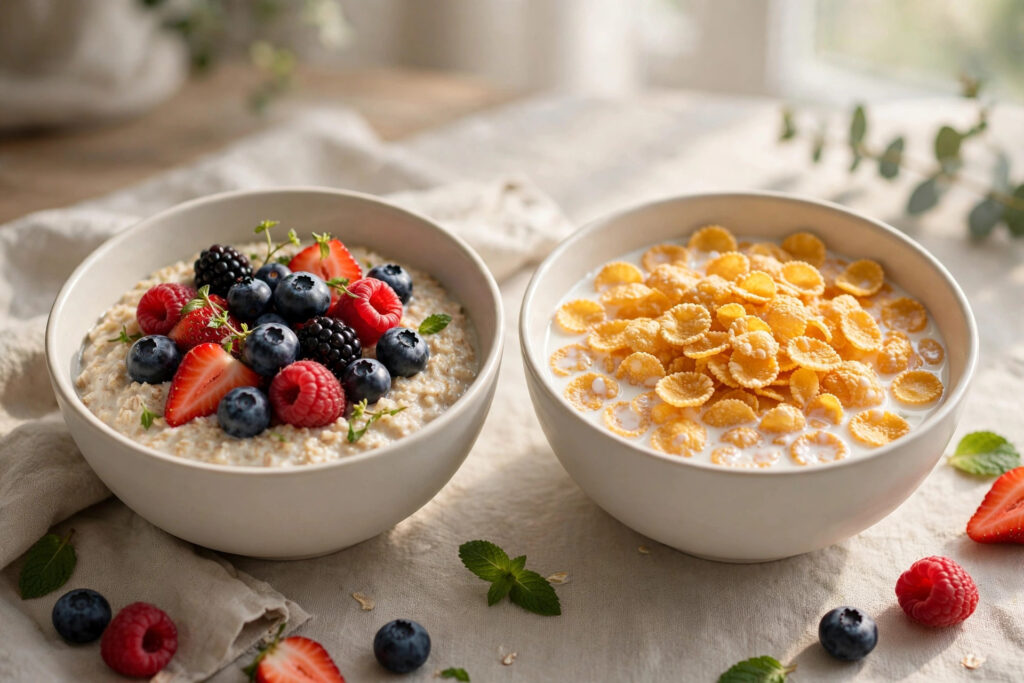
Walk down any cereal aisle and you’ll spot them side by side: the plain bag of oats and the bright box of cornflakes. Both promise you a good morning. Only one of them really delivers.
Short answer: oats win. More fibre, more protein, barely any sugar, and energy that actually lasts till lunch. But cornflakes aren’t the villain some people make them out to be — and how you build your bowl matters more than which box you grab. Here’s the full, honest breakdown so you can decide for yourself.
Oats vs cornflakes: the nutrition numbers side by side
Let’s start with what’s actually in the bowl. These are typical values per 100g dry — brands differ a little, so always check your own box (USDA FoodData Central keeps the full database if you’re curious).
| Nutrient (per 100g, dry) | Oats | Cornflakes |
|---|---|---|
| Calories | ~379 | ~358 |
| Protein | 13g | 7g |
| Fibre | 10g | 3g |
| Carbohydrates | 68g | 84g |
| Sugar | ~1g | ~8–9g |
| Glycemic index (approx.) | ~55 | ~81 |
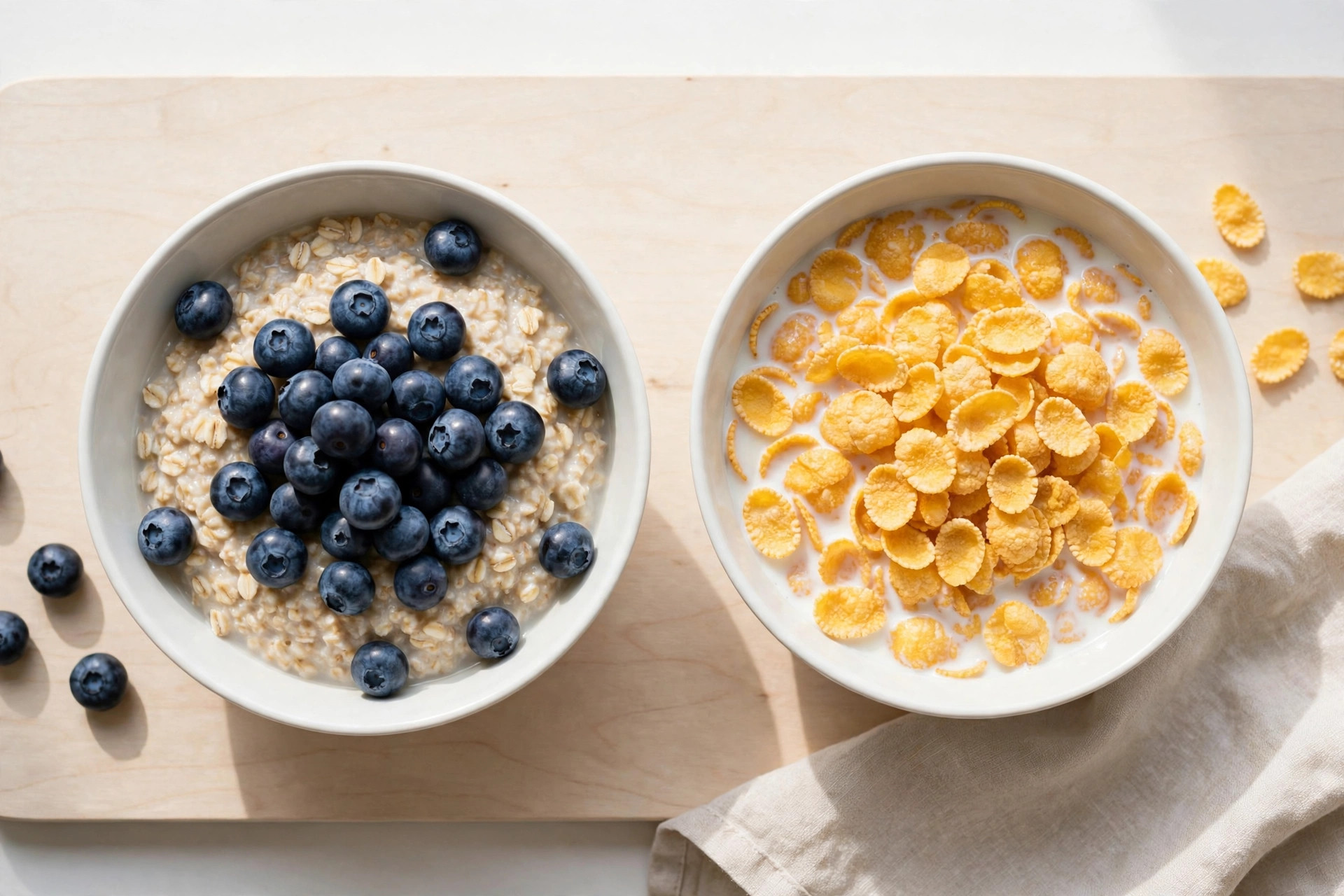
Two things jump out. First, oats give you nearly double the protein and triple the fibre. Second, cornflakes carry far more sugar and starch with very little to slow them down.
Yes, cornflakes look lighter on calories per 100g — but that’s a trick of the numbers. A normal bowl of oats (about 40g) lands around 150 calories, while a 30g bowl of cornflakes is roughly 110. The real question isn’t the calorie count in the bowl. It’s how you feel two hours later — and that’s where oats run away with it.
Fibre is where oats pull ahead
If this contest has one deciding round, it’s fibre. Oats pack about 10g of fibre per 100g, and a good chunk of it is beta-glucan — a soluble fibre that’s been linked to lower LDL (“bad”) cholesterol and a happier gut. Cornflakes manage around 3g, mostly the insoluble kind that does far less heavy lifting.
Why should you care? The NHS advises aiming for 30g of fibre a day, yet most adults only get about 20g. A single 40g bowl of oats hands you roughly 4g — a genuine head start before 9am. If fibre still feels like a vague health word, our guide on what fibre is and why you need it breaks it down simply.
Fibre also does something you can feel: it slows digestion. That slow release is the whole reason an oat breakfast keeps you going while a cornflake breakfast has you raiding the biscuit tin by eleven.
Sugar and processing: cornflakes’ weak spot
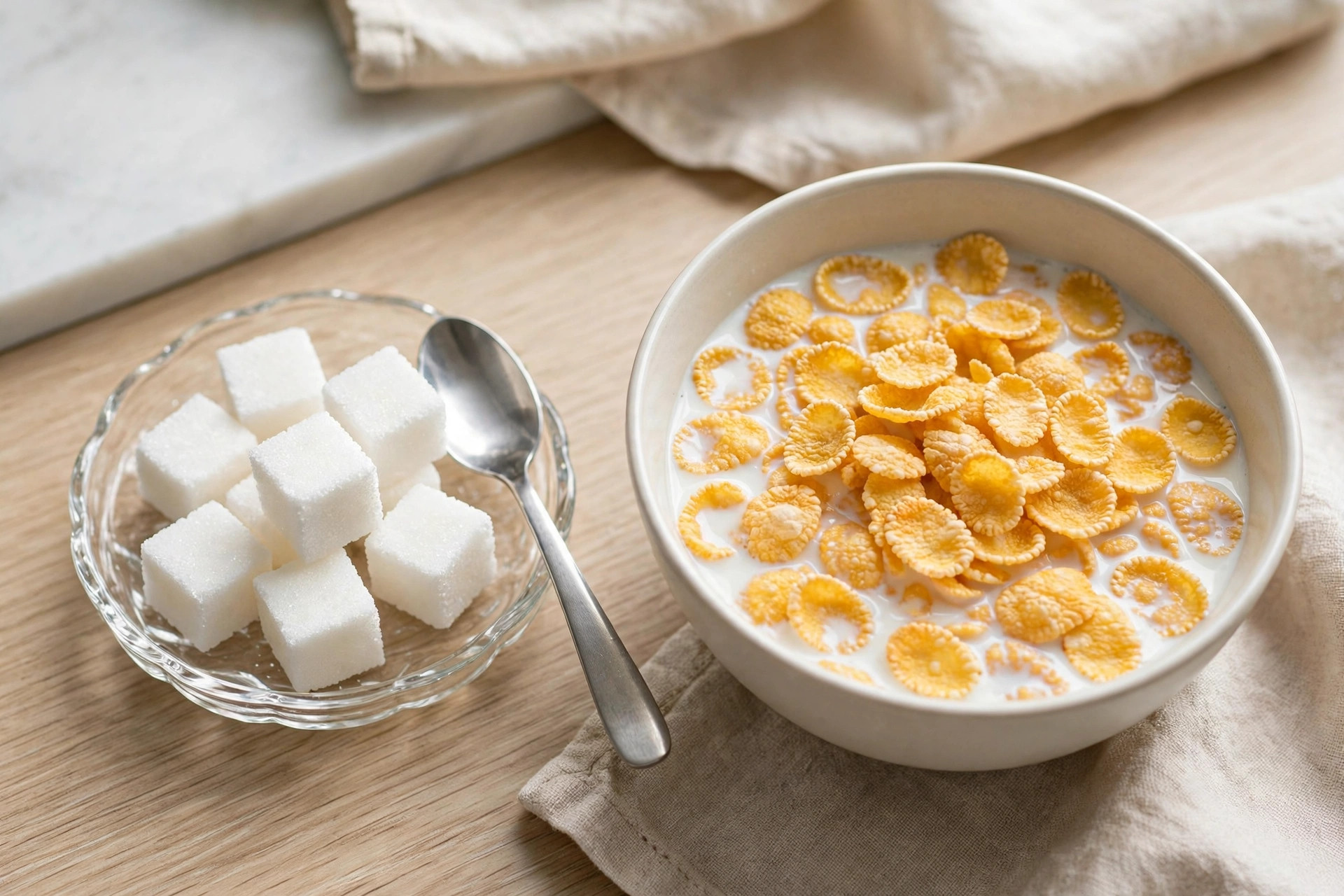
Plain oats are about as honest as food gets: one ingredient, virtually no sugar (around 1g per 100g), nothing added, nothing stripped out. Cornflakes tell a different story. They’re made by cooking corn grits with sugar and malt flavouring, then toasting them into flakes — a heavily processed product with roughly 8–9g of added sugar per 100g.
To be fair, manufacturers then fortify cornflakes with iron and B vitamins to replace some of what processing removed. That’s not nothing. But it’s a bit like draining a pond and then pouring a bucket of water back in.
One honest caveat: flavoured instant oat sachets can be just as sugary as cornflakes. The win belongs to plain oats — rolled or steel-cut — not the apple-pie-flavoured sachet with 12g of sugar hiding inside. This is exactly why learning how to read a nutrition label matters more than trusting the front of the box.
Blood sugar, fullness and weight loss
Here’s where the numbers turn into something you feel in your body. On the glycemic index — the scale researchers use to rank how fast foods raise blood sugar — oats sit around 55 (medium) while cornflakes shoot up to 81 or higher (high). You can look up tested values in the Glycemic Index Foundation’s database, run by the University of Sydney.
What that means at your kitchen table: oats digest slowly, so your energy curve stays smooth. Cornflakes digest fast, so you get a quick lift, a spike, and then the slump — usually right when you’re trying to concentrate.
For weight loss, that fullness effect beats the small calorie difference. Protein and fibre both switch on satiety signals, and oats bring plenty of both — which is also why protein-rich mornings top our list of the best breakfasts for weight loss. Cornflakes, eaten plain, leave most people hungry again within the hour, and a hungry brain makes worse lunch decisions. If you want the full picture on morning protein, see our roundup of the best sources of protein.
Quick note: this is general information, not medical advice. If you live with diabetes or take blood-sugar medication, talk to your doctor or a dietitian about the best breakfast pattern for you.

How to build a better bowl (either way)
The box matters less than what you do with it. Here’s how to get the most out of either choice.
Making oats tastier
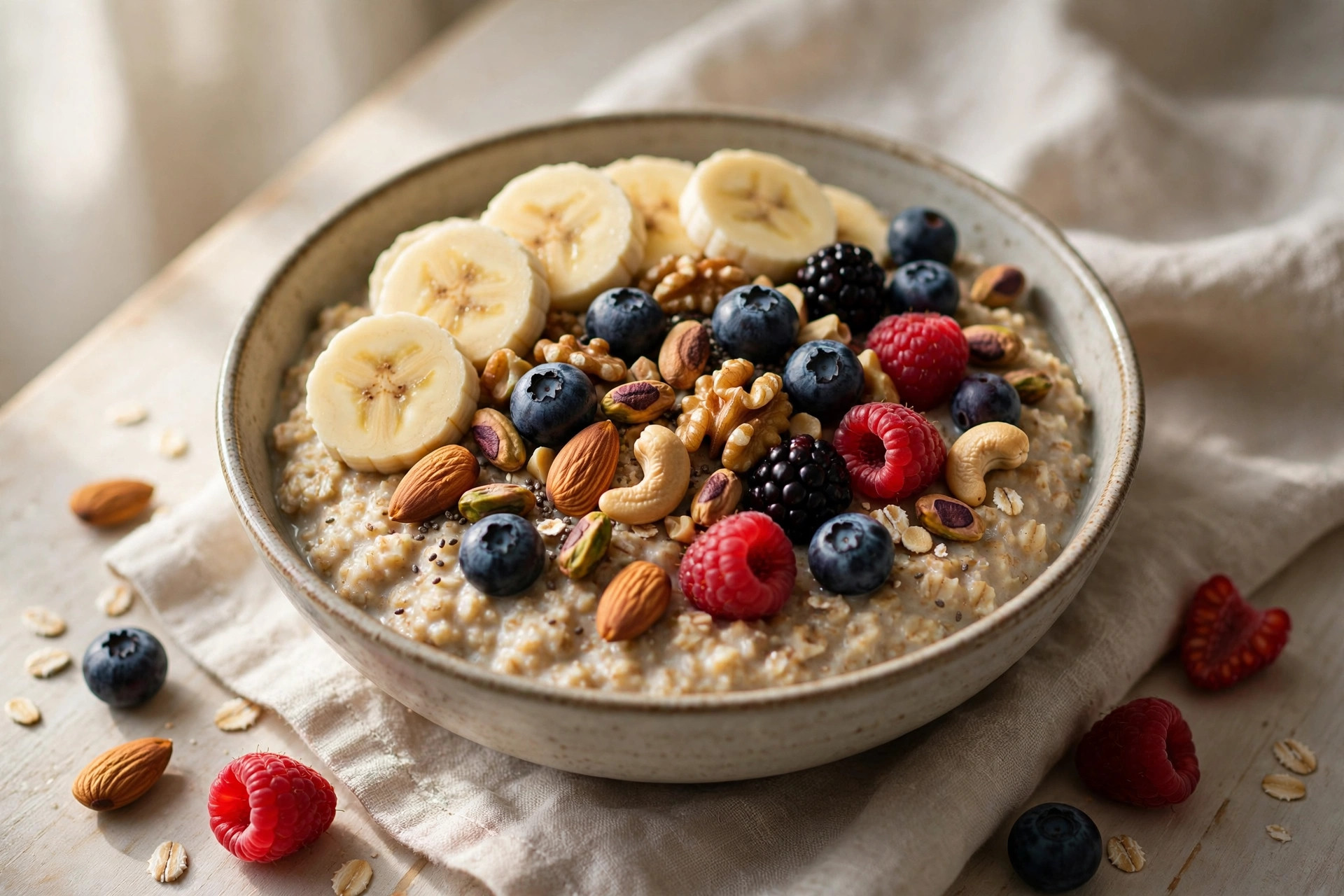
Bland oats are a choice, not a rule. Try overnight oats: mix rolled oats with milk or yoghurt in a jar, add frozen berries, and refrigerate — breakfast makes itself. A spoonful of peanut butter adds richness and staying power. Cinnamon gives sweetness without sugar, and a chopped banana does the rest. Savoury fan? Cook oats in water with a pinch of salt, then top with a fried egg.
Making cornflakes work harder
Like cornflakes and not giving them up? Fair enough — just upgrade the bowl. Pour a smaller serving and bulk it out with a handful of almonds or walnuts and sliced banana or strawberries. Swap some of the milk for Greek yoghurt to add protein. And pick the plainer boxes: compare sugar per 100g on the shelf and take the lowest. A “healthier” cornflake bowl still won’t match oats, but it beats a sad, sugary one — and it definitely beats skipping breakfast entirely.
Frequently asked questions
Are flavoured instant oats as bad as cornflakes?
Often, yes — some sachets pack as much sugar per serving as a bowl of cornflakes. If you buy instant, pick plain and flavour it yourself with fruit or cinnamon.
Can kids eat cornflakes every day?
They can, but rotation is smarter. Kids love the crunch, so keep cornflakes in the mix a few days a week and add sliced fruit on top. On other days, porridge or eggs give them the fibre and protein growing bodies need.
Which keeps you full longer — oats or cornflakes?
Oats, comfortably. The combination of soluble fibre and extra protein slows digestion and steadies blood sugar, so the full feeling lasts hours longer.
Is porridge the same as oats?
Basically, yes. Porridge is just oats cooked in water or milk. Same grain, same fibre, same win.
The bottom line
Oats beat cornflakes on almost every measure that matters: fibre, protein, sugar, processing, blood sugar, and staying power. If you want one change to your mornings, switching the box is the easiest win in the cereal aisle.
But here’s the honest part the purists skip: the best breakfast is the one you’ll actually eat, day after day. A well-built bowl of cornflakes with fruit and nuts still fuels your morning — and any breakfast beats no breakfast. Pick oats when you can, upgrade cornflakes when you can’t, and never feel guilty about the bowl you enjoy.
One response to “Oats vs Cornflakes for Breakfast: The Honest Winner”
[…] and helps remove it — that morning bowl of oats is doing quiet work for your arteries (see our oats vs cornflakes comparison). And remember: high cholesterol usually has no symptoms, so pair diet changes with […]