Snacking gets blamed for a lot of failed diets. But it is rarely the snacking itself that causes the damage — it is what you snack on, and how much of it. A good snack bridges the gap between meals so you don’t walk into dinner starving and eat everything in sight. Chosen well, snacks become one of your best weight-loss tools. Here is what actually works, backed by evidence, plus 12 snacks worth keeping in your kitchen.
What makes a snack weight-loss friendly?
There are no magic fat-burning snacks, so treat anyone promising them with suspicion. A useful snack does two simple things: it keeps you full until your next meal, and it fits inside your daily calorie budget. The two nutrients that do the heavy lifting are protein and fibre — both slow digestion down, which keeps hunger quieter for longer. As a rule of thumb, aim for a snack of about 150–250 calories built around one of them.
Nuts are a good test case for how this works. A 2019 meta-analysis in Advances in Nutrition (Lee-Bravatti et al.) pooled 15 trials and found almond eaters weighed roughly 1.4 kg less than the control groups — a modest difference, and the trials varied quite a bit, so read it as a hint rather than proof. The honest takeaway: nuts don’t automatically make you gain weight, but only when you watch the portion.
Snacks also sit inside your whole day of eating. Harvard’s Healthy Eating Plate is a solid, free guide to getting that bigger balance right.
The 12 best snacks for weight loss
1. Greek yoghurt with berries
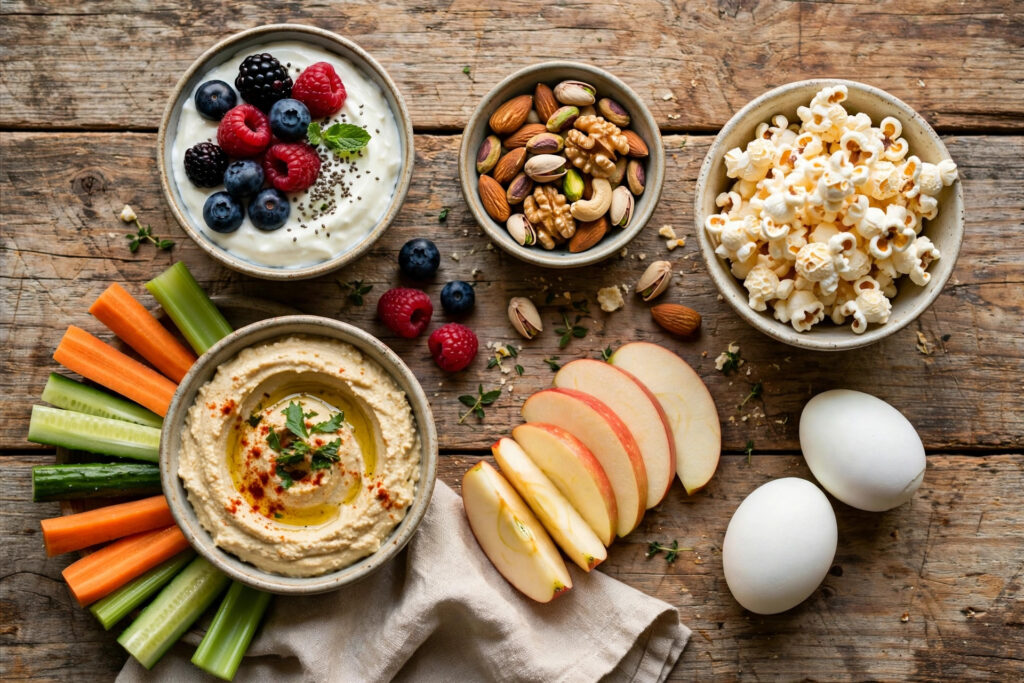
Thick, tangy, and packing around 15–20 g of protein per small pot. Choose plain yoghurt and add a handful of berries for sweetness and fibre. Skip the fruit-flavoured pots — they often hide several teaspoons of added sugar.
2. Two hard-boiled eggs
Cheap, portable, and about 12–14 g of protein for roughly 140 calories. A pinch of salt, pepper, or chilli flakes keeps them interesting. Boil a batch on Sunday and you have grab-and-go snacks all week.
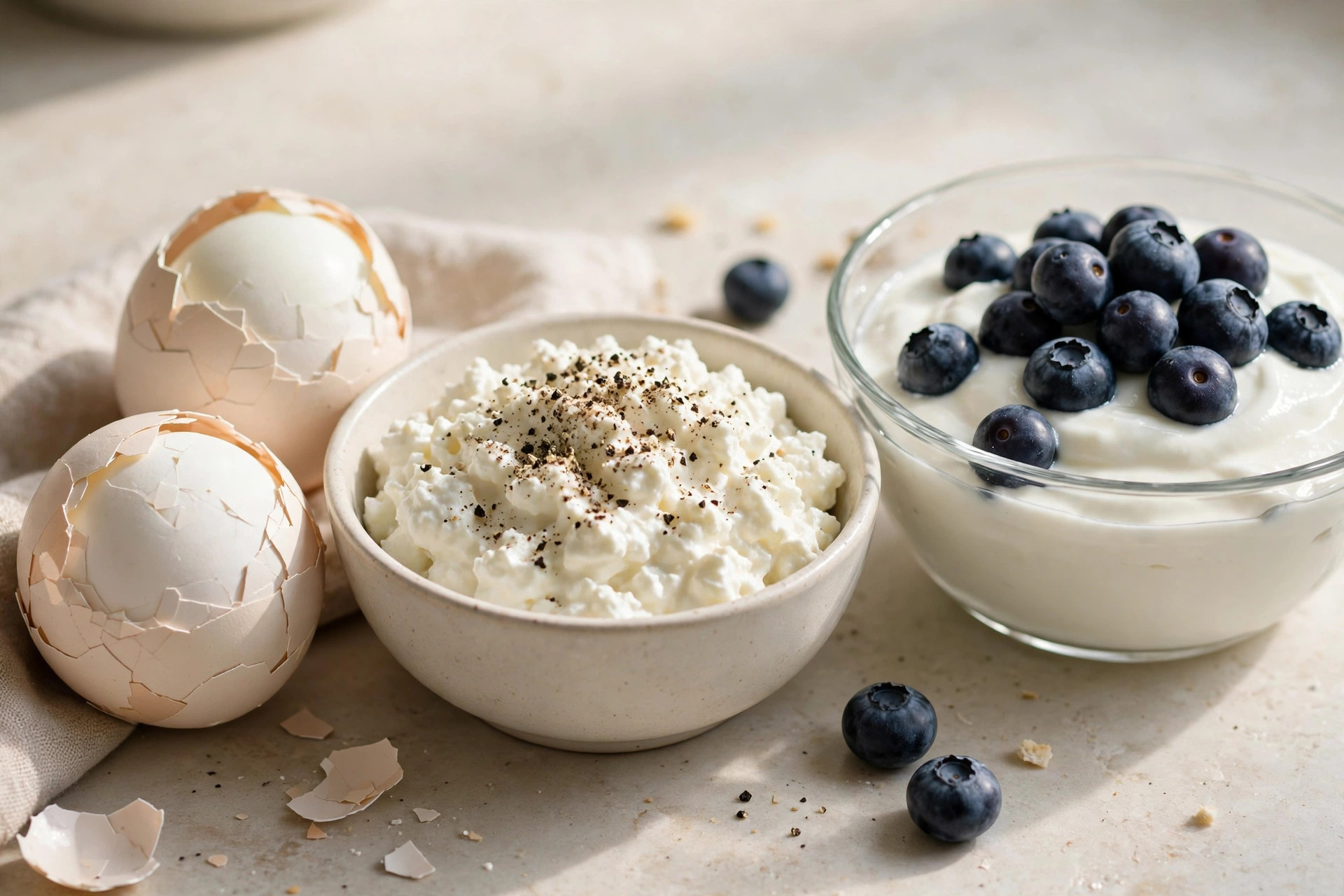
3. Cottage cheese
Cottage cheese is rich in casein, a slow-digesting protein that keeps you full for hours. Half a cup delivers around 14 g of protein. Eat it savoury with black pepper and cherry tomatoes, or sweet with cinnamon and a few berries.
4. Apple slices with peanut butter
An apple gives you fibre and crunch; a tablespoon of natural peanut butter adds protein and healthy fats. Keep it to one measured tablespoon — a “generous” spoonful can quietly double the calories.
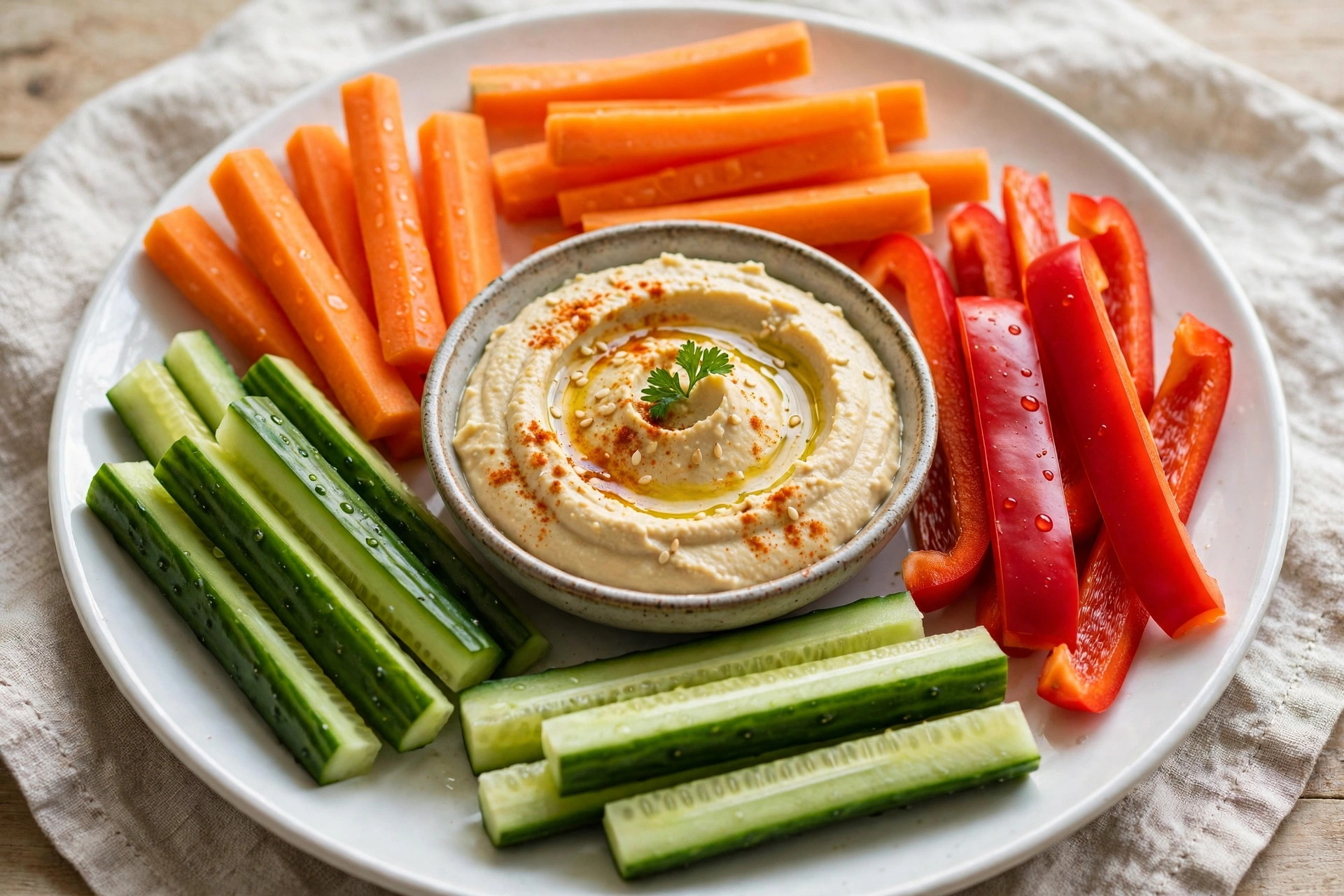
5. Veggie sticks with hummus
Carrots, cucumber, and red pepper sticks with two tablespoons of hummus: plenty of crunch, fibre, and plant protein for under 150 calories. It is the rare snack that fills a plate without filling your calorie budget.
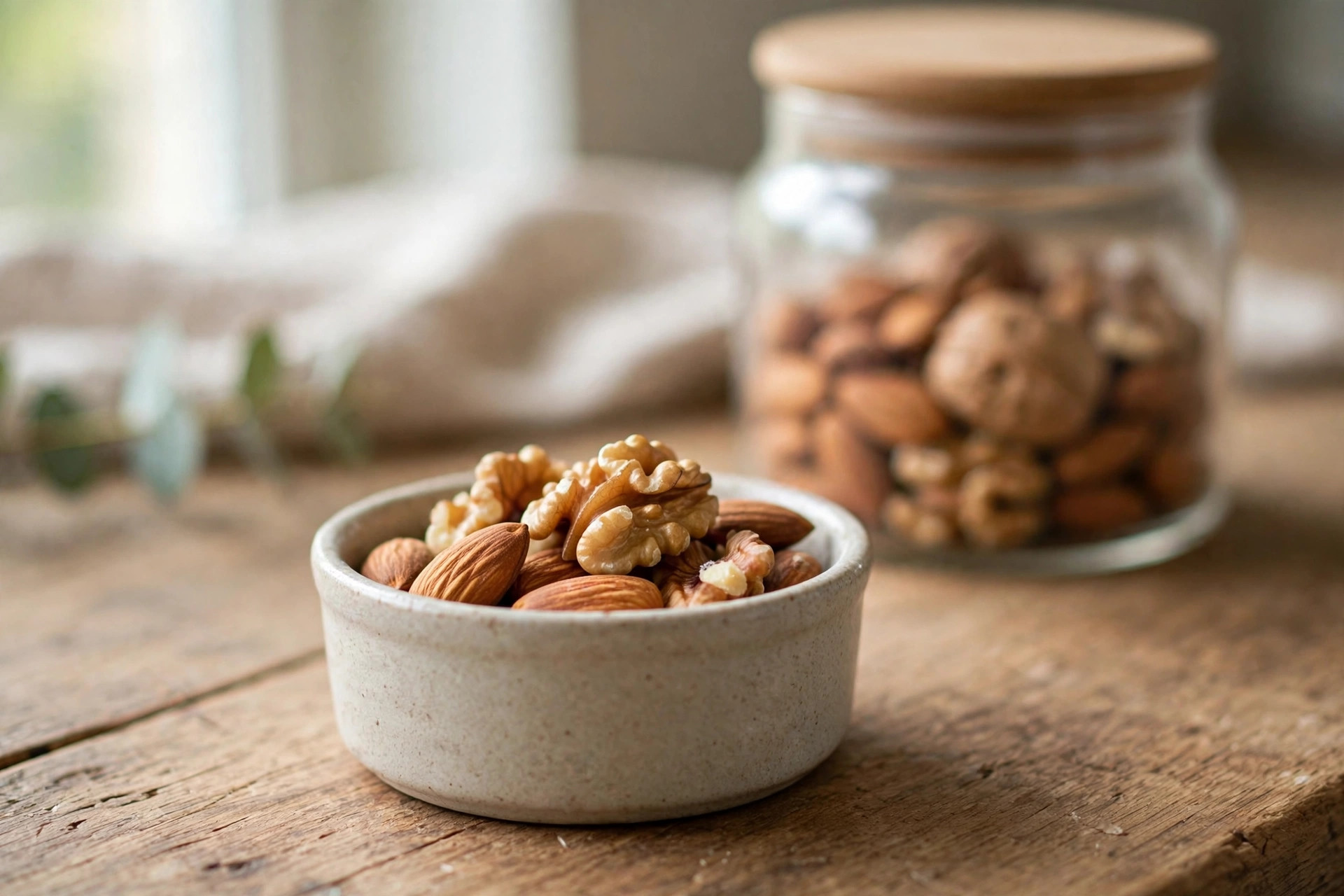
6. A small handful of almonds
About 23 almonds (28 g) give you protein, fibre, and healthy fats for roughly 160 calories. Count them out or weigh the portion once — eating from the bag is how 160 calories silently becomes 400.
7. Air-popped popcorn
Three cups of plain air-popped popcorn come in at roughly 100 calories. It is a whole grain with fibre, and the sheer volume makes it feel like a proper treat. Skip the butter; a pinch of salt or paprika does the job.
8. Roasted chickpeas
Crunchy, savoury, and full of fibre and plant protein. Toss cooked chickpeas with a little oil, salt, and spices, then roast until crisp. They scratch the same itch as crisps with far more staying power.
9. Edamame
A cup of edamame gives you around 18 g of protein plus fibre — impressive for a plant snack. Eat them warm with a little salt, straight from the pod. Buy them frozen and microwave a portion in minutes.
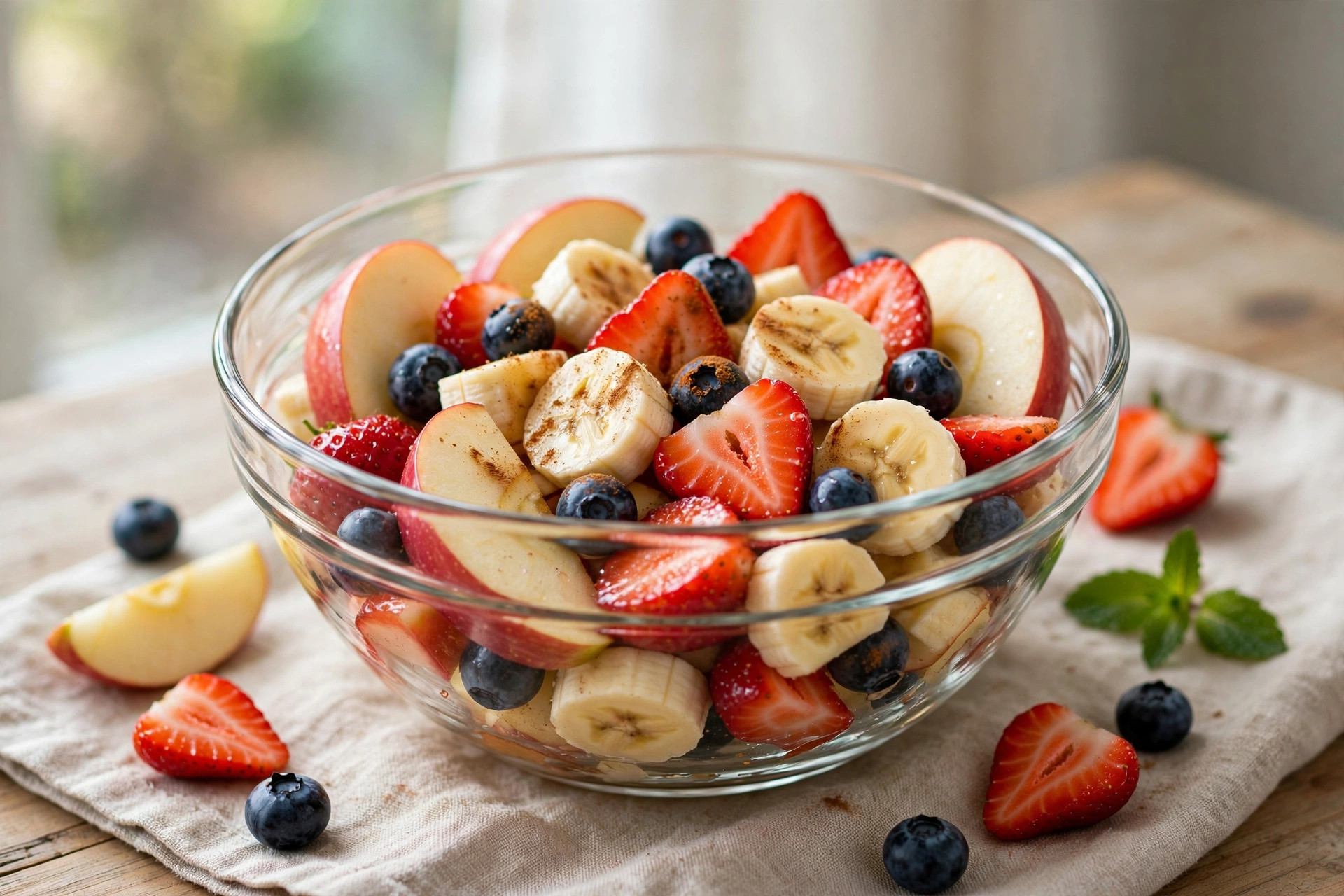
10. Fruit and chia bowl
A bowl of sliced apple, strawberries, and banana with a teaspoon of chia seeds: fibre, natural sweetness, and a little extra staying power from the seeds. A dusting of cinnamon makes the whole thing taste like dessert.
11. Pumpkin seeds
A small handful (about 30 g) packs protein, fibre, magnesium, and zinc for around 150 calories. Their crunch makes them a natural stand-in for crisps when you fancy something salty. Choose plain or lightly salted.
12. A mini overnight oats pot
Mix three tablespoons of oats with yoghurt and milk, add berries, and leave it in the fridge overnight. You get slow-digesting carbs, protein, and fibre in a jar you can carry to work. Keep the portion small — this is a snack, not breakfast.
The portion trap: when healthy snacks work against you
A healthy snack eaten in triple the portion is just extra calories. This is where most weight-loss snacking quietly fails. The worst offenders:
- Nuts and nut butter — around 600 calories per 100 g. Weigh them until you learn what 30 g looks like.
- Dried fruit — a small box of raisins carries the sugar of a whole bunch of grapes with none of the fullness.
- Cheese and dark chocolate — fine in small amounts, dangerously easy to overdo.
- Granola and trail mix — often sold as health food, but calorie-dense and made for grazing.
The fix is boring but it works: decide the portion before you start eating, put it in a bowl, and put the packet away. If you want to get precise, learning how to count calories for a week teaches you portion sizes fast.
Smart swaps that save you calories
You don’t always need a brand-new snack — sometimes a better version of the old one does the job.
| Instead of this | Try this | You save roughly |
|---|---|---|
| A 50 g bag of crisps (260 kcal) | 3 cups air-popped popcorn (100 kcal) | 160 kcal |
| A milk chocolate bar (280 kcal) | 2 squares dark chocolate + an apple (150 kcal) | 130 kcal |
| A sugary cereal bar (200 kcal) | Greek yoghurt with berries (120 kcal) | 80 kcal |
| A large syrup latte (250 kcal) | Tea or coffee with milk (30 kcal) | 220 kcal |
3 snacking habits that quietly undo your diet
The snack matters, but the habit matters just as much:
- Snacking straight from the packet — you will always eat more than you planned. Serve a portion every time.
- Eating while distracted — screens make you eat faster and notice less. Give the snack two minutes of attention.
- Treating thirst or boredom as hunger — drink a glass of water first and wait ten minutes.
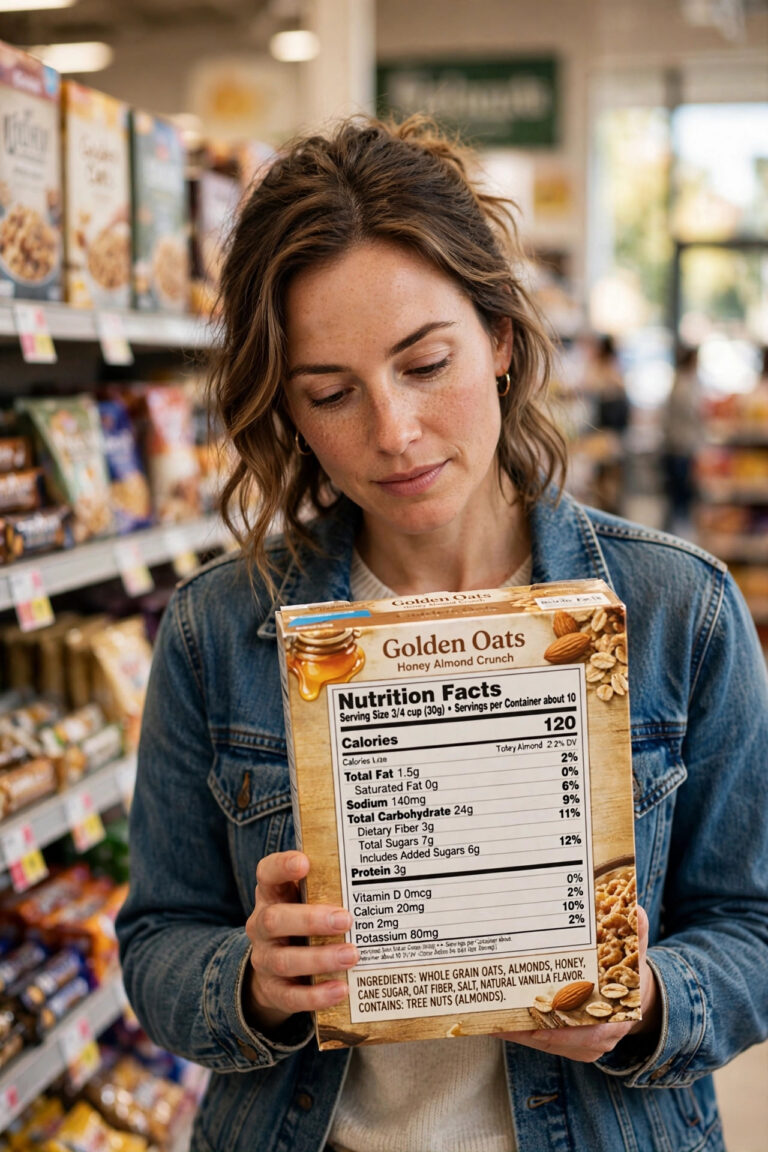
Also watch out for snack bars wearing a health halo. The NHS points out that many cereal bars are high in sugar and fat despite their healthy image — check the label before you trust the packaging. If sweet cravings are your main battle, our piece on how to stop sugar cravings goes deeper.
What about late-night snacking?
Eating at night doesn’t magically turn food into fat — your total daily calories matter far more than the clock. That said, heavy late meals can disturb your sleep, and tired people snack worse the next day. If you are genuinely hungry in the evening, have a small protein-and-fibre snack of around 150 calories — Greek yoghurt, a boiled egg, or a bowl of popcorn — and keep it an hour or two before bed.

The bottom line
Snacking is not the enemy of weight loss — mindless, oversized, sugary snacking is. Build your snacks around protein and fibre, keep portions honest, and keep a few good options ready so the vending machine doesn’t decide for you. Do that consistently, and snacking starts working for your goals instead of against them.
Disclaimer: This article is general information only, not medical advice. If you have diabetes, a heart condition, an eating disorder, or any health condition that affects your diet, talk to your doctor or a registered dietitian before changing how you eat.