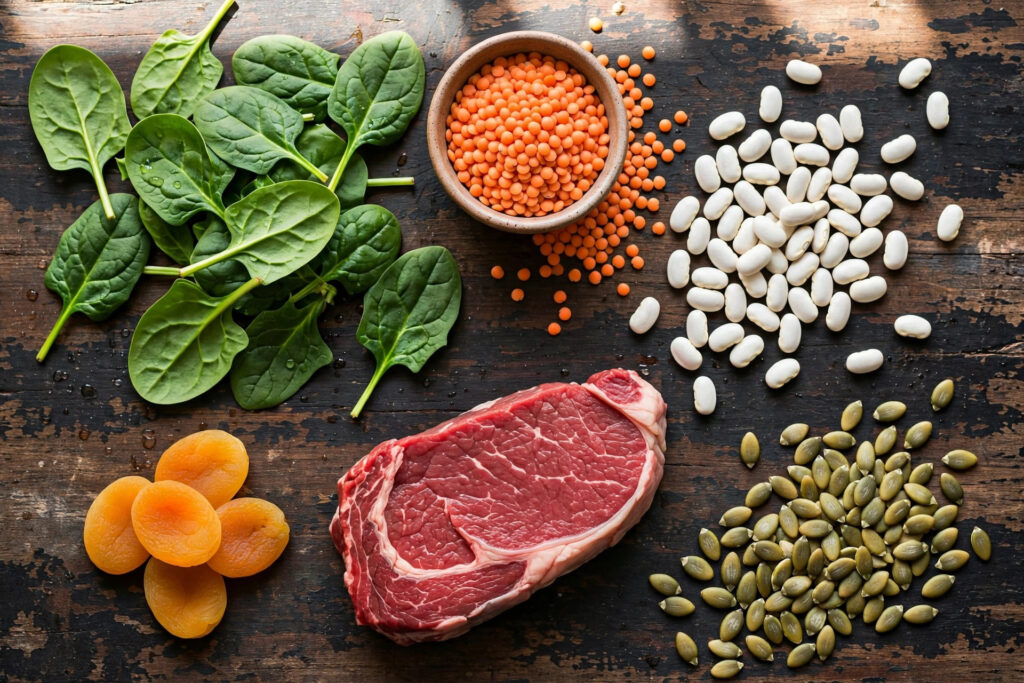
Tired by 3pm even after a full night’s sleep? Pale skin, brittle nails, more hair in the shower drain than usual? For many women, the quiet culprit is low iron.
Women are built to need more of it. Every monthly period drains iron reserves — a heavy flow drains them fast. Pregnancy is the biggest ask of all: your blood volume grows by nearly half to support the baby, and the NIH raises the daily target to 27mg. Breastfeeding keeps demands high, and teenage girls, whose bodies are still growing while periods begin, need 15mg a day. Add it up, and it’s no surprise that iron deficiency is one of the most common nutritional gaps in women worldwide.
The good news: food can fix a lot of this. But here’s what the usual lists won’t tell you — not all iron-rich foods are equal, because your body absorbs some far better than others. Once you understand that, you can eat smarter instead of just eating more.
How much iron do women actually need?
In the UK, the NHS recommends 14.8mg of iron a day for women aged 19 to 49, dropping to 8.7mg after menopause. The US National Institutes of Health puts the figure at 18mg a day, rising to 27mg during pregnancy.
If you eat mostly plants, treat those numbers as roughly doubled in practice — your body pulls far less iron out of plant foods. Heavy periods, pregnancy, breastfeeding and regular blood donation all push your needs higher still.
Pay closest attention at five life stages: your teens (growth plus new periods), your 20s-40s if your periods are heavy, during pregnancy, in the months after giving birth, and if you’re a runner or train hard — athletes lose extra iron through sweat and foot-strike breakdown of red blood cells. If any of those is you, the rest of this article matters twice as much.
Heme vs non-heme: the absorption secret most lists skip
This is the part that changes everything. Iron comes in two forms, and they are not absorbed equally:
- Heme iron — found in meat, poultry and fish. Your body absorbs roughly 15-35% of it.
- Non-heme iron — found in lentils, beans, spinach and fortified cereals. Your body absorbs only about 2-20% of it.
That’s why a vegetarian woman can eat “iron-rich” spinach salads every day and still run low. The iron is there — her body just can’t get at most of it. The NIH notes that vegetarians effectively need almost twice as much iron from food to end up with the same amount in their blood. Knowing the difference is the whole game: pair your foods right, and the same meal can deliver two or three times the iron.
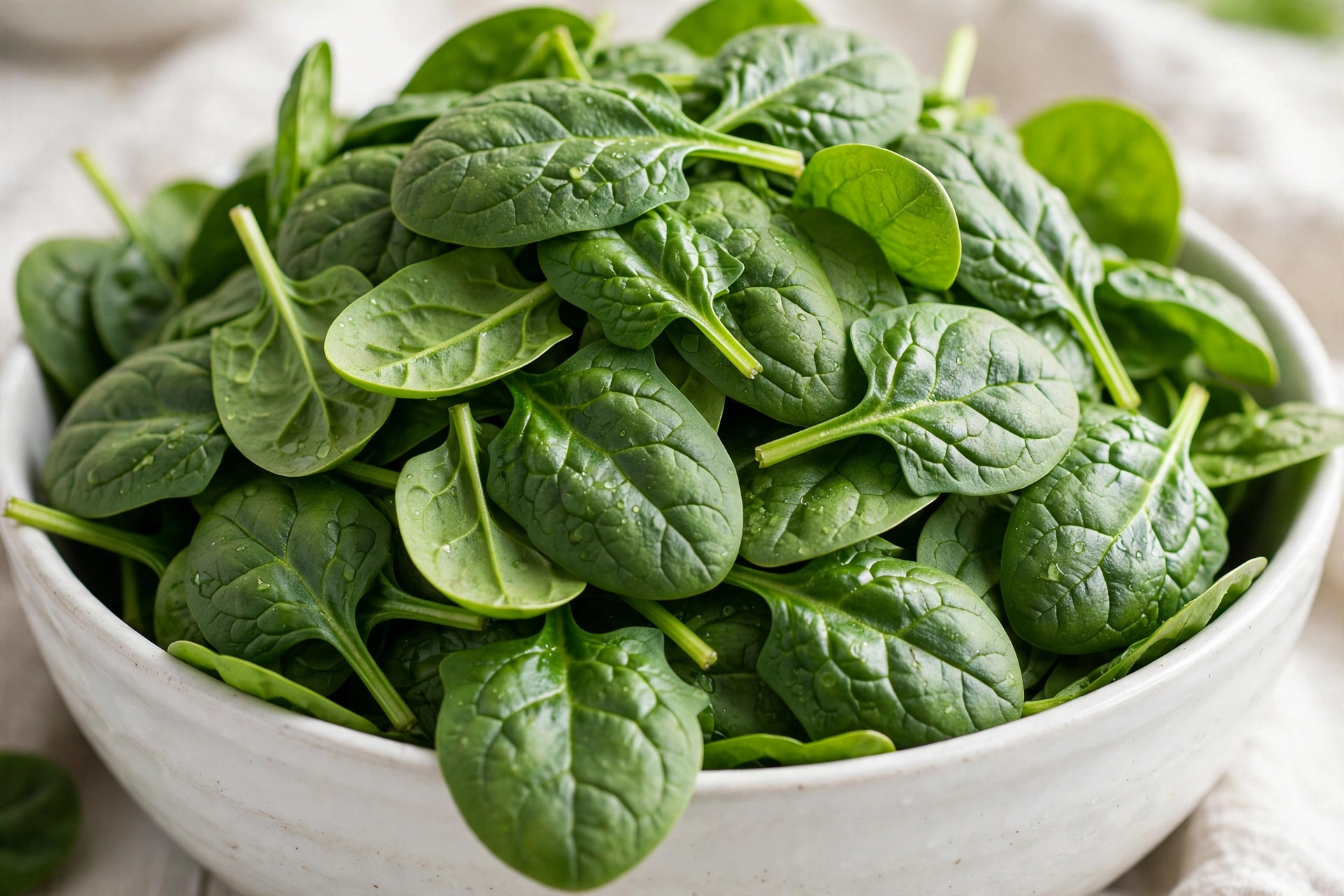
Iron-rich foods, with the actual numbers
Here’s what’s worth putting on your plate, with typical iron per serving:
| Food | Serving | Iron (approx.) | Type |
|---|---|---|---|
| Chicken or beef liver | 90g (3oz) | 5-8mg | Heme |
| Iron-fortified cereal | 1 bowl | up to 18mg | Non-heme |
| White beans | 1 cup, cooked | 8mg | Non-heme |
| Lean beef | 90g (3oz) | 2.5mg | Heme |
| Lentils | ½ cup, cooked | 3mg | Non-heme |
| Spinach (cooked) | ½ cup | 3mg | Non-heme |
| Tofu | ½ cup | 3mg | Non-heme |
| Pumpkin seeds | 1 handful (28g) | 2.5mg | Non-heme |
| Sardines | 1 small can | 2mg | Heme |
| Dark chocolate (70%+) | 30g | 2mg | Non-heme |
A few honest notes. Liver is the heavyweight champion, but eat it in moderation — and the NHS advises avoiding liver during pregnancy because of its very high vitamin A. Fortified cereals look spectacular on paper, but iron content varies wildly between brands, so check the label. And meat does double duty: it also tops our list of the best sources of protein.
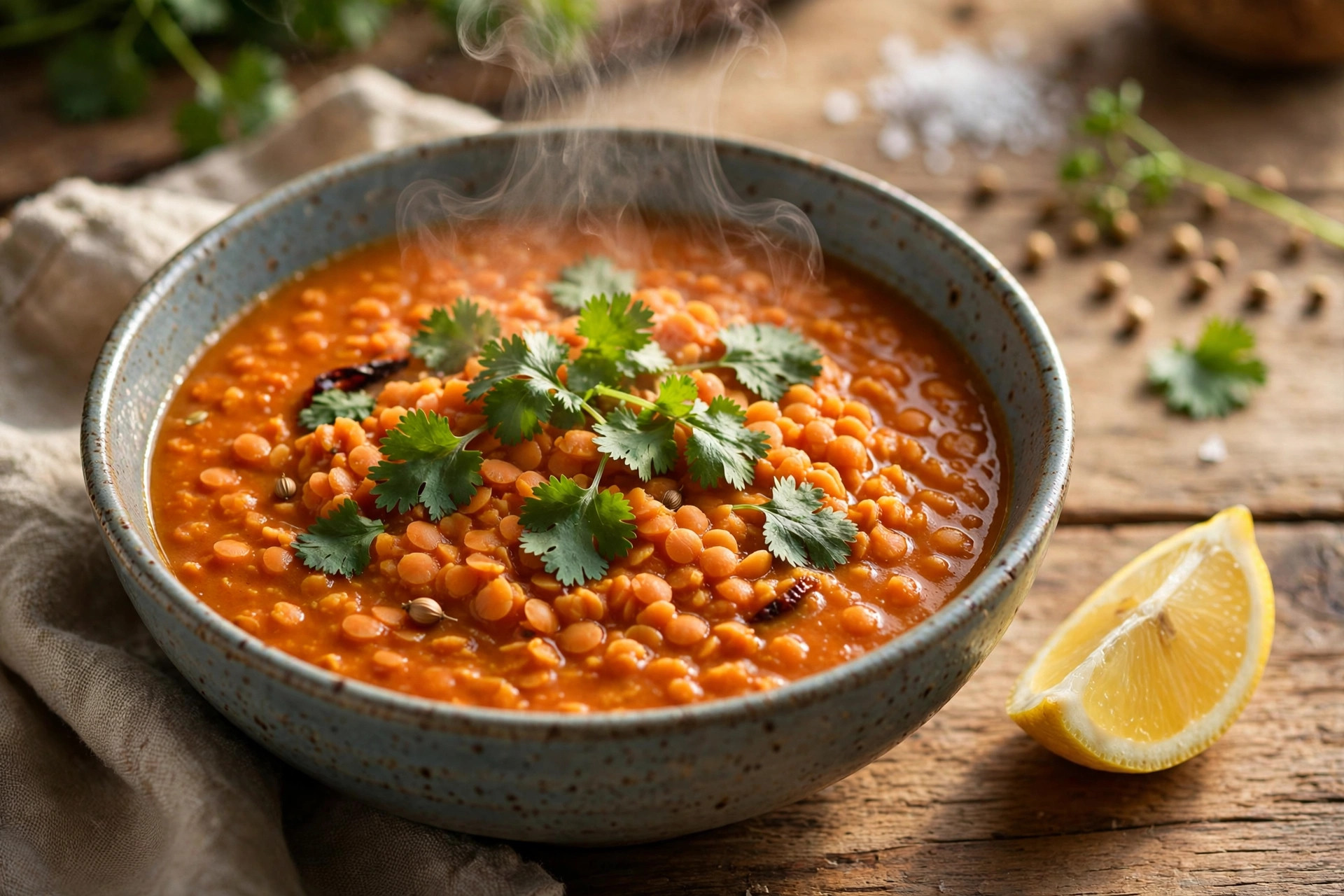
Lentils, beans and chickpeas deserve an extra mention: they’re also packed with fibre, which keeps you full and your digestion moving — here’s why fibre matters so much.
The vitamin C trick that multiplies absorption
This is the single most useful tip in this article. Vitamin C transforms non-heme iron — it can double or even triple how much your body absorbs from plant foods. The NIH confirms that eating vitamin C foods alongside plant iron makes a measurable difference.
No supplements, no complicated recipes. Just build one pairing habit:
- Lentil dal + a squeeze of lemon
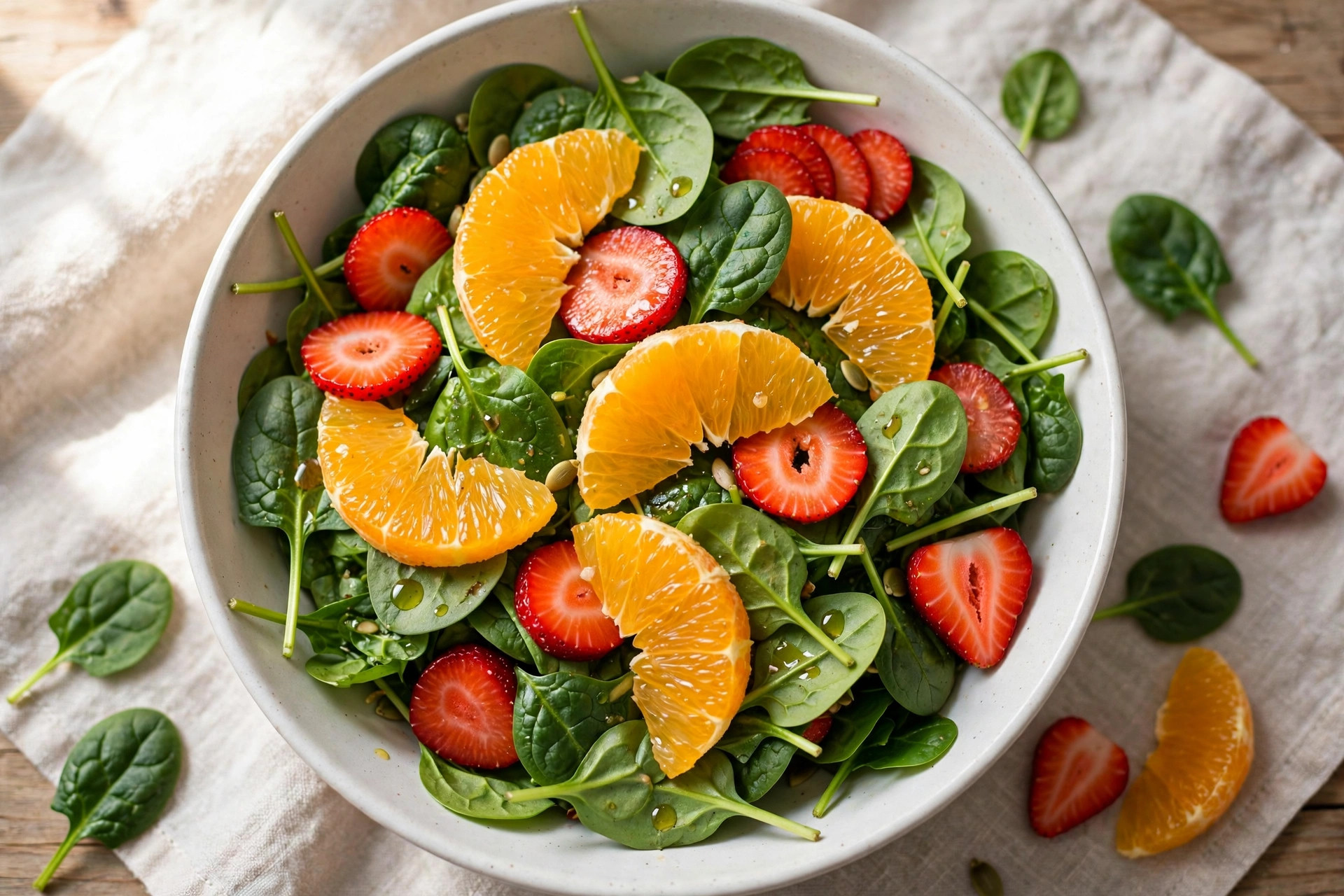
- Spinach salad + orange segments or strawberries
- Bean chilli + chopped tomatoes and peppers
- Fortified cereal + a small glass of orange juice
- Tofu stir-fry + broccoli
One small tweak, and the same meal quietly delivers far more iron.
Put it together: 5 iron-smart meals
- Lemon tadka dal with rice — red lentils plus lemon juice and tomatoes: iron, vitamin C and comfort in one bowl.
- Beef and bean chilli — heme iron from the beef, non-heme from the beans, vitamin C from peppers and tomatoes. The absorption dream team.
- Sardines on wholegrain toast with rocket and lemon — cheap, fast, and genuinely iron-rich.
- Tofu and broccoli stir-fry — the broccoli’s vitamin C unlocks the tofu’s iron; add cashews for crunch.
- Overnight oats with strawberries and pumpkin seeds — iron from the oats and seeds, vitamin C from the berries. Breakfast sorted.
What quietly blocks iron absorption
Just as some foods help, others undo your good work without you noticing:
- Tea and coffee with meals. Tannins can sharply cut iron absorption. Keep your chai or coffee at least an hour away from iron-rich meals.
- Calcium at the same time. A calcium supplement or a large glass of milk alongside your iron-rich lunch can get in the way. Space them out.
- Eating iron foods “plain”. A spinach salad with no vitamin C source gives you a fraction of what’s possible — always add the pairing.
None of these are villains. It’s just timing.
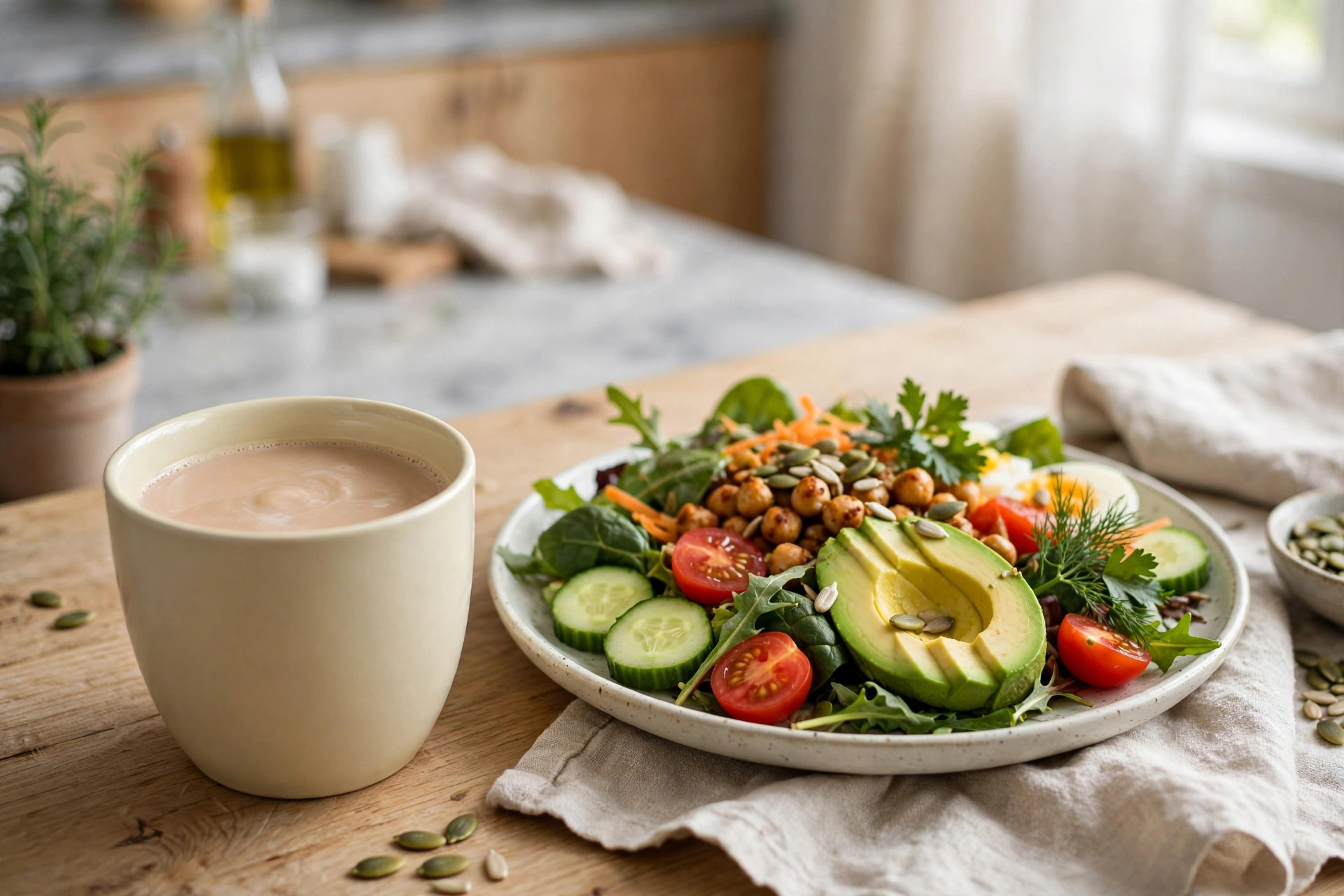
Signs you might be running low
Your body whispers before it shouts. Common early signs of low iron include constant tiredness, pale skin, getting breathless on stairs you used to manage fine, brittle nails, extra hair shedding, restless legs at night, and unusual cravings for ice or clay.
If several of those sound familiar, don’t guess — ask your doctor for a simple blood test (ferritin and haemoglobin). Low iron often creeps up slowly, so women blame busy lives and poor sleep for months before anyone checks. One test settles it, and treatment — usually diet changes, sometimes a prescribed supplement — works well once the cause is clear.
Important: this article is general information, not medical advice. Don’t start iron supplements on your own — too much iron is harmful, especially for children, and high doses need medical supervision. If you’re pregnant, breastfeeding, or managing a health condition, talk to your doctor or a registered dietitian about what’s right for you.
The bottom line
Women need more iron than men, and plant iron needs a little help to do its job. Remember three things: eat iron-rich foods most days, always pair plant iron with vitamin C, and keep tea and coffee away from mealtimes. Do that consistently, and your energy has a real chance to come back.
One response to “Iron-Rich Foods for Women: What Actually Works”
[…] 100g cooked) also bring fibre, folate, and iron — in fact, they’re among the foods on our iron-rich foods for women list, so they do double […]