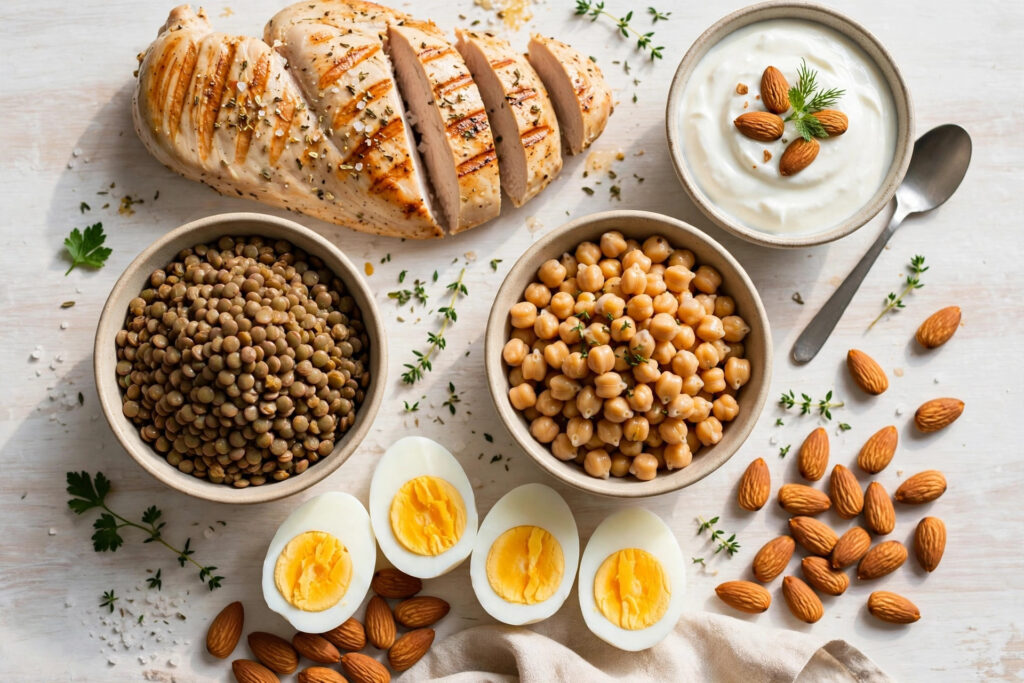
Protein is the nutrient everyone talks about and almost nobody measures. Gym-goers chase it, dieters fear missing it, and vegetarians get asked about it constantly. So let’s settle it properly: how much do you actually need, which foods deliver the most, and what’s worth your money.
Short answer: most adults need far less than the fitness industry suggests — roughly 1 gram per kilogram of body weight a day covers most people. And the best sources aren’t exotic. They’re sitting in your kitchen already.
How much protein do you actually need?
Here’s the simple rule of thumb: take your weight in kilograms and aim for about that many grams of protein per day. Weigh 70kg? Around 70g. Weigh 85kg? Around 85g. Done — no calculator required.
That rule lines up with the science. The official Recommended Dietary Allowance is 0.8g per kilogram of body weight — the minimum to stay healthy (Harvard Health). If you’re active, pregnant, or over 50, aim a little higher: 1 to 1.6g per kilogram. Harvard notes that beyond about 2g per kilogram, the average person gains nothing extra.
If you train regularly, our diet guide for gym-goers goes deeper on eating around workouts. But for everyone else, the 1g-per-kilo rule is honest, simple, and enough.
Protein per 100g: the full comparison table
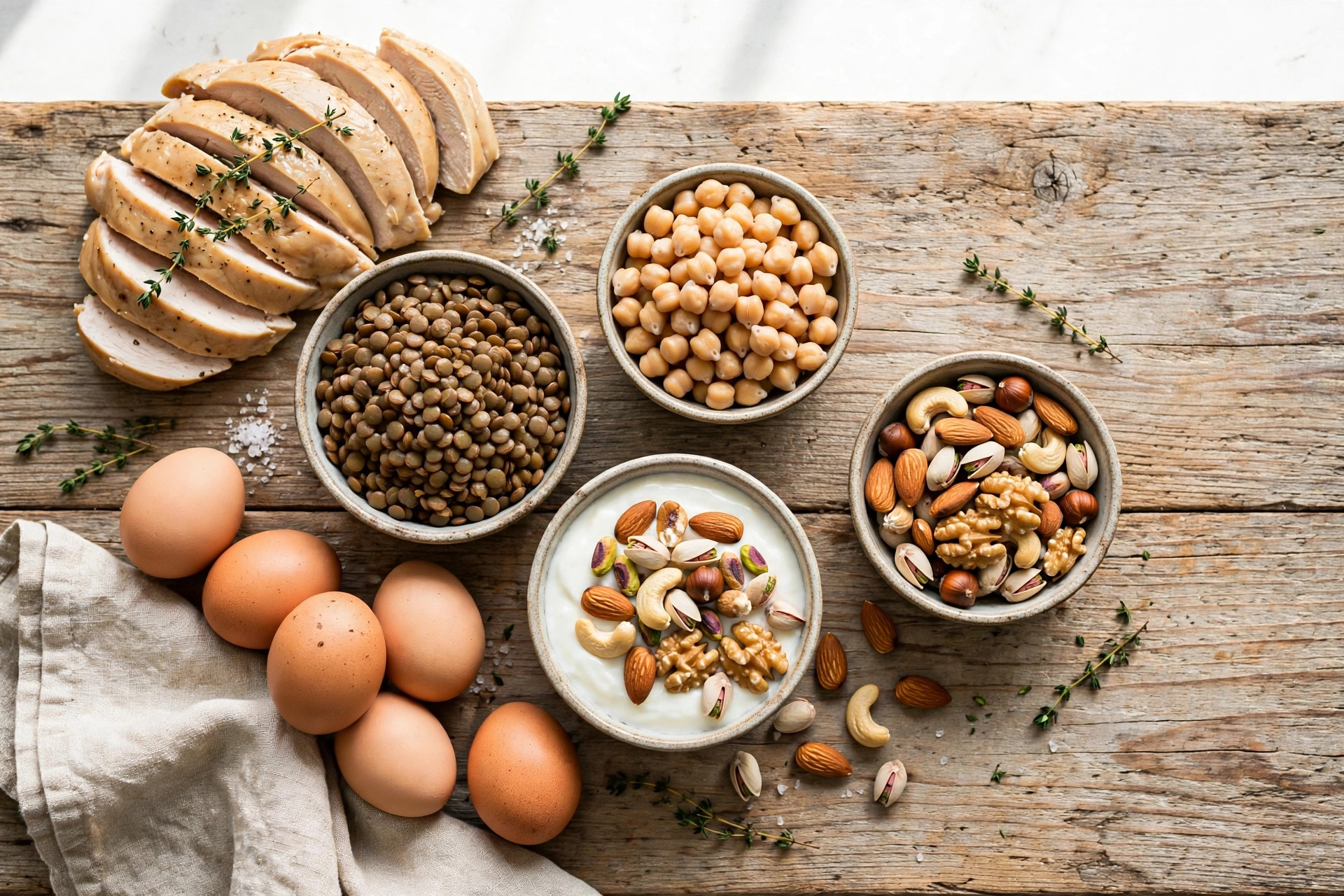
Numbers beat opinions. Here are 12 of the best sources ranked by protein per 100g (typical values — USDA FoodData Central holds the full database):
| Food | Protein per 100g | Type |
|---|---|---|
| Chicken breast (cooked) | 31g | Animal |
| Peanuts | 26g | Plant |
| Canned tuna | 26g | Animal |
| Salmon (cooked) | 25g | Animal |
| Almonds | 21g | Plant |
| Paneer | 18g | Animal (dairy) |
| Eggs | 13g | Animal |
| Greek yogurt | 10g | Animal (dairy) |
| Lentils (cooked) | 9g | Plant |
| Chickpeas (cooked) | 9g | Plant |
| Firm tofu | 8g | Plant (soy) |
| Milk | 3g | Animal (dairy) |
Two things worth noticing. First, the gap between animal and plant sources is smaller than most people think — peanuts and almonds punch far above their weight. Second, per-100g numbers flatter dense foods: you won’t eat 100g of almonds in one sitting (that’s 600 calories), but you easily eat 100g of lentils. Context matters, which is why the sections below matter more than the table alone.
Animal protein: the heavy hitters
Animal foods win on two counts: density and completeness. Meat, fish, eggs, and dairy contain all nine essential amino acids your body can’t make itself — what nutritionists call complete protein (Harvard Health).
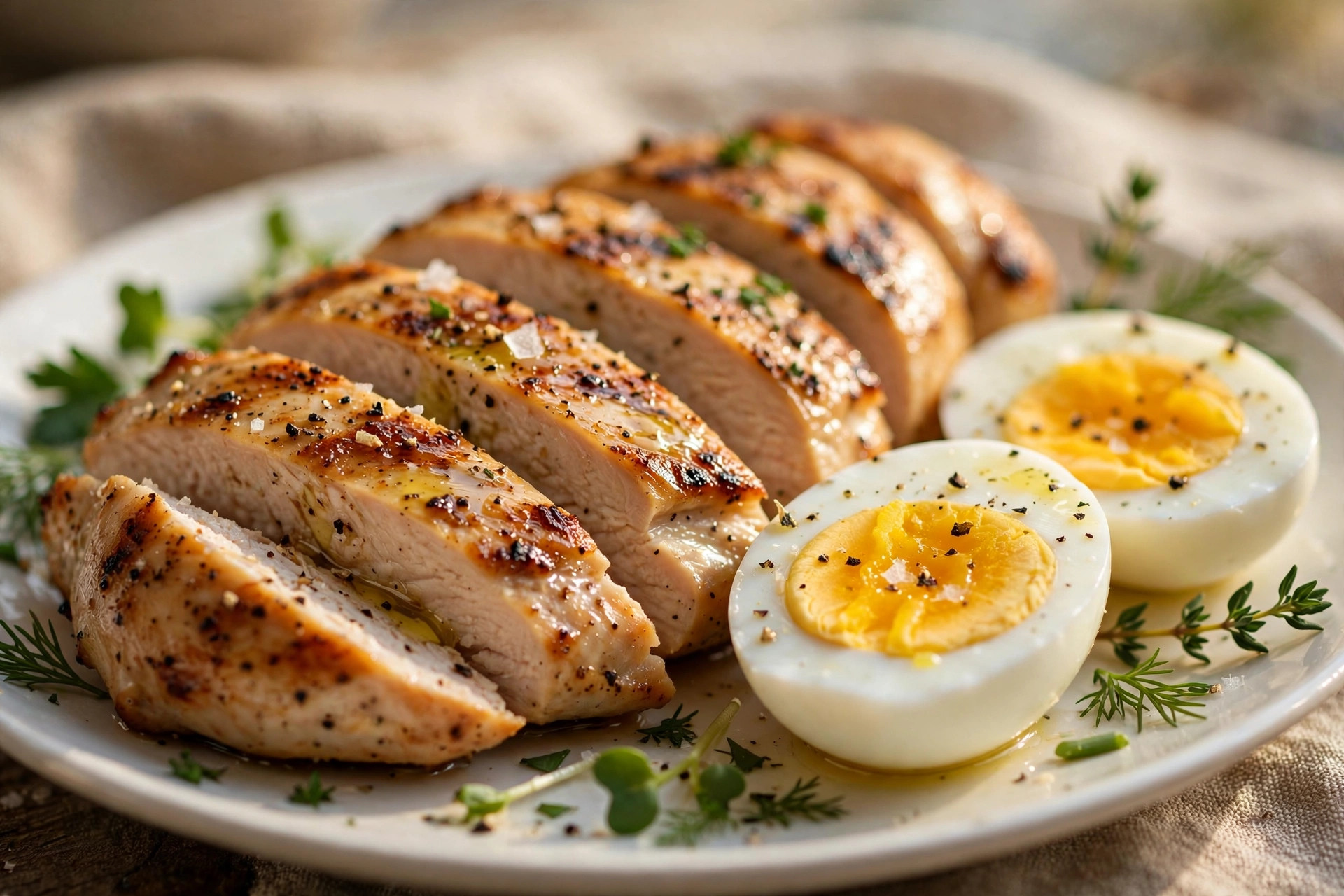
Chicken breast is the undisputed champion: 31g per 100g, lean, cheap, and endlessly versatile. Fish brings a bonus — salmon and tuna add omega-3 fats for your heart along with 25g+ of protein per 100g.
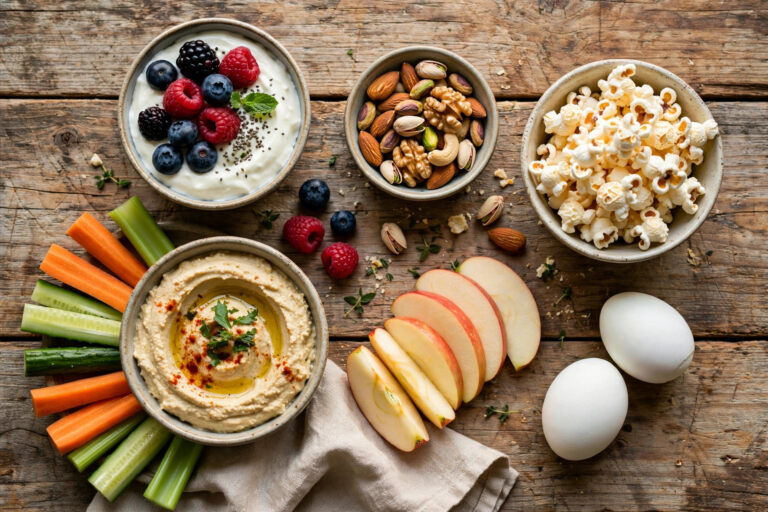
Eggs are the everyday hero. One large egg gives you about 6–7g of complete, easy-to-digest protein, and yes — you can eat eggs every day. Boil a few on Sunday and your week’s snacks are sorted.
Dairy pulls quiet weight too. Paneer (18g per 100g) is a vegetarian staple for a reason, and Greek yogurt (10g per 100g) beats regular yogurt nearly two-to-one — swap it into breakfast and you’ve added real protein without trying.
One honest note: Harvard’s experts warn that diets heavy in red and processed meat are linked to higher heart-disease risk. Lean poultry, fish, eggs, and dairy give you the protein without that baggage.
Plant protein: the vegetarian playbook
Here’s what the “where do you get your protein?” crowd misses: vegetarians who eat a varied diet almost always get enough. Most plant proteins are “incomplete” — low in one or two amino acids — but you don’t need every amino acid in every meal. Eat a mix through the day and your body assembles the full set.
The winning combinations are ones you already know:
- Lentils + rice (dal-chawal is a complete-protein meal by accident)
- Chickpeas + wheat (hummus with pitta, chana with roti)
- Peanut butter + wholegrain toast
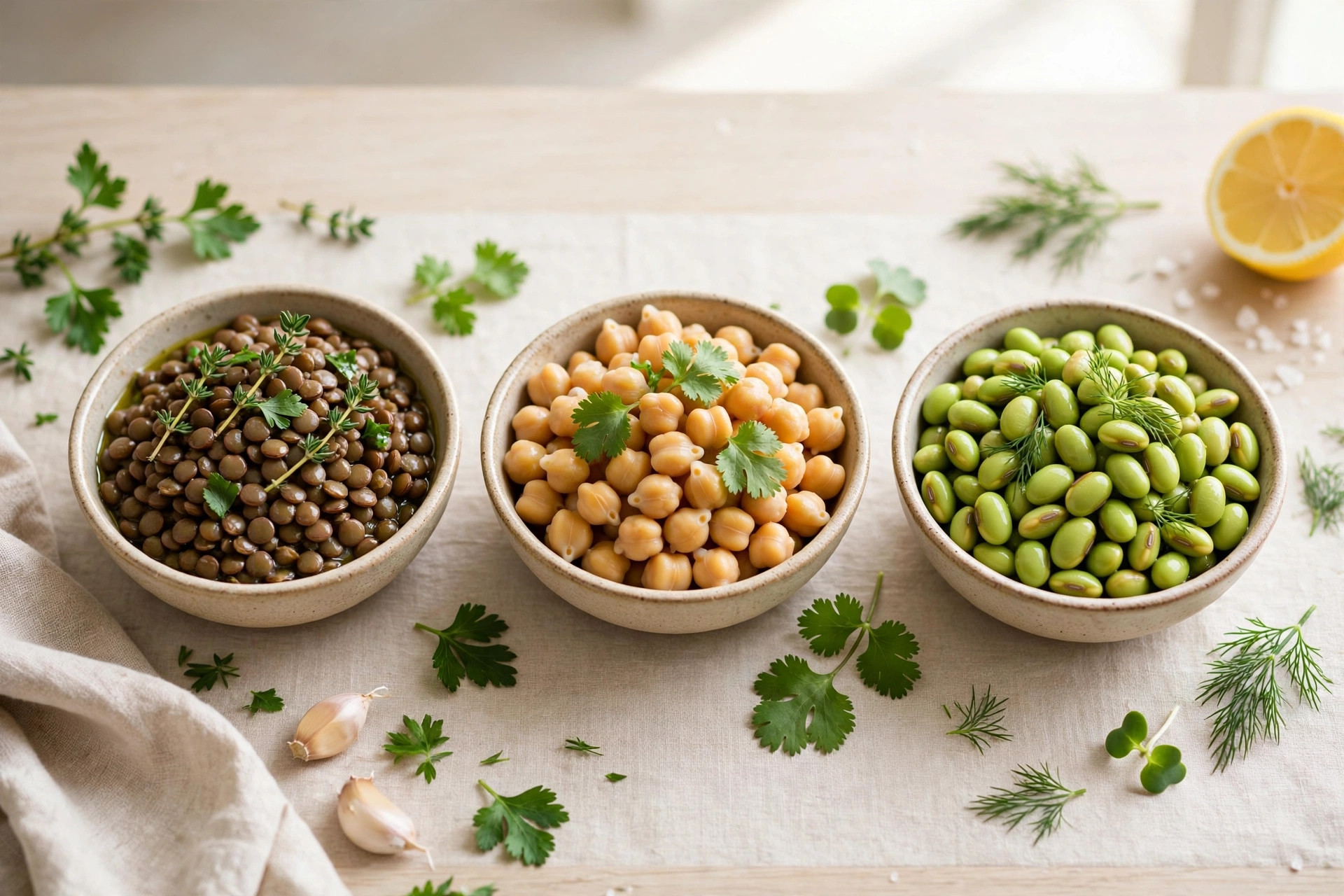
Soy is the exception that needs no combining — tofu, tempeh, and edamame are complete proteins on their own. Lentils and chickpeas (9g per 100g cooked) also bring fibre, folate, and iron — in fact, they’re among the foods on our iron-rich foods for women list, so they do double duty.
Nuts deserve respect with a warning label: almonds (21g) and peanuts (26g) are protein-dense but calorie-dense too. A small handful is a snack; a whole bag is a meal you didn’t plan.
Protein on a budget
You don’t need salmon money to hit your protein target. Some of the cheapest foods in the shop are also the most protein-rich — WebMD’s budget picks back this up:
- Eggs — the cheapest complete protein there is
- Lentils and dried beans — pennies per serving, 9g protein per 100g cooked
- Peanuts and peanut butter — 26g per 100g at a fraction of meat’s price
- Canned tuna and sardines — around 25g per 100g, shelf-stable for months
- Milk and plain yogurt — steady, affordable daily protein
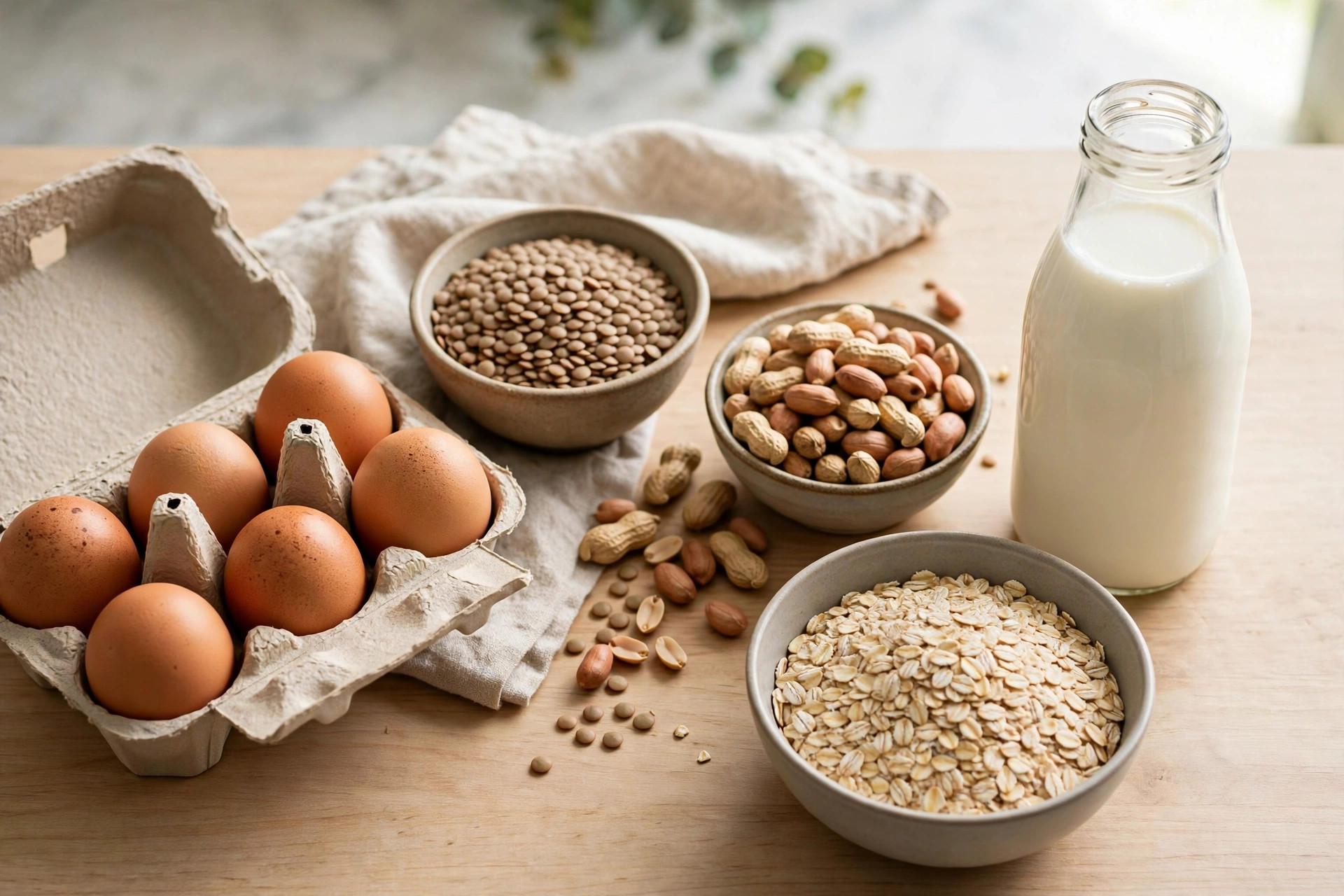
- Oats — 11g per 100g dry, and they pull breakfast duty too
The pattern is simple: the less processed the food, the cheaper the protein. Dried lentils beat canned, whole chicken beats nuggets, and plain peanut butter (just peanuts and salt) beats the sugary stuff every time.
3 protein myths, busted
Myth 1: “More protein means more muscle.”
Only half true. Protein repairs muscle, but without training there’s nothing to repair — extra protein just becomes extra calories. And as Harvard notes, the average person gains nothing past about 2g per kilogram.
Myth 2: “Plant protein doesn’t count.”
It counts just fine. The “incomplete protein” label sounds damning, but variety through the day solves it completely. Millions of healthy vegetarians are the proof.
Myth 3: “High protein damages your kidneys.”
Here’s the honest caveat: the concern is real for people who already have kidney disease — they should follow their doctor’s advice. But in healthy people, studies haven’t shown normal high-protein eating harms kidneys. Don’t let a half-remembered headline scare you off an extra egg.
Quick note: this is general information, not medical advice. If you have kidney disease, diabetes, or any condition affecting your diet, talk to your doctor or a dietitian before making big changes.
Frequently asked questions
Do vegetarians really get enough protein?
Yes, with variety. Lentils, chickpeas, soy, dairy, eggs, nuts, and grains through the day easily cover needs. The only people who should pay attention are vegans who eat a very narrow diet — soy and quinoa are your complete-protein friends.
Is protein powder necessary?
No. It’s convenient, not magical. A chicken breast or a bowl of dal gives you the same amino acids plus nutrients a powder can’t. Powders help athletes who struggle to eat enough; everyone else can skip them.
What’s the single cheapest high-protein food?
Eggs, usually — complete protein at a few pence each. Dried lentils run them close and feed more people per pound.
Can you eat too much protein?
You can overdo anything. Very high intakes (well above 2g per kilogram) mostly just displace other nutrients and add calories. People with kidney conditions should be especially careful and follow medical advice.
The bottom line: aim for roughly 1 gram per kilogram of body weight, get it from a mix of foods you actually enjoy, and don’t overthink it. Chicken, eggs, lentils, chickpeas, dairy, soy, and nuts — rotate through them, keep it simple, and your protein is sorted.
One response to “Best Sources of Protein: 12 Foods That Deliver”
[…] A few honest notes. Liver is the heavyweight champion, but eat it in moderation — and the NHS advises avoiding liver during pregnancy because of its very high vitamin A. Fortified cereals look spectacular on paper, but iron content varies wildly between brands, so check the label. And meat does double duty: it also tops our list of the best sources of protein. […]