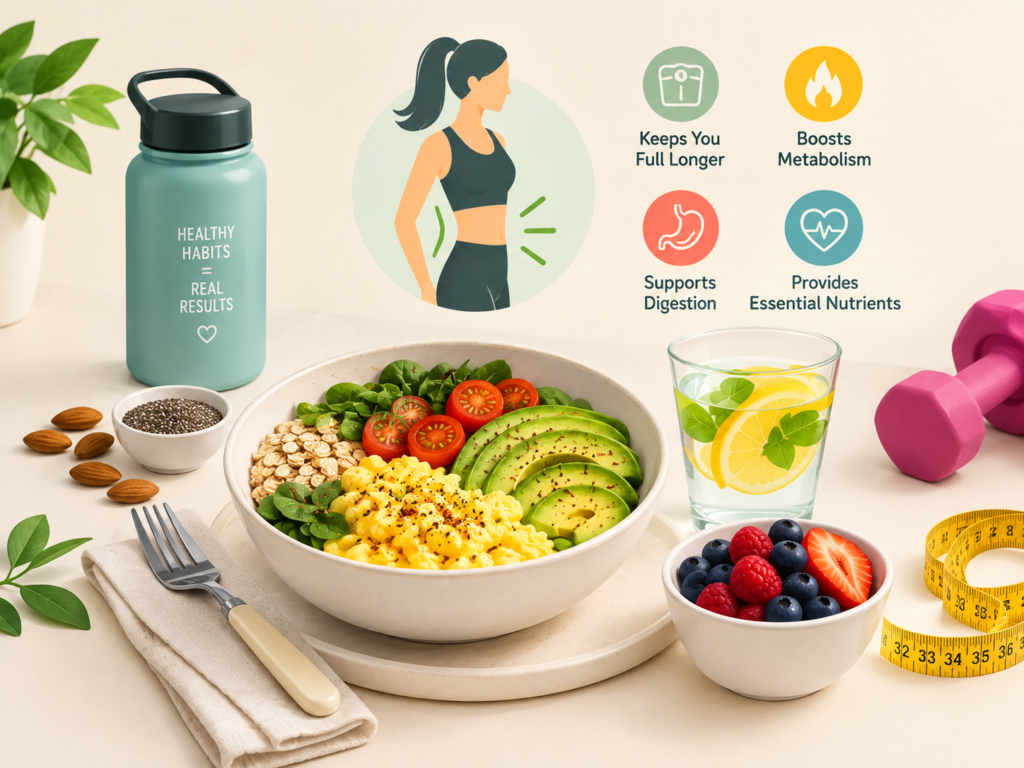
You ate a bowl of cornflakes with milk at 8 AM. By 10:30, you’re staring at the office biscuit tin like it owes you money. Sound familiar? That mid-morning crash isn’t a willpower problem. It’s a breakfast problem. The best breakfast for weight loss isn’t about eating less — it’s about eating smarter so your body actually stays full until lunch. Let me walk you through what works, what doesn’t, and exactly what to put on your plate tomorrow morning.
Why Your Breakfast Choice Matters More Than You Think
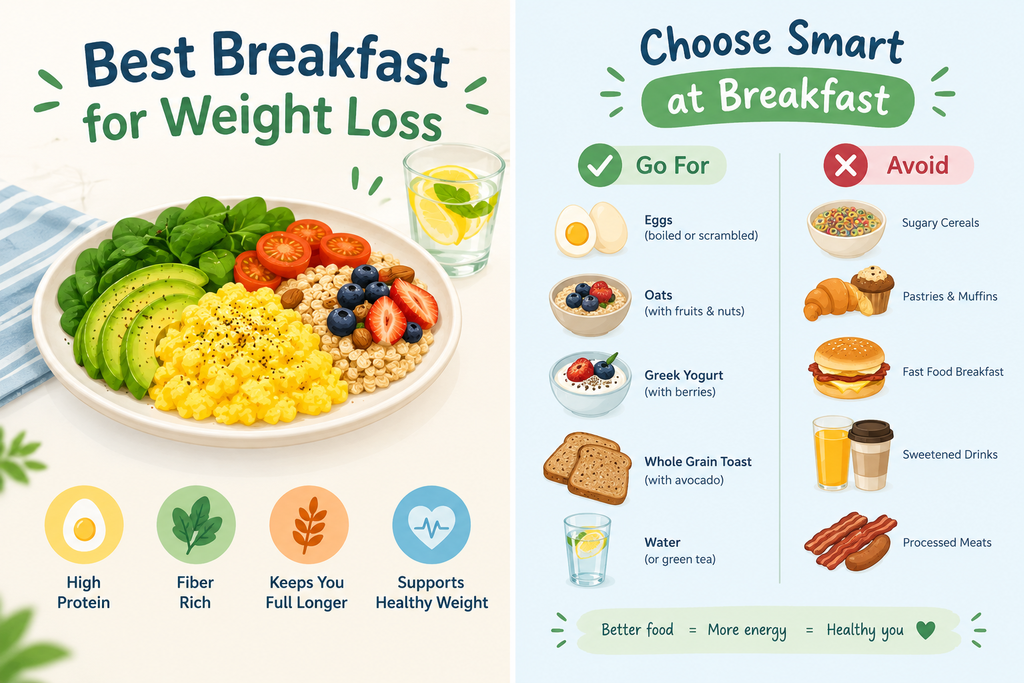
Here’s what actually happens when you start your day with a sugary cereal or plain toast with jam. Your blood sugar spikes fast. Your pancreas pumps out insulin to bring it down. Within two hours, your blood sugar drops below where it started, and your brain sends out a loud, urgent signal: eat something now. That’s why you crave biscuits, chips, or a second cup of sweet chai by mid-morning.
A 2013 study published in the American Journal of Clinical Nutrition found that people who ate a high-protein breakfast consumed roughly 200 fewer calories at lunch compared to those who had a low-protein morning meal. That might not sound like much on its own, but over a week, it adds up to about 1,400 calories — roughly half a pound of fat. The best breakfast for weight loss works with your body’s hunger hormones, not against them.
Does this mean breakfast is the single most important meal of the day? Not exactly. Your total daily calorie intake still matters most. But if you’re going to eat breakfast — and most of us do — making it count gives you a genuine advantage. The Harvard T.H. Chan School of Public Health’s Nutrition Source consistently highlights that meal quality matters just as much as meal timing when it comes to long-term weight management.
What Makes a Breakfast Actually Good for Weight Loss?
Not all morning meals are created equal. A croissant and a plate of eggs might have similar calories, but they’ll affect your hunger, energy, and cravings very differently over the next four hours. Three things separate a weight-loss-friendly breakfast from one that sets you up for a rough day of eating.
Protein Is the Star Player
Protein is the most filling macronutrient you can eat. When you consume protein, your gut releases hormones like GLP-1 and PYY that tell your brain you’re satisfied. At the same time, protein suppresses ghrelin, the hormone that makes you feel hungry. This is why two eggs keep you full longer than two slices of white bread, even when the calorie count is nearly identical.
Aim for at least 20 to 30 grams of protein at breakfast. That might sound like a lot, but it’s easier than you think. Two large eggs give you about 12 grams, and a cup of Greek yoghurt adds another 15 to 20 grams. If you want a deeper look at how to hit your daily targets through the rest of the day, our guide on the best sources of protein breaks it down by food type.
Fibre Keeps You Full Without the Calories
Fibre slows down digestion, which means glucose enters your bloodstream gradually instead of all at once. This keeps your energy steady and delays the return of hunger. Foods rich in fibre also physically take up more space in your stomach, sending fullness signals to your brain faster.
Oats, berries, chia seeds, and whole grains are excellent morning sources. If you’re curious about how much fibre you actually need and why most people fall short, this piece on what fibre is and why you need it is a quick, useful read.
Don’t Fear Healthy Fats
Somewhere along the line, fat became the villain of weight loss. But a small amount of healthy fat at breakfast — think avocado, nuts, or the yolk in your egg — actually slows gastric emptying. That’s a technical way of saying food stays in your stomach longer, keeping you satisfied. The key word is small. A quarter of an avocado or a tablespoon of peanut butter is plenty. You don’t need to pour olive oil over everything.
7 Best Breakfast Options for Weight Loss (With Portions)
Here are seven breakfasts that combine protein, fibre, and healthy fats in practical, realistic ways. No exotic ingredients, no hour-long prep. These are meals you can actually make on a Tuesday morning when your alarm went off three times.
1. Eggs Any Style With Vegetables
Two eggs scrambled, boiled, or made into an omelette with spinach, tomatoes, and mushrooms give you roughly 250 to 300 calories and about 18 grams of protein. The vegetables add volume and fibre without many calories, so the plate looks and feels generous. This is one of the simplest and most effective weight loss breakfasts you can make. If you’ve been wondering whether eating eggs daily is safe, our article on whether you can eat eggs every day covers the latest research.
2. Overnight Oats With Seeds and Berries
Mix half a cup of rolled oats with milk or a dairy-free alternative, a tablespoon of chia seeds, and a handful of berries the night before. In the morning, you’ve got a ready-to-eat bowl with about 300 to 350 calories, 10 to 12 grams of protein, and a solid hit of fibre. The chia seeds swell up and create a thick, pudding-like texture that feels surprisingly indulgent for something so simple. If you’ve been wondering whether oats actually beat sugary cereals, this comparison of oats vs cornflakes for breakfast makes the difference very clear.
3. Greek Yoghurt Parfait
A cup of plain, unsweetened Greek yoghurt layered with a small handful of nuts and some fresh fruit gives you around 250 calories and a massive 20 to 25 grams of protein. The trick is to choose plain yoghurt. Flavoured versions often pack 15 to 20 grams of added sugar per serving, which defeats the entire purpose. Sweeten it yourself with a drizzle of honey or a couple of chopped dates if you need to.
4. Vegetable Moong Dal Chilla
If you grew up eating Indian breakfasts, this one will feel like home. A chilla made from moong dal batter stuffed with grated paneer and finely chopped vegetables delivers about 250 to 300 calories and 15 to 18 grams of protein per serving. It’s naturally gluten-free, high in fibre, and takes about 15 minutes to make. Pair it with a small bowl of mint chutney instead of ketchup to keep the added sugar down.
5. Whole Grain Toast With Avocado and Egg
One slice of thick whole grain or sourdough toast topped with a quarter of a mashed avocado and a poached or fried egg comes in at roughly 300 to 350 calories. You get complex carbs from the bread, healthy fats from the avocado, and protein from the egg. It’s the kind of breakfast that looks like something from a café menu but takes five minutes to assemble at home.
6. Smoothie With Protein and Greens
Blend a scoop of protein powder or a cup of Greek yoghurt, a handful of spinach, half a banana, a tablespoon of flaxseed, and milk or water. You’ll get around 250 to 300 calories and 20 to 25 grams of protein in a drink you can take on the commute. The spinach is virtually tasteless once blended, and the flaxseed adds fibre and omega-3 fats. Just be careful not to overload it with fruit. A smoothie with three bananas and a cup of mango can easily hit 500 calories and spike your blood sugar. Our breakdown of smoothie benefits and common mistakes covers exactly what to watch out for.
7. Upma or Poha With Peanuts and Vegetables
A medium bowl of vegetable upma or poha made with plenty of onions, peas, carrots, and a tablespoon of roasted peanuts gives you around 250 to 300 calories. On their own, upma and poha are mostly carbs. But the peanuts add protein and fat while the vegetables add fibre and volume. The key is to load up on the vegetables and go easy on the cooking oil.
Pro Tip: If you want to see how these meals fit into your overall daily intake, our guide on how to count calories walks you through the basics without making it feel like a maths exam.
Breakfast Mistakes That Quietly Sabotage Weight Loss
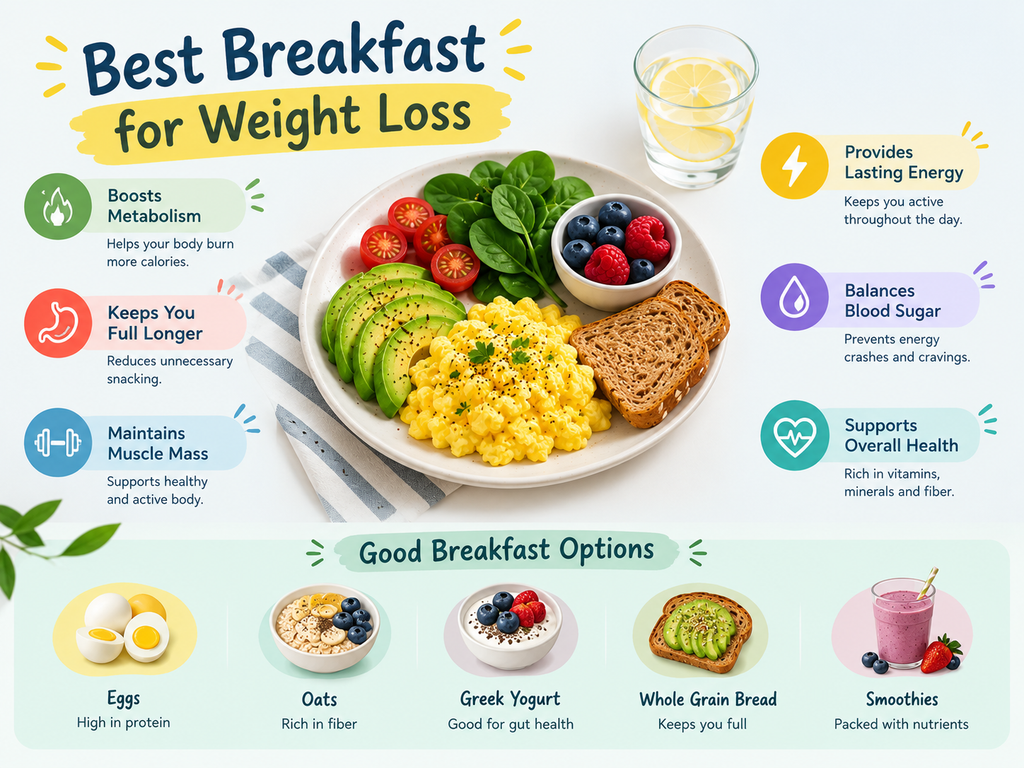
Even well-meaning people make breakfast choices that work against their goals. Here are the most common ones I see, and they’re usually the reason someone tells me, “I eat healthy but I’m still not losing weight.”
Drinking your calories without realising it is a big one. A large flavoured latte from a coffee shop can pack 250 to 350 calories and 30 grams of sugar — essentially a dessert disguised as a morning drink. A freshly squeezed orange juice sounds healthy, but a single glass can contain the sugar of three to four oranges without any of the fibre that would slow its absorption. You’re better off eating the whole fruit and drinking water or black coffee alongside your meal.
Another common mistake is eating a breakfast that’s almost entirely carbohydrates. A bowl of cereal with milk, a couple of plain idlis with chutney, or toast with jam might feel light and harmless, but they lack the protein and fat needed to keep you full. You’ll likely end up snacking before lunch, which pushes your total daily calories higher than if you’d just eaten a more balanced meal to begin with.
Portion distortion is the third trap. Avocado toast is a great breakfast, but if you’re using half an avocado, two thick slices of sourdough, and a generous drizzle of olive oil, you might be looking at 500 to 600 calories before you’ve even touched your coffee. Healthy ingredients still have calories, and weight loss ultimately comes down to maintaining a calorie deficit. The NHS Eatwell Guide offers a helpful visual reference for what balanced portions actually look like on a plate.
What If You’re Not Hungry in the Morning?
Some people genuinely don’t feel like eating when they wake up, and that’s perfectly okay. The old rule that you must eat breakfast to “kickstart your metabolism” has been largely overstated. Research from the University of Bath, published in the American Journal of Clinical Nutrition in 2014, found no significant metabolic difference between breakfast eaters and skippers over a six-week period. (Note: verify the specific study URL for your final publication — the findings are well-documented in the journal’s 2014 archives.)
If you’re not hungry, don’t force food. Just make sure your first meal of the day — whenever it happens — is balanced and protein-rich. The real danger of skipping breakfast is that many people get so ravenous by noon that they overeat at lunch or grab the nearest convenience food. If that sounds like you, try starting with something small, like a boiled egg or a handful of almonds, and build up from there.
For a more detailed look at whether skipping breakfast is actually fine for your health and weight goals, this article on whether skipping breakfast is okay covers the nuances honestly.
Disclaimer: This article provides general nutritional information and is not a substitute for personalised medical or dietary advice. If you have a medical condition such as diabetes, PCOS, or a thyroid disorder, please consult a registered dietitian or your doctor before making significant changes to your diet.
Quick Tips to Make Your Breakfast Work Harder
Prep the night before. Overnight oats, boiled eggs, and pre-chopped vegetables take almost no morning effort and remove the temptation to grab something convenient and unhealthy when you’re running late.
Eat your protein first. If your plate has eggs, toast, and fruit, start with the eggs. Research from Weill Cornell Medical College, published in Diabetes Care in 2015, found that eating protein and vegetables before carbohydrates can significantly blunt the blood sugar spike from the carbs. It’s a small trick, but it makes a noticeable difference in how you feel an hour later.
Don’t pair your balanced breakfast with a sugary drink. If you’ve made the effort to prepare a proper meal, don’t undo it with a heavily sweetened chai or a glass of packaged juice. Try reducing the sugar in your morning chai gradually rather than cutting it cold turkey — your taste buds adjust faster than you’d expect.
Frequently Asked Questions
What is the single best breakfast for weight loss?
There’s no single magic meal, but a breakfast that combines 20 to 30 grams of protein, a source of fibre, and a small amount of healthy fat will keep you full the longest and support a calorie deficit. Two eggs with vegetables and a slice of whole grain toast is a reliable, simple option that works for most people.
Can I eat bananas for breakfast if I’m trying to lose weight?
Yes, you absolutely can. A medium banana has about 100 calories and provides potassium, fibre, and natural sweetness. The key is to pair it with protein — like Greek yoghurt or a boiled egg — rather than eating it alone. A banana on its own digests quickly and won’t keep you full for very long.
Is it better to skip breakfast for weight loss?
Not necessarily. Skipping breakfast can work for some people, especially those who naturally aren’t hungry in the morning and can control their portions at later meals. But for many people, skipping leads to overeating at lunch and poor food choices. The best approach is the one you can stick to consistently while maintaining a calorie deficit throughout the day.
Your breakfast doesn’t have to be complicated, expensive, or boring. Pick one or two options from the list above, try them this week, and pay attention to how you feel at 11 AM. If you’re not raiding the snack drawer, you’re on the right track. Small, consistent changes at the start of your day add up to real results over weeks and months — no extreme diets required. Start tomorrow morning. Your future self will thank you.

2 responses to “Best Breakfast for Weight Loss: 7 Meals That Actually Work”
[…] about calories — protein and fibre in the morning steadies appetite all day, which is why the best breakfast for weight loss is about what you eat, not just eating […]
[…] and oats bring plenty of both — which is also why protein-rich mornings top our list of the best breakfasts for weight loss. Cornflakes, eaten plain, leave most people hungry again within the hour, and a hungry brain makes […]