
You crack two eggs into the pan every morning. They’re quick, they’re filling, and you genuinely enjoy them. Then you scroll past a headline that says eggs are clogging your arteries, and suddenly your favourite breakfast feels like a guilty secret.
So, can you eat eggs every day? The short answer is yes — most healthy adults can eat one to two eggs daily without any problems. But the full picture is a bit more interesting than that, and it depends on your health, your cooking habits, and what the rest of your plate looks like.
The Short Answer: Yes, Most People Can Eat Eggs Daily
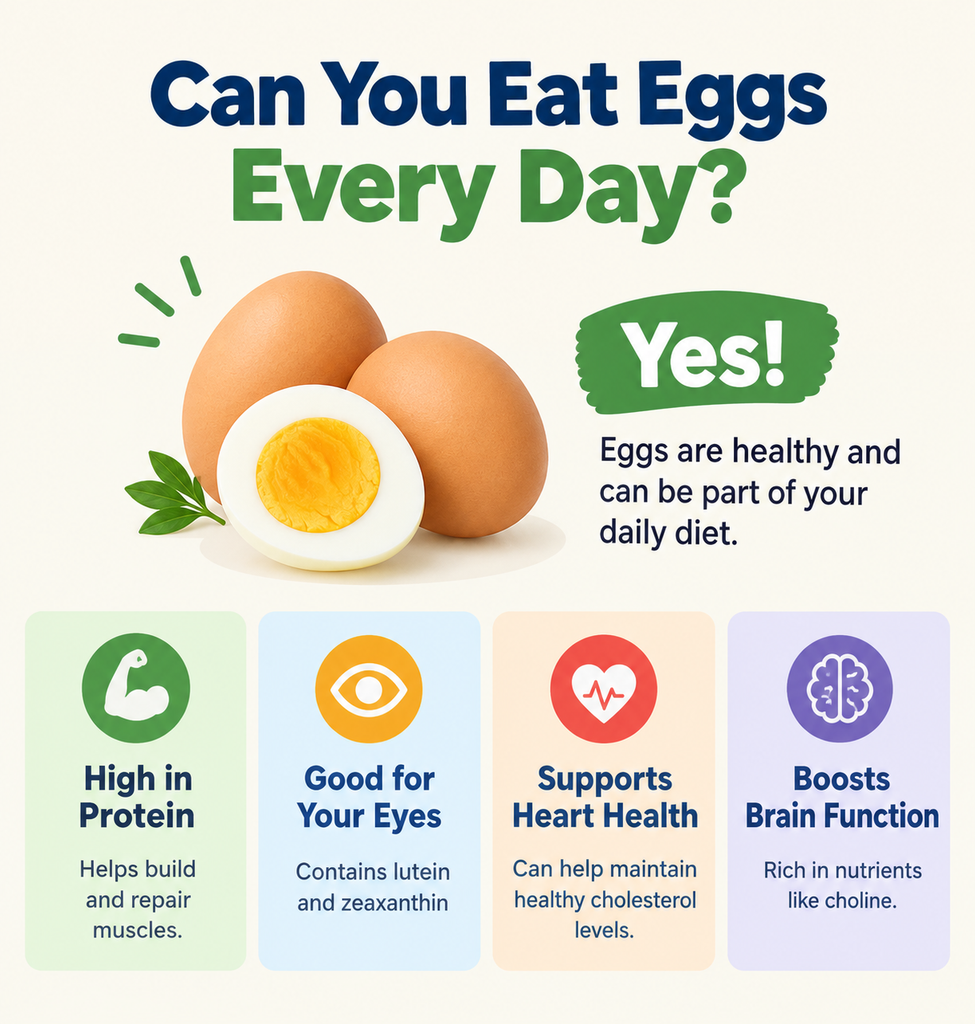
For the vast majority of healthy adults, eating eggs every day is perfectly fine. You don’t need to ration them like they’re contraband.
Major health organisations have shifted their stance on eggs over the past decade. The old rule of “no more than three eggs a week” that your parents probably grew up with? It’s largely outdated. The 2020–2025 Dietary Guidelines for Americans quietly dropped the specific daily cholesterol limit entirely. The American Heart Association now says that one whole egg per day fits within a heart-healthy dietary pattern for most people.
That said, “most people” is doing a lot of heavy lifting in that sentence. Your individual situation matters. Someone who’s 28, active, and has normal blood work is in a very different position from someone managing type 2 diabetes or familial hypercholesterolaemia. We’ll get into those specifics shortly.
The key takeaway right now: if you’re generally healthy, your daily two-egg omelette isn’t the villain it was once made out to be.
Why Eggs Got a Bad Reputation (and Why It’s Mostly Wrong)
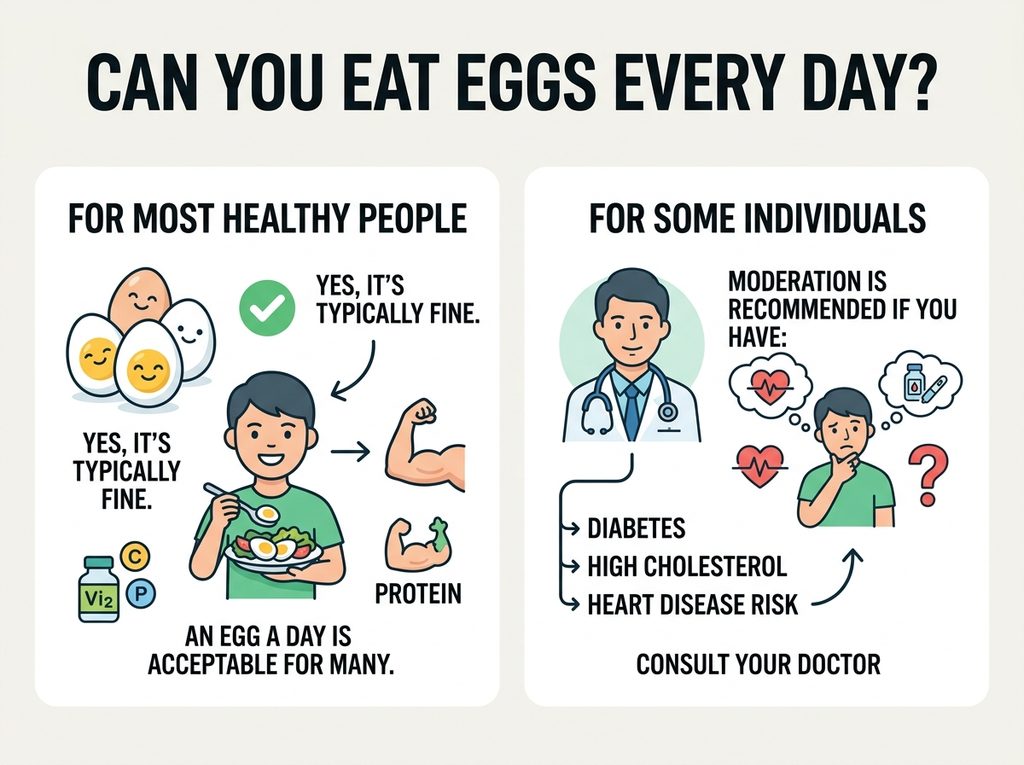
Eggs became public enemy number one in the 1970s and 80s, and the reason comes down to one word: cholesterol.
A single large egg yolk contains roughly 186 milligrams of dietary cholesterol. Back then, scientists assumed that eating cholesterol directly raised the cholesterol in your blood. The logic seemed airtight — eat cholesterol, get more cholesterol in your arteries, increase your heart disease risk. So health authorities told everyone to cut back on eggs, butter, and prawns.
The problem? That logic turned out to be mostly wrong.
Dietary Cholesterol vs. Blood Cholesterol
Here’s the distinction that changes everything. Dietary cholesterol is the cholesterol you eat in food. Blood cholesterol is what your liver produces and circulates through your body. These two things are not the same, and your body is far smarter about managing them than the old guidelines gave it credit for.
Your liver produces about 80% of the cholesterol in your blood. When you eat more cholesterol from food, your liver typically compensates by producing less. When you eat less, it produces more. For roughly 70% of the population — researchers call them “hypo-responders” — dietary cholesterol has a minimal effect on blood cholesterol levels.
What actually drives up your LDL (the “bad” cholesterol) far more than eggs ever could is saturated fat and trans fat. Think processed meats, deep-fried foods, and baked goods loaded with palm oil. A boiled egg has about 1.6 grams of saturated fat. A sausage-and-cheese breakfast sandwich can pack five to eight times that amount, and nobody wrote scary headlines about those for decades.
A large 2020 study published in the BMJ, which followed over 200,000 men and women for up to 32 years, found that eating up to one egg per day was not associated with an increased risk of cardiovascular disease. The Harvard T.H. Chan School of Public Health echoes this, noting that moderate egg consumption is safe for most people and that the overall quality of your diet matters far more than any single food.
So the real story isn’t that eggs are dangerous. It’s that we blamed the wrong thing for decades.
How Many Eggs Per Day Is Actually Safe?
This is where everyone wants a specific number, and I’ll give you one — with the caveat that it’s a general guideline, not a prescription.
For healthy adults with no underlying conditions, one to two whole eggs per day is well-supported by current research. That’s the sweet spot where you get the nutritional benefits without pushing into territory where the evidence gets murkier.
If you’re eating three or more whole eggs daily on a regular basis, the research gets thinner. Some studies suggest higher intakes may be fine for certain people, particularly athletes or those on low-carb diets, but the long-term data isn’t as robust. If you’re consistently eating four, five, or six whole eggs a day, it’s worth having a conversation with your doctor and getting your lipid panel checked every few months.
Here’s a practical way to think about it. If you eat two eggs for breakfast, that’s roughly 12 grams of high-quality protein, a solid dose of choline for brain health, and vitamins D and B12 — all for about 140 calories. That’s a remarkably efficient nutritional package. You’d struggle to get the same nutrient density from most other breakfast foods at that calorie level. If you’re curious about how eggs fit into a broader protein strategy, best sources of protein covers other options worth rotating in.
And if you want a deeper breakdown of the numbers, how many eggs per day is safe goes into more detail on the research behind different intake levels.
What About Egg Whites?
If you’re trying to keep cholesterol intake low but still want the protein, egg whites are a handy tool. The yolk contains virtually all the cholesterol and fat, but it also holds most of the vitamins, minerals, and healthy fats. A common approach is to use one whole egg plus two egg whites. You get the flavour and nutrients from the yolk while bumping up protein without adding extra cholesterol.
Who Should Be More Careful With Daily Eggs?
This is the “it depends” part, and it matters. Not everyone falls into the “one to two eggs is fine” category.
People with type 2 diabetes should pay closer attention. Some studies have found an association between high egg consumption and increased heart disease risk specifically in diabetic populations. The evidence isn’t unanimous — other studies show no significant link — but the uncertainty means it’s worth being cautious. If you have diabetes, sticking to around three to four whole eggs per week and leaning on egg whites for the rest is a sensible approach. You can read more about dietary considerations in foods to avoid with high cholesterol.
People with familial hypercholesterolaemia — a genetic condition that causes very high LDL cholesterol regardless of diet — should also limit whole egg intake. Your liver doesn’t regulate cholesterol the same way, so dietary cholesterol can have a bigger impact on your blood levels.
Hyper-responders make up about 25–30% of the population. These are people whose blood cholesterol does rise noticeably in response to dietary cholesterol. The tricky part is that you usually don’t know you’re a hyper-responder unless you get your blood tested before and after changing your diet. If you’ve recently increased your egg intake and your next blood test shows a jump in LDL, that’s useful information to discuss with your doctor.
A quick but important note: This article provides general nutritional information and is not a substitute for personalised medical advice. If you have heart disease, diabetes, high cholesterol, or any other health condition, talk to your doctor or a registered dietitian before making significant changes to your diet.
Does How You Cook Your Eggs Matter?
Absolutely. And this is where a lot of people accidentally sabotage themselves.
The egg itself isn’t the problem. The problem is what you cook it in and what you serve it alongside. A boiled egg is a nutritional gem. That same egg fried in a tablespoon of butter and served with two rashers of bacon and white toast is a very different meal from a cardiovascular perspective.
Boiling and poaching are your best friends if you’re watching your fat intake. Both methods add zero extra fat and preserve the egg’s nutrients well. Scrambling is fine too, especially if you use a small splash of milk and a non-stick pan instead of a generous knob of butter. If you want to understand the bigger picture of cooking fats, healthy vs unhealthy fats explains which oils and fats are worth using.
Frying eggs isn’t inherently bad, but the oil you choose matters. A quick fry in a teaspoon of olive oil is very different from deep-frying in reused vegetable oil. And the company your eggs keep on the plate counts just as much. Pairing your eggs with spinach, tomatoes, and whole-grain toast creates a balanced meal. Pairing them with processed meats and refined carbs every single morning shifts the overall nutritional profile in a less helpful direction. If you’re rethinking your morning routine, best breakfast for weight loss has some solid ideas that go beyond the fry-up.
Pro Tip: If you meal-prep, hard-boiled eggs keep well in the fridge for up to a week. Peel them in the morning, toss one in a salad or eat it with a piece of fruit, and you’ve got a protein-rich snack with zero cooking required.
What Happens to Your Body When You Eat Eggs Every Day?
Let’s talk about what actually changes when eggs become a daily habit, because the benefits are more significant than most people realise.
Your protein intake gets a quiet boost. Two large eggs deliver about 12 grams of complete protein, meaning they contain all nine essential amino acids your body can’t make on its own. Protein keeps you fuller for longer, supports muscle maintenance, and helps stabilise your blood sugar throughout the morning. If you’ve ever noticed that a breakfast of just toast and jam leaves you hungry by 10 a.m., adding eggs to the mix often fixes that problem.
Your brain gets more choline. Choline is a nutrient most people don’t get enough of, and eggs are one of the richest dietary sources. A single large egg provides roughly 147 milligrams of choline, which is about 27% of the recommended daily intake. Choline plays a critical role in brain development, memory, and liver function. It’s especially important during pregnancy, yet studies consistently show that most pregnant women fall short of the recommended amount.
Your eyes get some protection. Egg yolks contain lutein and zeaxanthin, two antioxidants that accumulate in the retina and help protect against age-related macular degeneration and cataracts. These compounds are fat-soluble, which means the fat naturally present in the yolk actually helps your body absorb them more effectively than you would from a supplement alone.
Your nutrient density improves without extra calories. Eggs pack vitamin D, vitamin B12, selenium, riboflavin, and phosphorus into a remarkably small calorie footprint. At roughly 70 calories per large egg, you’d be hard-pressed to find another whole food that delivers this much nutritional variety per calorie.
One thing worth mentioning: if you start eating eggs daily, you might notice your digestion adjusting during the first week or two, especially if you previously ate very little protein at breakfast. This is normal and usually settles quickly.
Frequently Asked Questions
Is eating two eggs a day too much?
For most healthy adults, two eggs a day is perfectly safe and well within current dietary guidelines. The research shows that moderate egg consumption — up to one to two whole eggs daily — doesn’t increase heart disease risk in the general population. If you have diabetes or a genetic cholesterol condition, you may want to limit whole eggs to three or four per week and check with your doctor.
Do eggs raise your cholesterol?
For about 70% of people, the cholesterol in eggs has very little effect on blood cholesterol levels. Your liver adjusts its own cholesterol production to compensate. The bigger dietary drivers of high LDL cholesterol are saturated fat and trans fat from processed foods, not the cholesterol in whole foods like eggs. That said, about 25–30% of people are “hyper-responders” whose blood cholesterol does rise with dietary cholesterol, so individual responses vary. You can explore this topic further in do eggs raise cholesterol.
Can I eat eggs every day if I’m trying to lose weight?
Yes, and they can actually help. Eggs are high in protein and relatively low in calories, which makes them excellent for satiety. Studies have shown that people who eat eggs for breakfast tend to consume fewer calories throughout the rest of the day compared to those who eat a carb-heavy breakfast of the same calorie count. Just pay attention to how you cook them — boiled or poached eggs won’t add hidden calories the way a buttery scramble might.
Are brown eggs healthier than white eggs?
No. The colour of the shell is determined by the breed of the hen and has no impact on nutritional content. Brown eggs and white eggs are essentially identical in protein, fat, vitamins, and cholesterol. The reason brown eggs sometimes cost more is that the hens that lay them tend to be larger and require more feed, not because the eggs are nutritionally superior.
Your Next Step
Eggs are one of the most affordable, versatile, and nutrient-dense foods you can put on your plate. The fear around daily egg consumption was built on outdated science, and the current evidence is reassuring for the vast majority of people.
If you’ve been limiting yourself to two eggs a week out of habit or old advice, try bumping up to one or two a day for a month. Pay attention to how you feel, how your energy levels hold up through the morning, and — if you’re due for blood work anyway — check your lipid panel to see how your body actually responds. Your own blood test results will tell you more than any headline ever could.
And if you want to dig deeper into how eggs fit into your overall diet, can you eat eggs every day is a great starting point for more practical guidance.



4 responses to “Can You Eat Eggs Every Day? Here’s the Real Answer”
[…] deep-fried foods. If you’re curious about making eggs a daily habit long-term, this guide on eating eggs every day covers what to watch for over the months and […]
[…] you can make. If you’ve been wondering whether eating eggs daily is safe, our article on whether you can eat eggs every day covers the latest […]
[…] it simple and repeatable. Two boiled eggs — cheap, filling protein (and yes, you can eat eggs every day)). Wholegrain toast with peanut butter, ready in two minutes. Or a banana blended with milk and […]
[…] hero. One large egg gives you about 6–7g of complete, easy-to-digest protein, and yes — you can eat eggs every day. Boil a few on Sunday and your week’s snacks are […]