
Your alarm goes off late. You rush out with just a coffee, promising you’ll eat at lunch. Sound familiar? Breakfast is the most skipped meal of the day. But is skipping breakfast okay, or are you inviting an energy crash and bigger problems? The honest answer: once in a while is no big deal, but a daily habit carries real risks. Here’s what the science says — and what to do if mornings just aren’t your thing.
Put simply, skipping breakfast means no food from dinner until lunch — roughly 16 hours with no fuel coming in.
What happens in your body when you skip breakfast
Here’s what happens on a morning you skip. Your body wakes up in a high-adrenaline state. But when no food arrives, it reads the situation as a threat. Mayo Clinic cardiologist Dr. Francisco Lopez-Jimenez explains the body thinks “with no food, I could die from starvation” and pumps out even more adrenaline. That’s why skipping can leave you shaky by mid-morning — your stress response is running with the fuel light on.
Your body also handles glucose best in the morning. Eat lunch after skipping and your blood sugar can spike harder than usual. Then comes the 11am slump.

Anyone who’s skipped breakfast before a long morning knows the rest of the script: stomach growling, focus gone, and by eleven you’re hunting for something sugary. When that crash hits, it helps to know what to eat when you feel low on energy instead of grabbing a chocolate bar — or at least to reach for one of the best snacks for weight loss rather than the vending machine.
Quick fact: your brain runs almost entirely on glucose. After an overnight fast plus a skipped breakfast, it’s no wonder concentration is the first thing to go.
Does skipping breakfast make you gain weight?
The evidence points one way: over time, yes — hunger builds all morning, so by lunch you’re ravenous and choose differently. A tired, hungry brain reaches for quick energy: usually sugar and refined carbs. Portions creep up too, because your eyes are bigger than your stomach when you’re starving.

The numbers back it up. A 2020 meta-analysis in Obesity Research & Clinical Practice (see the published record on PubMed) pooled 45 observational studies and found breakfast skippers had 48% higher odds of overweight and obesity than regular breakfast eaters. In children, a 2023 meta-analysis of more than 323,000 kids found 59% higher odds among those who skipped. And a 2021 review of adult studies linked skipping on three or more days a week to an 11% higher risk of developing overweight or obesity.
| Eats breakfast regularly | Skips it most days | |
|---|---|---|
| Weight trend | Steadier over time | Higher odds of weight gain |
| Morning blood sugar | Smoother glucose curve | Bigger spikes at lunch |
| Heart markers | Healthier cholesterol patterns | Worse lipids, more inflammation |
One honest caveat: these are observational studies, so they show a link rather than proof. But the pattern is remarkably consistent. That said, the picture isn’t one-sided — a 2023 review linked skipping to slightly lower body weight but higher LDL cholesterol, so no single study tells the whole story.
And it’s not only about calories — protein and fibre in the morning steadies appetite all day, which is why the best breakfast for weight loss is about what you eat, not just eating less.
The heart and blood sugar risks of skipping breakfast daily
Keep it up for years and the stakes rise. A Mendelian randomization study — a genetic method researchers use to test cause and effect — in Food Science & Nutrition found that breakfast skipping significantly raises the risk of coronary heart disease and heart attack. Large studies also link the habit to a 22–33% higher risk of type 2 diabetes — poorer insulin sensitivity, higher fasting blood sugar, unhealthier cholesterol.
The common thread is low-grade inflammation. Missing the morning meal repeatedly seems to nudge the body toward higher inflammatory markers and worse lipid patterns — including higher LDL (“bad”) cholesterol — which quietly damage blood vessels over time. It’s not one skipped breakfast that matters; it’s the rhythm your body settles into.

A quick note: this is general information, not medical advice. If you live with diabetes, heart disease, or a history of disordered eating, talk to your doctor or a registered dietitian before changing how you eat.
Intermittent fasting vs skipping breakfast: what’s the difference?
Fair question — and the two aren’t quite the same. There’s a real difference between a planned 16:8 window with balanced meals and chaotic skipping, where breakfast vanishes and dinner grows. As Dr. Lopez-Jimenez notes, many skippers “are able to do that because they have a pretty large dinner” — fuelling up most when the body needs it least.
Dietitians tend to agree: structured fasting can suit some people, but any eating pattern needs to be nutritionally complete and sustainable. If you’re trying a fasting window, keep dinner at a sensible hour and don’t use the window as an excuse to eat poorly — meal quality still does most of the work.

Take extra care if you’re pregnant, on diabetes medication, or have any history of disordered eating. Simple test: if skipping leaves you bingeing at night, it’s not working.
Can’t face food in the morning? Start small
If a full breakfast turns your stomach, don’t force it — something small beats nothing. Start with a piece of fruit and build up.
If you’ve got five minutes
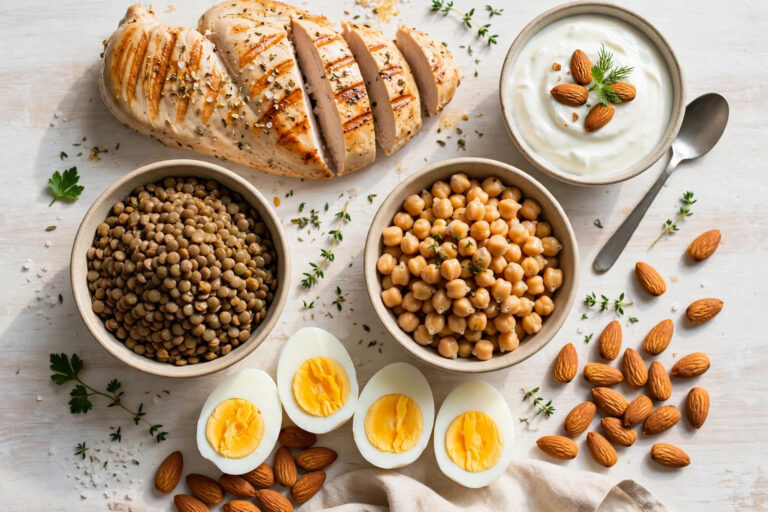
Keep it simple and repeatable. Two boiled eggs — cheap, filling protein (and yes, you can eat eggs every day)). Wholegrain toast with peanut butter, ready in two minutes. Or a banana blended with milk and peanut butter, if chewing feels like too much effort this early.
If you can prep the night before
Overnight oats with berries — assemble it in a jar, grab and go (our oats vs cornflakes guide settles the debate). Greek yoghurt with honey and a handful of nuts works the same way: no morning effort required.

Pro tip: keep it boring and repeatable. The “perfect” breakfast you eat twice is worse than the simple one you’ll actually eat every day.
Frequently asked questions
Will skipping breakfast help me lose weight?
Probably not. Research links regular skipping to weight gain, not loss — total calories and food quality across the day matter far more than which meals you cut.
Is just having a coffee the same as skipping breakfast?
Pretty much — black coffee has almost no calories, so your body still runs on empty. Fine occasionally — just check how much coffee per day is okay if you’re on cup three by 10am.
Is it okay to skip breakfast once in a while?
Yes. A rushed morning here and there won’t hurt you — the risks come from the daily habit, kept up over months and years.
Does skipping breakfast slow your metabolism?
Not in the dramatic way people imagine — there’s no “starvation mode” switch that flips after one missed meal. But habitual skipping is linked to poorer metabolic markers over time: worse insulin sensitivity and unhealthier cholesterol. So the issue is the pattern, not a single morning.
What’s the healthiest breakfast when I’m short on time?
Aim for protein plus fibre: boiled eggs, Greek yoghurt, or overnight oats. That combination keeps you full until lunch, which is exactly what prevents the 11am snack raid.
Who should never skip breakfast?
Children, teenagers, pregnant women, people on diabetes medication and anyone with a history of eating disorders should eat in the morning — and get professional advice.
The bottom line
Skipping now and then won’t hurt you. But as a daily habit, the evidence is hard to ignore: more weight gain, worse blood sugar, higher heart risk. The fix needn’t be dramatic — eat something small tomorrow and notice how 11am feels. Small, steady changes beat grand plans you abandon by Wednesday. Want to build from here? Browse our breakfast guides for healthier mornings.


One response to “Skipping Breakfast: Is It Actually Okay? The Science-Backed Truth”
[…] Like cornflakes and not giving them up? Fair enough — just upgrade the bowl. Pour a smaller serving and bulk it out with a handful of almonds or walnuts and sliced banana or strawberries. Swap some of the milk for Greek yoghurt to add protein. And pick the plainer boxes: compare sugar per 100g on the shelf and take the lowest. A “healthier” cornflake bowl still won’t match oats, but it beats a sad, sugary one — and it definitely beats skipping breakfast entirely. […]